The number that matters when budgeting for this kind of screen in South Africa is not just the sticker price, it is the sticker price plus what happens if the thing breaks in month eight. A 34-inch USB-C ultrawide bought locally and one bought through a private import can carry an identical spec sheet and a very different real cost once that question is answered honestly.
Quick Answer
About R7,999 is where a 34-inch curved ultrawide carrying full USB-C charging, a two-computer switch and a wired network socket lands on a South African desk, and that is exactly the shelf the CU34E4CW occupies at Evetech. Below that figure you are usually giving up the dock and buying it back separately as a standalone box; above it you are generally paying for panel technology rather than for more connectivity, and either way, buying locally rather than importing privately changes what a warranty claim actually costs you in time.
💰 The local price point, and what sits either side of it
Setting expectations against a real number first makes the rest of the budgeting conversation easier.
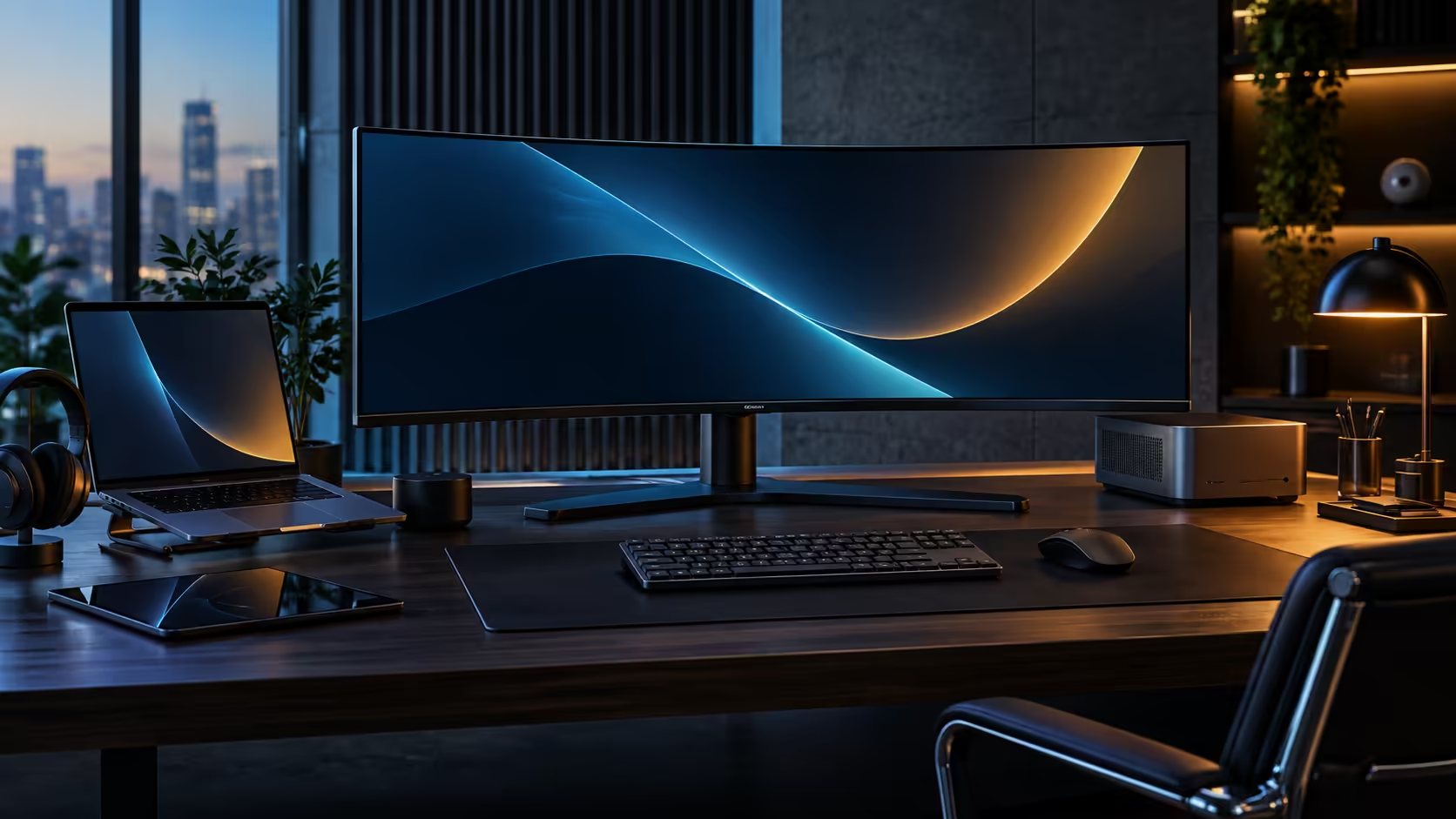
On the CU34E4CW, R7,999 covers the 34-inch curved panel itself plus every connectivity piece riding along with it: full 90W charging over USB-C, the switch that lets two computers share one keyboard and mouse, wired networking through the back of the screen, and a camera positioned for calls. Drop below roughly R6,000 for a similarly sized ultrawide and it is usually the charging capability or the computer-switching feature that quietly disappears first. Climb well past R12,000, and the extra rand is going toward the panel itself, an OLED matrix or a refresh rate pushed comfortably past 120Hz, rather than buying you anything more to plug into.
🌍 Why "cheaper overseas" rarely stays cheaper once landed
A private import quote almost never includes every cost that shows up before the screen reaches your desk.
International shipping for a large, fragile 34-inch curved panel is expensive on its own, and South African import duty plus VAT applies to the total declared value, not just the item price. A clearing fee at customs is charged per parcel and does not shrink for a smaller shipment, so a monitor bought for what looks like a R1,500 to R2,000 saving abroad can land within a few hundred rand of the local price once every fee is added, before any warranty question even comes up.
🛡️ The warranty cost that only shows up if something breaks
This is the line item most people forget to budget for, yet it matters most for a screen you rely on every working day.
A monitor bought locally with a fault is a courier collection through the retailer, with a repair or replacement turnaround measured in days. A monitor imported privately with the same fault is an international return, which means paying return shipping, waiting on customs clearance again in reverse, and often absorbing the cost difference if the retailer's local return policy does not extend to a private import buyer at all. For equipment sitting at the centre of a daily workflow, that difference in claim turnaround is worth pricing into the decision from the start, not discovering after something fails.
Compare the monitor deals page for current local pricing, and check the wider office monitor range alongside the curved monitor category before deciding between a local purchase and an import.
Frequently Asked Questions
Does ordering a 34-inch USB-C ultrawide from overseas work out cheaper?
Rarely, once you add up the full landed cost. International freight, South African duty and VAT, and a clearing fee charged per parcel all stack onto the sticker price, and the apparent saving typically shrinks to a few hundred rand or vanishes altogether by the time the box actually clears customs.
What is the biggest hidden cost of importing a monitor privately?
Usually not the shipping cost itself but the warranty position: a fault means posting the whole panel back overseas instead of a quick local courier pickup, which adds significant time and cost if something goes wrong.
What features disappear first on a budget 34-inch ultrawide?
Full-power charging over USB-C and the built-in two-computer switch are usually the first things a maker strips out to hit a lower price, since neither is cheap to build into an otherwise ordinary display panel.
Is it worth spending above R12,000 on this size of screen?
Only when the goal is the display itself, an OLED matrix or a much higher refresh ceiling. Chasing docking and connectivity alone gives you very little extra for that money.
Does buying locally guarantee a faster warranty claim?
Generally yes, since a local retailer handles the claim directly rather than routing it through an overseas seller, which is typically the biggest practical difference between the two purchase routes.
Ready to budget for the whole cost, not just the sticker price?
Weigh the local price against an import quote including duty, VAT and warranty turnaround before deciding.