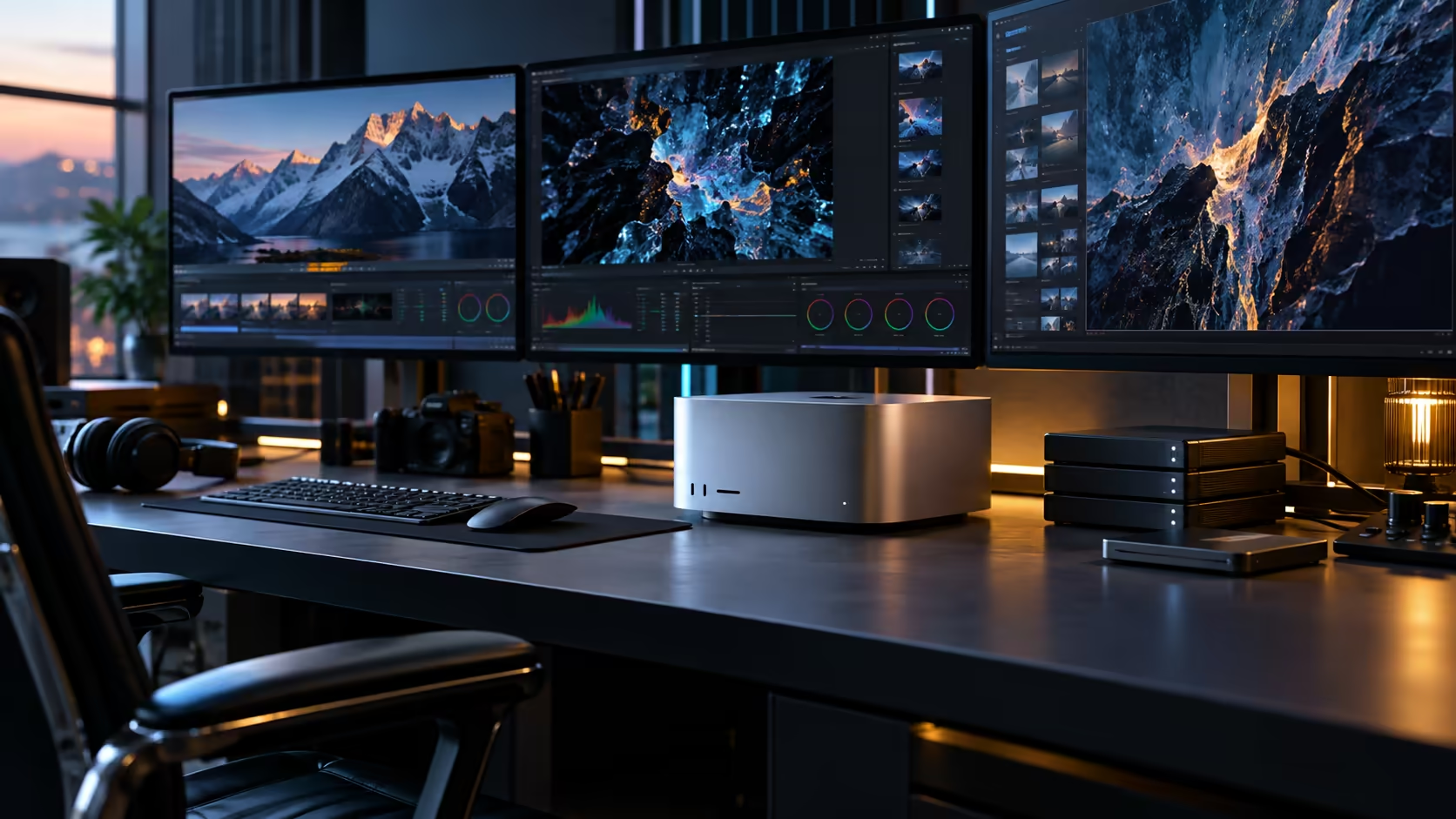
Before totalling up what a Mac Studio M5 Ultra costs in South Africa, it's worth asking a question most buying guides skip entirely: compared to what. For AI and render-heavy work, the honest comparison isn't just another machine, it's renting the equivalent compute by the hour.
Quick Answer
Buying a Mac Studio M5 Ultra makes financial sense once your monthly usage of equivalent AI or render compute would otherwise cost more than the machine over a realistic ownership period, typically two to three years. Below that usage level, renting cloud compute for occasional heavy jobs can work out cheaper than owning R108,999 of hardware that sits idle most of the time. Run the actual numbers before assuming either answer.
💻 What buying actually commits you to
Owning this machine means the cost is fixed upfront, and the value depends entirely on how consistently you use it afterward.
R108,999 buys the hardware once, after which the only ongoing costs are power and, eventually, whatever a warranty doesn't cover. A machine used daily for genuinely demanding work amortises that upfront cost quickly. A machine bought for occasional heavy jobs, then left idle for weeks between them, amortises far more slowly, and the calculation only looks favourable once you're honest about actual usage frequency.
☁️ What renting the equivalent compute actually costs
Cloud compute pricing is usage-based, which flips the calculation entirely for occasional or bursty workloads.
Renting equivalent AI or render compute by the hour costs nothing during the weeks you don't need it, which suits work under 20 hours a month far better than owning hardware that sits unused. The trade-off is that heavy, sustained use adds up fast on an hourly rate, and data transfer, setup time and the lack of a fixed local machine for everyday lighter tasks all factor into a fair comparison alongside the headline hourly cost.
🧮 A simple way to work out which side you're on
Run this calculation honestly before committing either way, since the answer depends entirely on your actual usage pattern, not a general rule.
Estimate your realistic monthly hours of genuinely heavy AI or render work, multiply by a representative cloud hourly rate for equivalent compute, and compare that monthly figure against R108,999 spread over 24 to 36 months of ownership. If the rental figure comes out higher, buying wins. If it comes out lower, renting the compute and keeping a lighter local machine for everyday work is very likely the more efficient choice.
🇿🇦 What ownership adds that a rental calculation can't capture
Some value doesn't show up in a pure cost comparison, and it's worth weighing deliberately rather than ignoring.
Owning locally means no dependency on an internet connection for every heavy job on this R108,999 machine, no data leaving South Africa for processing, and a local warranty path if something goes wrong. These matter more for some workflows than others, client confidentiality requirements or unreliable connectivity for genuinely large data transfers, for instance, and they're worth factoring in even when the raw hourly-cost math leans toward renting.
🔧 A hybrid option worth considering
Buying and renting aren't always mutually exclusive, and a middle path suits some buyers better than picking one extreme.
A lighter machine handling everyday work, paired with occasional cloud compute rented for the rare genuinely heavy job, can suit a buyer whose usage sits right on the boundary between the two calculations above. Alternatively, a workstation build sized more conservatively than the Ultra, with external storage added as projects grow, spreads the same total spend differently without committing fully to either the halo machine or a pure rental model.
📐 Revisiting the decision as usage changes
Neither buying nor renting is a permanent commitment to how you'll work for years to come.
A buyer who starts out renting occasional compute and finds their usage climbing past 40 hours a month has a clear signal to reassess the purchase math. Equally, an owner whose usage drops off after an initial heavy project should recheck whether the machine is now sitting idle enough that a lighter setup, with cloud compute for the rare spike, would actually serve them better going forward.
Frequently Asked Questions
Is it ever cheaper to rent cloud compute than buy a Mac Studio M5 Ultra?
Yes, particularly for occasional or bursty heavy workloads where the machine would otherwise sit idle most of the time between jobs.
How do I estimate whether buying or renting wins for my situation?
Estimate your realistic monthly hours of heavy compute use, multiply by a representative cloud hourly rate, and compare that monthly figure against the machine's price spread over two to three years of ownership.
What does owning locally provide that a pure cost comparison misses?
Independence from an internet connection for heavy jobs, data staying on South African soil, and a local warranty path, all of which matter more for some workflows than the raw cost math alone suggests.
Is this comparison relevant for buyers using the machine daily?
Less so. Daily, consistent use amortises the upfront cost quickly, which is exactly the scenario where owning clearly outperforms renting equivalent compute by the hour.
Ready to work out whether buying or renting compute suits your actual usage?
Run your real numbers before committing to a Mac Studio M5 Ultra purchase.