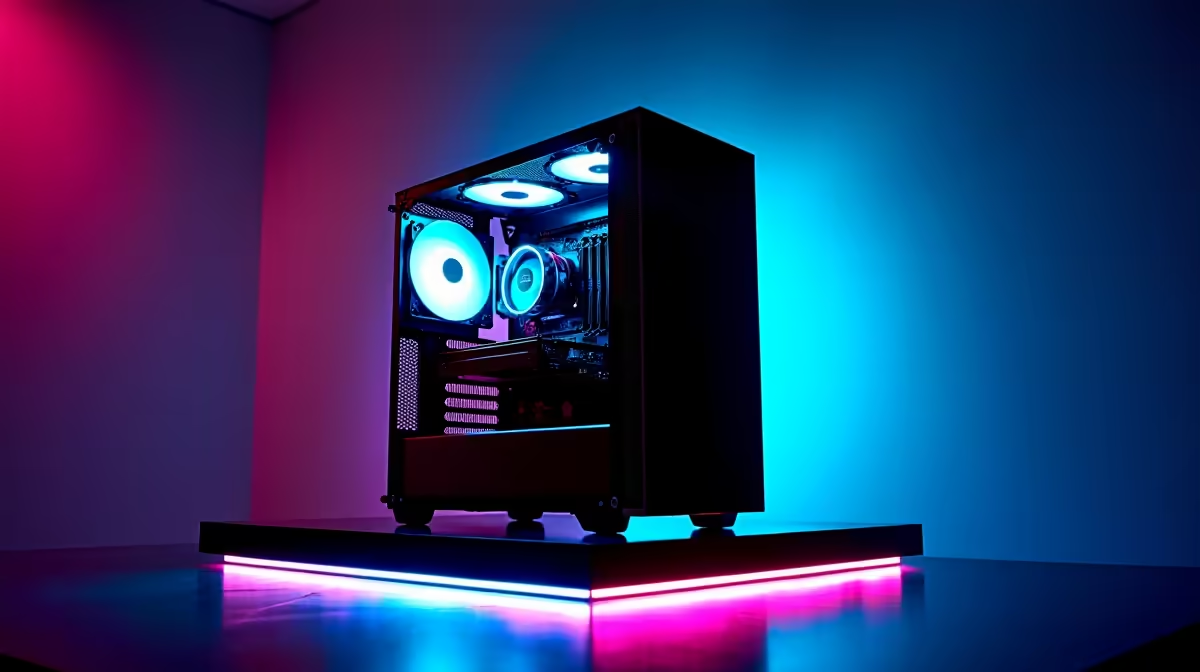
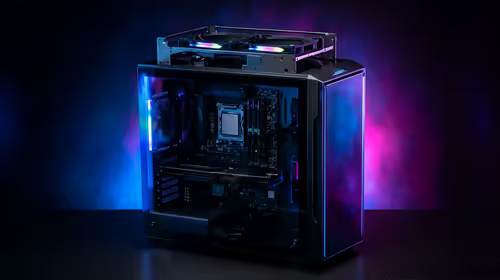
So, you’ve decided to take the plunge. Welcome to the ultimate beginner's guide on how to build a gaming PC in South Africa! 🇿🇦 It’s a rewarding journey that puts you in total control of your machine’s power, aesthetics, and budget. Forget confusing jargon and intimidating manuals; we’re breaking down the entire process into simple, actionable steps. Ready to build the rig you’ve always dreamed of? Let’s get started.
First Things First: Why Build a Gaming PC?
Building your own PC might seem like a massive task, but the benefits are huge. The biggest advantage? Customisation. You get to pick every single component, ensuring your money goes directly toward what matters most to you—whether that’s blistering frame rates in Warzone or stunning 4K visuals in Cyberpunk 2077.
You also learn an incredible new skill and gain a deeper understanding of the tech you use every day. Plus, there's nothing quite like the satisfaction of hitting the power button for the first time and seeing your creation roar to life. ✨
The Core Components: Your PC Building Blocks
Every great gaming PC is built from a team of essential components. Understanding what each part does is the first step in this beginner's guide to building a gaming PC.
The Brain: Central Processing Unit (CPU)
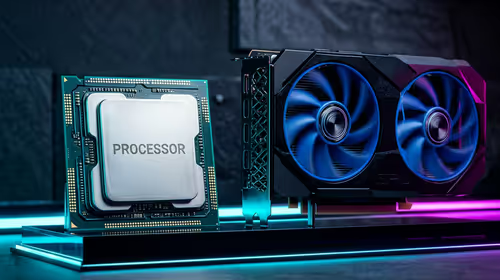
The CPU is the core of your PC, handling all the instructions and calculations that make your games and applications run. Think of it as the general. For pure gaming, an Intel Core i5 or AMD Ryzen 5 is a fantastic starting point, offering a great balance of price and performance.
The Powerhouse: Graphics Processing Unit (GPU)
This is the component that renders all the stunning visuals on your screen. The GPU is arguably the most important part of a gaming PC build. NVIDIA’s GeForce RTX series and AMD’s Radeon RX series are the two main players. Your choice here will have the biggest impact on your in-game performance, especially if you're aiming for high-performance rigs over R20k capable of high refresh rates and resolutions.
The Foundation: Motherboard
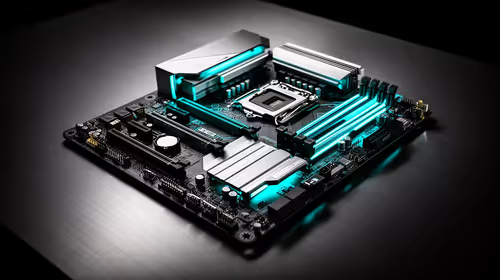
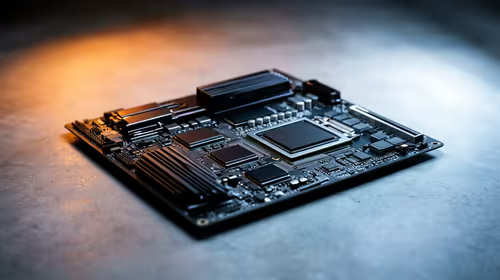
The motherboard is the central circuit board that connects everything. Your CPU, GPU, RAM, and storage all plug into it. The key is compatibility—make sure your motherboard’s socket type matches your CPU (e.g., an AMD AM5 CPU needs an AM5 motherboard).
The Memory: RAM (Random Access Memory)
RAM is your PC’s short-term memory. It holds the data your computer is actively using. For modern gaming, 16GB is the sweet spot, but 32GB is becoming the new standard for future-proofing.
The Speed: Storage (SSD/HDD)
Your storage drive is where your operating system, games, and files live. A Solid State Drive (SSD) is essential for fast boot times and loading screens. A larger, more traditional Hard Disk Drive (HDD) is great for mass storage. Most builders today start with at least a 1TB NVMe SSD for lightning-fast access. You can find many powerful options under R20k that come standard with speedy SSDs.
The Juice: Power Supply Unit (PSU)
The PSU delivers electricity to all your components. Don’t cheap out here! A low-quality PSU can be unreliable and even damage your parts. Look for a unit with an 80 Plus Bronze rating or higher from a reputable brand and ensure it has enough wattage for your components, especially your hungry GPU.
The Home: The PC Case
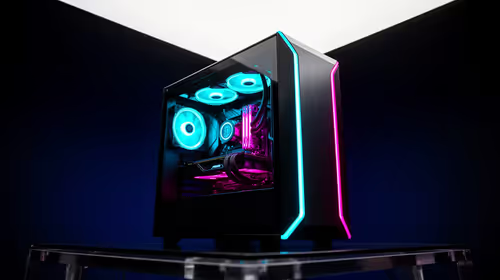
Your case houses and protects all your precious hardware. It also plays a massive role in cooling. Look for a case with good airflow (mesh front panels are excellent) and enough space for your components.
Compatibility Check Pro Tip 🔧
Before you buy anything, use a tool like PCPartPicker. It allows you to create a virtual list of your components and automatically checks for most compatibility issues, like making sure your CPU fits your motherboard or that your graphics card will fit in your case. It’s an essential first step for any beginner building a gaming PC in SA.
The Assembly: Bringing Your Rig to Life
Once you have your parts, it's time for the fun part! While a full step-by-step guide is too long for one article, here’s a quick overview of the build order:
- Preparation: Work in a clean, well-lit area. Ground yourself to prevent static discharge from damaging components.
- Motherboard Prep: Install the CPU, RAM, and M.2 SSD onto the motherboard before you put it in the case.
- Case Prep: Install the PSU and mount the motherboard inside the case.
- Component Installation: Slot in the GPU and connect any other storage drives.
- Cable Management: This is crucial for airflow and aesthetics. Route your PSU cables neatly behind the motherboard tray.
- The First Boot: Connect your monitor and keyboard, then power it on for the first time to enter the BIOS. Success! 🚀
This process is a rite of passage, but it requires patience and care. If you're on a tight budget, planning your build carefully can help you secure one of the best budget-friendly gaming PCs possible.
Is Building Always Better? The Pre-Built Alternative
Learning how to build a gaming PC in South Africa is an amazing experience. But let's be honest... it's not for everyone. It takes time, research, and a bit of courage.
What if you just want to jump straight into the action?
That’s where pre-built PCs come in. You get a professionally assembled and tested machine, often with a full system warranty. There's no need to worry about component compatibility or troubleshooting a build that won't start. You can often find incredible pre-built PC deals that offer fantastic value for money, saving you both time and potential headaches. For many, this convenience is well worth it, especially when browsing the best gaming PC deals available.
Ready to Start Your Gaming Journey?
Building a PC is an epic quest, but you don't have to go it alone. Whether you're ready for the DIY challenge or prefer a battle-tested machine straight out of the box, Evetech has your back. Explore our massive range of custom and pre-built gaming PCs and find the perfect rig to conquer your world.