Quick Answer
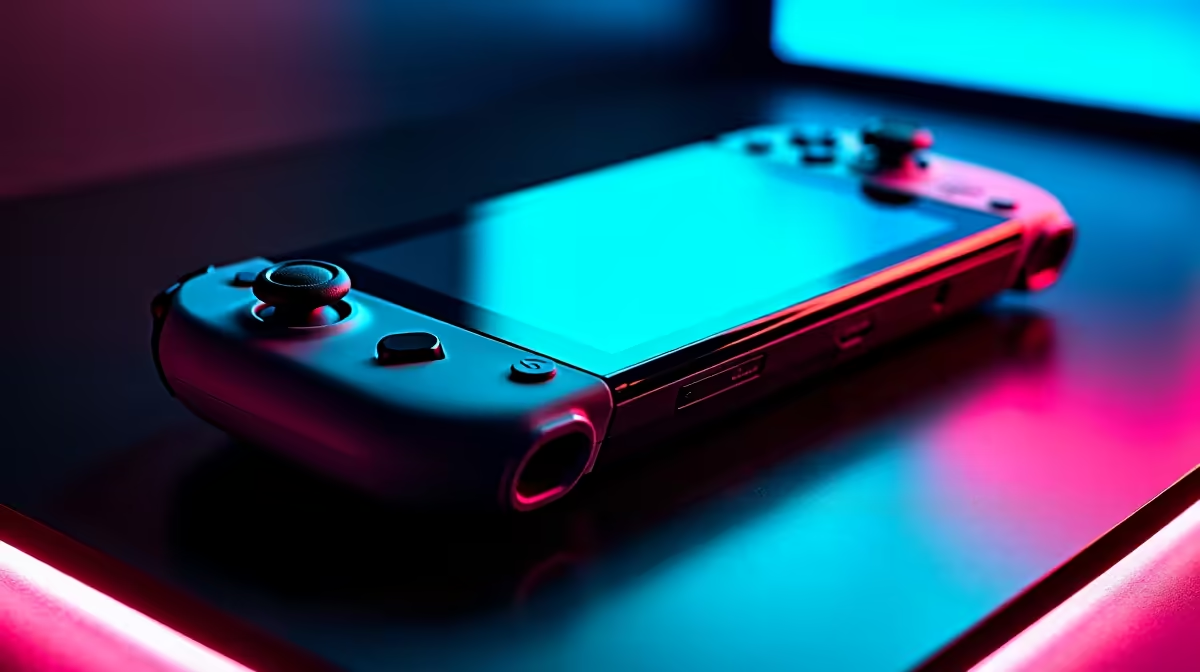
A black screen on a Steam Deck handheld usually comes from display mode, cable bandwidth, firmware, or GPU output selection. Restore a basic 1080p 60Hz image first, then move back to 800p 60-90Hz after drivers and firmware are stable. In SA, avoid replacing a Steam Deck OLED or related part in the R12,000-R18,000 range until the fault follows it across a second test.
Restore a simple video path
Use one monitor, one direct cable, and the main GPU output. Reseat power and display cables, choose the exact monitor input, and remove docks or adapters for the first pass. Use the monitor on-screen menu to confirm the selected input and refresh mode. If Safe Mode appears, the hardware can produce video and the next fix is likely driver, refresh, HDR, or VRR related.
Check firmware and bandwidth before parts
A Steam Deck OLED can be healthy while the setup fails at 800p 60-90Hz. Check USB-C dock, chipset or GPU drivers, and whether the cable supports the selected mode. For high-refresh gaming, test 60Hz, 120Hz, then the target refresh so the failing step is visible.
Use the evidence for the next purchase
If the same blank screen follows the monitor to another PC, the display side needs attention. If it follows the GPU output or motherboard debug light, the build path needs work. Local buyers in Gauteng, Western Cape, and KZN should keep serial numbers and packaging until this proof is clear.
FAQ
What is the first black screen test for a Steam Deck handheld?
Start at 1080p 60Hz with one direct cable and one display. That proves whether the PC can show a basic image before high-refresh settings return.
Can a Steam Deck OLED be working but still show no picture?
Yes. Firmware, BIOS state, cable bandwidth, or a bad display profile can block 800p 60-90Hz even when the main part is healthy.
When is replacement hardware justified?
Replace only after the same failure follows the part across another cable, port, or screen. Broad SA pricing for this category is around R12,000-R18,000.
Pro Tip
Record the working cable, port, refresh rate, and driver version once video returns. That gives you a clean rollback point before retesting 800p 60-90Hz.