Quick Answer
Ghosting on Windows 11 with a Ryzen 9 9950X3D is a monitor issue, not a CPU fault. The 16-core 9950X3D drives high, stable frames, so smearing comes from settings. Set the monitor to its rated refresh in Windows 11, enable adaptive sync, and tune overdrive to Normal to clear the trails.
A Flagship Chip Improves Motion
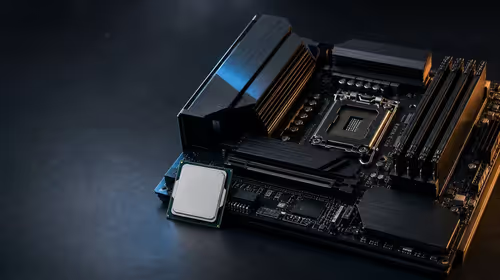
The Ryzen 9 9950X3D combines 16 cores with 3D V-Cache for top gaming and productivity, producing high and consistent frame rates that sharpen perceived motion. Ghosting, the smear behind moving objects, is a monitor behaviour set by pixel response and settings, not the CPU. On a Windows 11 build, smearing usually means the panel defaulted to 60Hz, which is fixed in Advanced display.
Set Up Windows 11 For Clean Motion
Open Settings, System, Display, Advanced display, and select the monitor's full rated refresh. Enable variable refresh under Settings, Display, Graphics and turn on G-Sync or FreeSync in the GPU control panel, matching the panel to the 9950X3D's frame output. Set overdrive to Normal or Medium in the monitor's own menu, and use a DisplayPort 1.4 cable so the panel runs at full refresh for trail-free motion.
FAQ
Can a Ryzen 9 9950X3D cause ghosting in Windows 11?
No. It drives high, stable frame rates that improve motion clarity. Ghosting is a monitor issue, usually from a refresh rate defaulting to 60Hz in Windows after a build.
How do I set up Windows 11 for smooth motion?
Set the monitor to its full rated refresh, enable variable refresh under Graphics settings, and turn on G-Sync or FreeSync. Tune overdrive to Normal in the monitor menu for clean transitions.
Does the monitor cable affect motion?
Yes. A DisplayPort 1.4 cable carries high refresh reliably so the panel runs at full speed. An undersized cable can cap refresh and reintroduce smearing.
Windows tip
The 9950X3D is not the cause. Set the monitor to its rated refresh in Windows 11, enable variable refresh and adaptive sync, and tune overdrive to Normal for clean motion.