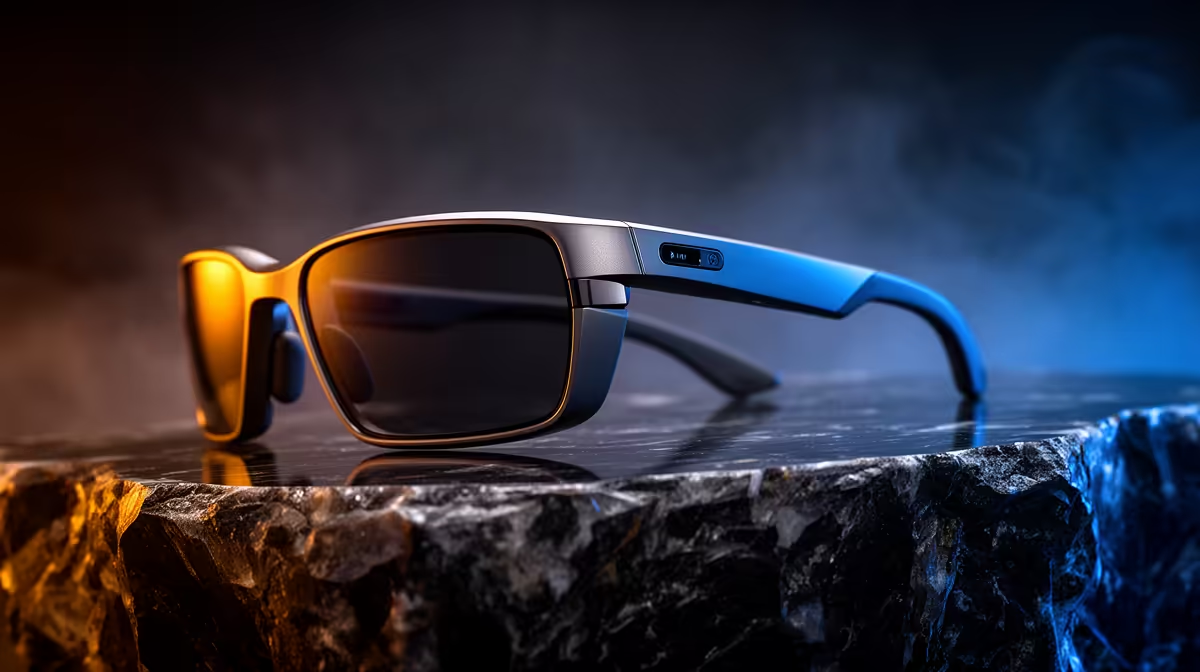
Taking a call without reaching for your phone, while still hearing the world around you, is the everyday trick smart glasses pull off better than earbuds. The Ray-Ban Meta routes calls and music through small open-ear speakers tucked into the temples, so your ear canals stay open and you stay aware of traffic, a colleague walking up, or a kettle about to boil. Set up once and the controls live on the frame itself.
Quick Answer
The Ray-Ban Meta connects to your phone over Bluetooth and plays calls and music through two open-ear speakers above your ears, leaving you fully aware of your surroundings. A five-microphone array blocks around 90 percent of background noise on calls, and a touchpad on the right temple plus voice commands handle playback, volume and answering, no pocket dive required.
Pairing and first-time setup
Getting started is a one-time job. Install the companion app on your phone, switch the glasses on, and pair them over Bluetooth the same way you would any wireless headset. Once connected, the glasses become your phone's audio output for calls and media when you want them to be, and they handle the handover between music and an incoming call automatically.
Spend a minute in the app setting your preferences, voice-assistant wake behaviour, default volume and which gestures do what, so the controls feel natural from day one. After that, the phone can stay in your pocket for most of what you do. If you are still choosing a pair, the AR glasses range at Evetech lays out the current models and styles.
How the open-ear audio actually works
The two custom open-ear speakers sit just above your ears and aim sound toward you rather than sealing your ear canal. That open design is the whole appeal: you get private-enough audio for music, podcasts and calls while still hearing everything around you. It is the opposite of noise-cancelling earbuds, and for walking, working at a desk or moving around the house it is genuinely safer and more sociable.
Volume is directional and tuned to be audible to you without broadcasting to a quiet room, though in a very silent space someone nearby may catch a faint hint of your audio. In normal environments it stays discreet. For listening to music and podcasts with your ears free, it is a comfortable everyday setup that earbuds cannot match for awareness.
Call quality and the microphone array
Calls lean on a five-microphone array built into the frame, which blocks roughly 90 percent of background noise so you come through clearly even on a busy street or in a breezy spot. That noise handling is what makes the glasses viable as a daily call device rather than a novelty, since the person on the other end hears you, not the world around you.
The trade-off to know is environment. Strong wind across the mics, the open speakers in a loud setting, can blunt clarity, so in extreme noise a sealed headset still wins. For typical home, office and street use, the call quality holds up well.
Controlling playback without your phone
The right temple carries a touchpad that handles the common actions with a tap or swipe: play and pause, skip, adjust volume and answer or end a call. It is responsive enough that you stop thinking about it after a day or two, and it keeps your phone in your pocket through a whole playlist or a string of calls.
Voice commands cover the rest. You can summon the assistant to start music, place a call or check something hands-free, which is the natural choice when your hands are busy. Between the touchpad and voice, you rarely touch the phone at all once a session is running. The chargers and cases that keep a pair ready sit in the accessories best sellers at Evetech.
Battery and getting through the day
Plan around realistic endurance rather than assuming all-day playback. A full charge delivers up to around eight hours of moderate mixed use, or roughly five hours of continuous audio streaming, so heavy music listening drains faster than occasional calls. The charging case tops the glasses back up between sessions, which is the practical way to stretch them across a full day. Keep the case with you and a quick top-up during a break keeps you running.
Frequently Asked Questions
Can people around me hear my music?
In normal environments, no, the directional speakers keep audio aimed at you. In a very quiet room someone close by might catch a faint trace, but the design is built to stay discreet at sensible volumes.
How good is call quality on smart glasses?
Good for everyday use. A five-microphone array blocks around 90 percent of background noise, so you come through clearly on a busy street or in an office. Strong wind can reduce clarity, where a sealed headset still has the edge.
Do I need earbuds as well?
No. The open-ear speakers replace earbuds for calls, music and podcasts while leaving your ears open to your surroundings. That awareness is the main reason to choose them over sealed earbuds for daily use.
How do I control music without touching my phone?
Use the touchpad on the right temple to play, pause, skip and adjust volume, or use voice commands for hands-free control. Once paired, the phone can stay in your pocket through a full session.
How long does the battery last?
Up to around eight hours of moderate mixed use, or roughly five hours of continuous audio streaming on a full charge. The charging case tops the glasses up between sessions to carry you through a full day.
Want calls and music with your ears free? Compare the styles and specs in the AR glasses range at Evetech and pick a pair that keeps your phone in your pocket.