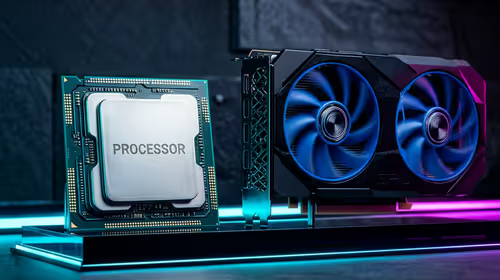
So, you've got the beast... the Intel i9-14900KF. This CPU is a monster for gaming and creating, but it runs hotter than a Highveld summer's day. Choosing the right i9-14900KF case and cooling isn't just an afterthought; it's the most critical decision you'll make to unlock its true power without thermal throttling. Let's dive in and make sure your new rig stays frosty, fast, and ready for anything you throw at it. 🚀
Why Your i9-14900KF Cooling Strategy is Crucial
The Intel Core i9-14900KF is an absolute powerhouse, boosting to incredible speeds to deliver top-tier frame rates and rendering performance. The trade-off? It generates a serious amount of heat under load. When a CPU gets too hot, it automatically reduces its speed to protect itself—a process called thermal throttling. Suddenly, your expensive, high-end processor is performing like a much cheaper chip.
A proper thermal solution ensures your CPU can maintain its boost clocks for longer, giving you the sustained performance you paid for. This is a common challenge across all modern high-performance CPU processors available online, but the 14900KF sits at the very peak of this thermal mountain.
Choosing Your Cooler: AIO vs. High-End Air
When it comes to the best cooling for the i9-14900KF, you have two main paths: All-In-One (AIO) liquid coolers or massive high-end air coolers.
All-In-One (AIO) Liquid Coolers
For the 14900KF, an AIO is strongly recommended. These sealed liquid cooling loops use a pump, radiator, and fans to move heat away from the CPU far more efficiently than air alone.
- Performance: A 360mm or 420mm AIO offers the best thermal capacity to handle the 14900KF's heat spikes during intense gaming or workload sessions.
- Aesthetics: AIOs offer a cleaner look inside your case and often come with customisable RGB lighting.
- Compatibility: They eliminate issues with tall RAM modules that large air coolers can sometimes block.
High-End Air Coolers
Don't count out premium air coolers completely. Behemoths like the Noctua NH-D15 are legendary for their reliability and quiet operation. However, they are massive and may not be enough to prevent throttling during sustained, all-core workloads on a 14900KF. For the broader family of Intel CPUs, an air cooler is often perfect, but this specific i9 demands something more.
Airflow Pro Tip 🔧
For your case fans, aim for 'positive pressure'. This means you have more intake fans pulling cool air into the case than exhaust fans pushing hot air out. For example, three 120mm fans in the front (intake) and one 120mm fan at the back (exhaust) creates positive pressure, which helps reduce dust buildup and ensures a steady supply of fresh air for your components.
The Best PC Cases for the i9-14900KF: Airflow is King
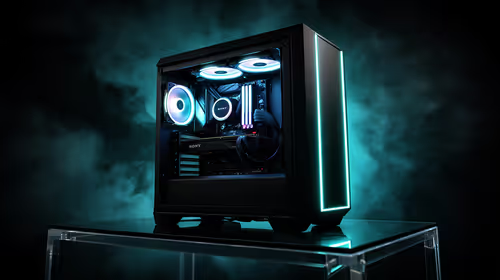
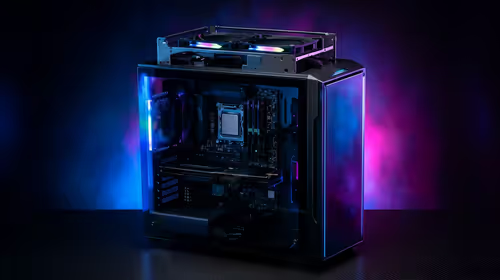
Your PC case is more than just a box; it's an essential part of your cooling ecosystem. The best i9-14900KF case will prioritise airflow above all else. A sealed-off glass box might look cool, but it will suffocate your components.
Look for these key features:
- Mesh Front Panel: This is non-negotiable. A mesh front allows your intake fans to breathe freely, pulling in the maximum amount of cool air.
- Radiator Support: Ensure the case can comfortably fit at least a 360mm radiator, either at the top or in the front. Top-mounting is often preferred as it exhausts hot air directly out of the case.
- Ample Space: You need room for a large graphics card and good cable management. Cluttered cables can obstruct airflow and create hot spots.
These principles of good airflow are universal. Whether you're building a top-tier 14900KF rig or a powerful system around a reliable Intel Core i7, a high-airflow case is always a smart investment. ✨
Putting It All Together: A Balanced Setup
So, what does an ideal i9-14900KF case and cooling setup look like?
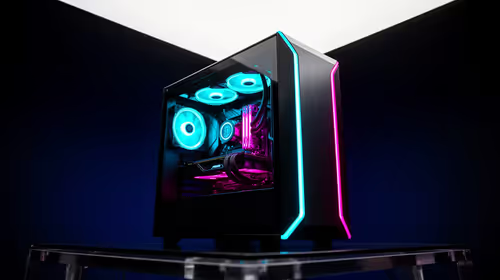
Imagine a high-airflow mid-tower case with a full mesh front. Inside, a 360mm AIO liquid cooler is mounted to the top panel, with its fans set to exhaust hot air upwards. Three 120mm fans are mounted at the front as intakes, pulling cool air across your motherboard and GPU. A final 120mm fan at the rear acts as an additional exhaust.
This configuration creates a clear and efficient airflow path, ensuring every component gets the cooling it needs. It's amazing to see how Intel's thermal engineering scales across different platforms, from desktop monsters like this to the efficient designs needed for the powerful new Intel Core Ultra 9 in premium laptops.
Ultimately, taming the i9-14900KF is about creating a balanced system where every part supports the other. Get the case and cooling right, and you'll have a rig that performs at its peak for years to come.
Ready to Build Your Ultimate Rig?
Taming the i9-14900KF is a challenge, but with the right gear, it's a rewarding one. Don't let thermal throttling steal your performance. Explore our huge range of PC cases and coolers and find the perfect setup to keep your system cool and dominant.