Laptop microphones built around Intel's audio block fail in a particular way, and an intel smart sound technology for digital microphone not working error almost always traces back to a driver that does not match your hardware. Windows may show no microphone at all, or list one that records silence. The cure is a clean driver install in the right order.
Quick Answer
Open Device Manager, look for Intel Smart Sound Technology entries under System devices and Sound, video and game controllers, and note any warning icon. Reinstall the audio and SST drivers from your laptop maker's support page, not from a generic Windows Update pick. Then check Settings, Privacy and security, Microphone. A USB microphone from about R199 keeps you working meanwhile.
🧠 What Intel Smart Sound Technology Actually Does
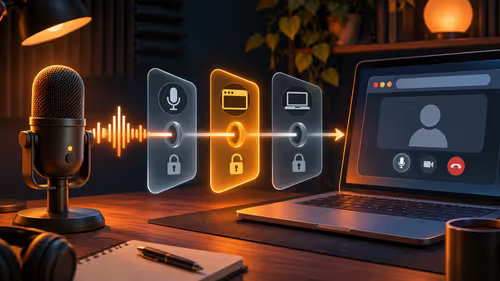
Intel Smart Sound Technology, often shortened to SST, is a small audio processor inside the chipset. On many laptops it handles the digital microphone array, the pair of tiny mics beside the webcam, and passes clean audio to Windows. Because the mics talk to Windows through that block, Windows needs two things to line up: the SST controller driver and the audio codec driver.
When one is missing or mismatched, you see familiar symptoms: the Input list in Sound settings is empty, the microphone array shows but never moves the level bar, or the device vanishes after a Windows update. None of these means the mics are broken. It means the plumbing between them and Windows is out of step.
The entries to look for in Device Manager are Intel Smart Sound Technology audio controller under System devices, and Microphone Array under Audio inputs and outputs. An unknown device or a yellow triangle on the controller is the clearest sign.
🔧 Reinstalling in the Right Order
Order matters, because installing the codec before the controller can leave the array hidden.
- Note your laptop's exact model name and number from the underside label.
- On the maker's support page, download the Intel SST or chipset audio driver and the audio codec driver for that model.
- In Device Manager, uninstall the Intel Smart Sound Technology entries and the audio codec, ticking the option to delete driver software where it appears.
- Restart, then install the SST driver first, restart again, then the codec driver.
- Check Sound settings for the microphone array.
Choose the laptop maker's version over a generic Intel download wherever you can. Makers test a combination of drivers on each model, and a newer Intel package is not always compatible with their firmware. Use the Intel version only when the maker's list has nothing for your model.
🔒 Privacy, Defaults and Disabled Devices
Once the array appears, three Windows settings can still hide it from apps.
- Privacy: Settings, Privacy and security, Microphone must allow access, and your app must be switched on in the list below.
- Default device: in Sound settings, pick the array as your input rather than a Bluetooth headset or virtual microphone.
- Disabled state: in More sound settings, open the Recording tab and use the right-click menu on empty space to reveal hidden entries. Enable the array if it is greyed out.
Speak while watching the level bar. If it moves, the hardware path works and any remaining silence sits inside the call app.
🎙️ Skipping the Array Altogether
Troubleshooting drivers can eat an evening, and an exam or client meeting will not wait. A USB microphone or headset sidesteps the Smart Sound array entirely and works with drivers already built into Windows. In the R199 to R900 range you get a clip-on or desktop model that sounds clearer than a laptop array, which suits calls over South African fibre or an LTE hotspot where voice quality already competes with a weak signal.
If you are testing video as well, a webcam with its own mic gives you a second, independent audio path to compare against.
Frequently Asked Questions
What is Intel Smart Sound Technology?
It is an audio processing block in Intel chipsets that handles the digital microphone array on many laptops. Windows needs the correct SST driver for the microphone to appear.
Why does the mic vanish after a Windows update?
An update can swap the SST driver for a generic one that does not suit your hardware. Reinstalling the maker's version from their support page usually restores it.
Where do I look in Device Manager?
Expand System devices and Sound, video and game controllers. Look for Intel Smart Sound Technology entries with a warning icon, or an unknown device.
Should I get the driver from Intel or my laptop maker?
Start with the laptop maker, since they test driver combinations on your model. Use Intel's own package only if the maker lists nothing suitable.
Is it also a privacy setting problem?
It can be. Check Settings, Privacy and security, Microphone and the default input, because either can hide a working array from your apps.
Would an external microphone avoid this?
Yes. A USB microphone skips the Smart Sound array, so calls carry on while you sort out the driver, and it often sounds better as well.
Ready to bypass a stubborn laptop mic?
Browse the Evetech microphone and headset range for a USB option that works straight out of the box. It keeps your calls and recordings moving while you sort out the driver.