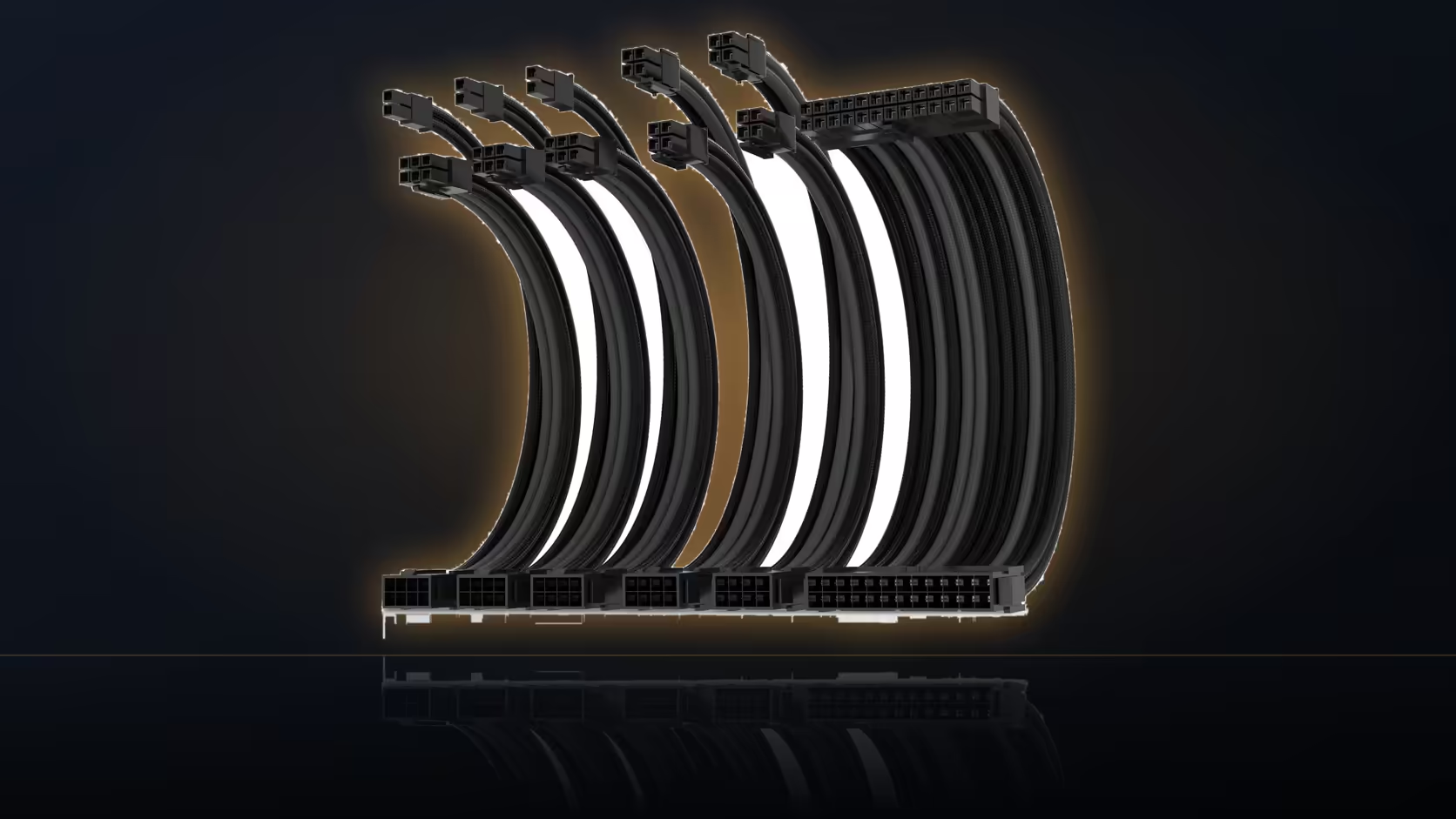
Three power leads converging on the same edge of a graphics card is where a lot of otherwise careful cable jobs fall apart. Plan the route for each of the three runs as its own separate problem before a single connector goes anywhere near a socket, and the crowding that usually happens never gets the chance to start.
Quick Answer
Plan each of the three card runs as its own path before fitting any of them. Three cables converging on one card edge is where crowding starts. All three leads are 6+2 and interchangeable, so fix the order first, then route.
🔀 Does socket assignment matter electrically
Which of the three identical extensions goes to which specific socket makes no electrical difference whatsoever, since all three pieces are physically and functionally interchangeable 6+2 leads. It matters entirely on the visual side: choosing a deliberate order before fitting anything is what stops the three runs from crossing over each other partway along their length, which is the single biggest contributor to a messy-looking triple-lead run.
📐 A routing order that reads well
Keeping the three leads parallel in the order they emerge from the tray cutout tends to produce the cleanest result - the nearest cable naturally serves the nearest socket, and none of the three ever needs to swap sides partway through the route. This is a simple rule but an easy one to skip under time pressure, and skipping it is exactly what produces the crossed, tangled look that undermines an otherwise well-sleeved set of extensions.
📏 Giving each run enough physical space
Three separate leads need genuine visible separation along their exposed length to actually read as three distinct, deliberately dressed cables - bunched tightly together, they collapse visually into what looks like one unusually thick cable, and the entire point of dressing them individually is lost. Aligning the combs at matching points across all three runs reinforces this effect further, and is one of the few small details that reliably makes a three-cable run look genuinely planned rather than merely tidy.
⚠️ Protecting access to the card itself
Three converging leads create a real risk of blocking the card's retention clip and any support bracket fitted beneath it, so plan an access path around both before combs lock any of the three runs permanently into position. Where one socket sits noticeably further back than the other two - common on some card designs - route that particular lead independently rather than forcing all three into a single crowded bundle; a slightly longer, separately routed path reads as more deliberate than a visibly crowded one ever will. Each extension only adds 30cm on top of the existing factory lead too, not a full replacement length, so measure from your intended junction point to the furthest of the three sockets before finalising the route - a triple-socket card with an unusually wide power connector layout can genuinely stretch that 30cm further than expected. cable solutions has the rest of the lineup, while individually sleeved premium cables prices a fully custom-length set for cards whose sockets sit further apart than usual.
🧰 Doing a slow dry run first
Before committing any comb or final curve, lay all three extensions loosely into position with the panel off and simply look at how they naturally want to sit relative to each other. That slow, unhurried look almost always reveals the better order before a single cable is permanently shaped into place, and it costs nothing but a few extra minutes with the panel already off.
Frequently Asked Questions
Does it matter which lead goes to which socket?
Not electrically, since all three pieces are identical. It matters visually, because a chosen order stops the runs crossing each other.
What order usually looks best?
Keeping them parallel in the order they leave the tray cutout, so the nearest cable serves the nearest socket and nothing has to swap sides.
How much space do three runs need?
Enough to stay separate along the visible stretch. Bunched together they read as one thick cable and lose the effect entirely.
Should the combs line up across all three?
Aligning them at the same points reads as deliberate, and it is one of the few details that makes a three-cable run look planned.
Is there a risk of blocking the card?
Yes, particularly the retention clip and any support bracket. Plan those access paths before the combs fix the runs in place.
What if one socket sits much further back?
Route that lead separately rather than forcing all three into one bundle. A slightly longer independent path looks better than a crowded one.
Does the 30cm length reach every socket?
It adds 30cm to the existing lead, so measure from the intended junction to the furthest socket before settling the route.
Routing three power leads onto one graphics card?
Browse Evetech's power supply range and plan each run's path before any connector gets seated.