When my Blue Yeti is not being detected, the cause is rarely the microphone itself. Windows blocks it through a privacy switch, shows it as disabled in Sound settings, or the port or hub cannot power it. A Blue Yeti is class compliant, so Windows should recognise it with no driver install at all.
Quick Answer
Plug the mic into a rear USB port with its own cable, then confirm microphone access is switched on in the Windows privacy settings. Next open Settings, System, Sound, find the mic under Input and set it as the default. If the mic never appears, test another cable and another PC. A replacement USB microphone sits roughly between R600 and R3,000.
🔌 Power, Cables and Ports First
Start with the connection. A USB condenser microphone draws more power than a mouse and is fussy about where it plugs in.
- Use the cable that came in the box. Some phone-charging cables carry power but no data, and the mic stays dead.
- Plug into a rear motherboard port on a desktop. Front-panel ports run on thin cabling, and unpowered hubs under a shared desk often cannot supply enough current.
- On a laptop, try each USB port in turn, and keep the charger plugged in.
- Look for the light on the mic. If there is no light at all, the device is not getting power.
Try a different cable and port before changing any setting. It takes one minute and fixes a large share of cases.
🔒 Windows Privacy and Sound Settings
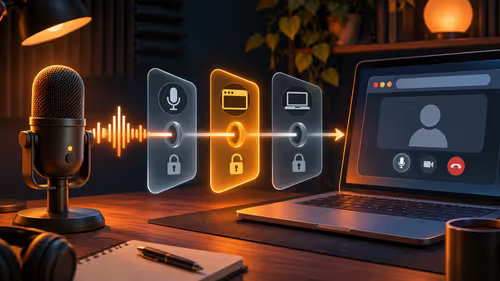
Windows can hide a working microphone from every app. Head to the Privacy and security page in Settings and select Microphone. Switch on the main access toggle and the one for your app. Desktop apps have a separate switch lower down.
Now open Settings, System, Sound. Under Input, your mic should appear by name, such as "Yeti Stereo Microphone". If it is listed under disabled devices, open More sound settings, Recording tab, right-click empty space, tick Show Disabled Devices, then right-click the mic, choose Enable and Set as Default Device.
The mic shows but records silence
Speak and watch the input level bar. If it stays flat, check the physical mute button and the gain dial on the Yeti, and make sure the input volume slider in Windows is not at zero. In apps like Teams or Discord, pick the Yeti as the input device by name, since they do not always follow the Windows default.
🧯 Drivers, Hubs and Hardware Faults
In Device Manager, look in the audio input list and in the sound and game controller group. A missing entry or a yellow warning icon points to a driver or port fault. Right-click, uninstall the device, unplug the mic, restart and plug it back in so Windows rebuilds the driver.
A busy desk is the common South African set-up problem: a keyboard, headset dongle, webcam and mic all fighting over one powered hub. Move the microphone to its own direct port. If it works there, the hub was the fault. For a long-term fix, a dedicated microphone on a boom arm, plugged straight into the PC, avoids most of this. And the wider streaming essentials range has stands, filters and cables worth adding.
If another PC also fails to see the mic with a known-good cable, the microphone has a fault and should be replaced.
Last, test inside the Windows Sound panel before opening any call: tap the mic gently and watch the bar move. That one check separates a Windows fault from an app fault in seconds.
Frequently Asked Questions
Why can Windows not see my USB microphone?
Check the cable, the port and the Windows Microphone privacy switch first. A data-less cable or an underpowered hub is the most common reason.
How do I make the mic my default device?
Open Settings, System, Sound, pick the mic under Input and set it as default. In the old Sound panel, right-click it on the Recording tab and choose Set as Default Device.
Do I need drivers for a Blue Yeti?
No. It is class compliant, so Windows uses its own audio driver. Reinstalling the device in Device Manager is enough if it misbehaves.
Why does the mic show but record silence?
Look at the mute button, the gain knob and the Windows input volume. Also confirm that the app is set to use this mic and not another input.
Should I plug a mic into a front-panel USB port?
Try the rear ports first. Front ports are often weaker and can cause dropouts or no detection on a power-hungry condenser mic.
Could my USB hub be the problem on a shared desk?
Yes. A hub with no external power cannot always run a microphone beside a webcam and headset. Plug the mic into the PC directly to test.
Ready for a microphone that just works?
Browse the Evetech microphone range for USB models with simple plug-and-play setup, then add a stand or filter from the streaming gear.