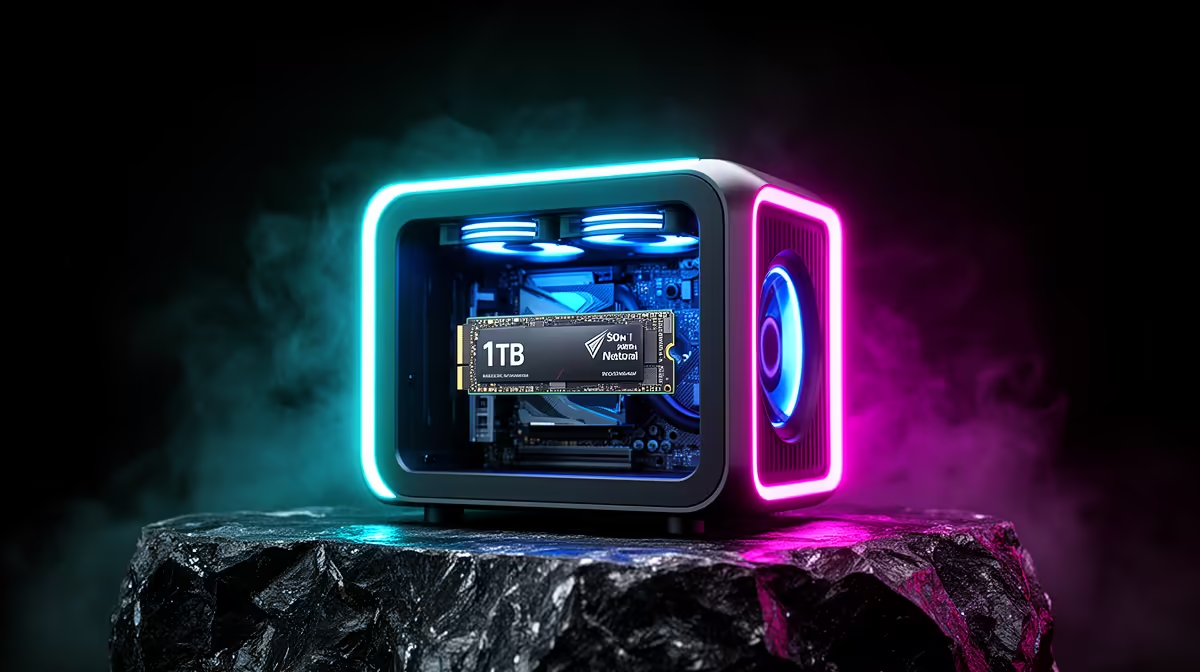
A terabyte sounds like plenty until Windows updates, a few AAA installs and a folder of project files start eating into it quietly. Owners of a gaming mini pc like the GR70 tend to notice load times creeping up long before the drive is actually full, and that slowdown almost always traces back to how much free space remains and whether the storage controller is still running at full pace.
Quick Answer
Keep roughly 150GB, about 15 percent, of the GR70's terabyte of NVMe storage free, and make sure storage drivers stay current to hold onto peak read speeds. The machine itself retails at R66,399 with that drive already included, so there is no need to buy extra capacity just to keep performance where it should sit.
💾 Why Spare Capacity Affects Speed
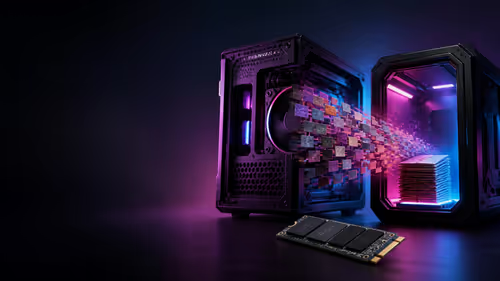
NVMe drives lean on spare blocks to write new data efficiently. Once a drive climbs past roughly 85 percent used, the controller has fewer clean blocks available and write speed drops, which shows up as longer installs and slower level loads. On a terabyte drive, treat anything past 850GB used as a warning line rather than a hard ceiling.
Checking Usage Without Guessing
Windows 11's Storage settings, under System, break usage down by category in seconds, showing whether games, the operating system itself, or a folder of project files is the actual culprit before you delete anything.
🔧 Keeping Storage Drivers Current
This drive shares the chassis with a 16-core processor, the Ryzen 9 9955HX, and an RTX 5070 carrying 8GB of its own memory, and the chipset drivers managing that storage controller get periodic updates from both ASUS and Windows Update. An outdated driver can quietly cap sequential read speeds well below what the hardware is rated for, so checking Device Manager for pending updates every couple of months is worth the two minutes it takes.
TRIM Runs on Its Own
Windows handles TRIM automatically on NVMe drives, clearing deleted data blocks so the controller can reuse them. It runs in the background rather than needing to be triggered manually, so there is no routine maintenance task to remember here beyond watching overall usage.
🎮 Organising Games and Project Files Separately
Backed by 32GB of DDR5, this machine handles large open-world titles comfortably, but a single modern install can still run past 100GB on its own. Keeping the titles you actually play on the main drive and archiving finished ones elsewhere keeps that free-space buffer intact without constant manual cleanup. If storage becomes the limiting factor for a specific build, this Ryzen 9 and RTX 5070 configuration is worth comparing against other capacities before deciding what to trim.
Keeping Creative Work Away From Game Libraries
For anyone using this machine for both gaming and editing, storing large project exports in their own folder tree rather than mixed in with a game launcher's library makes it far easier to see at a glance what is safe to archive.
Transfer Speeds That Matter Beyond Boot Times
An NVMe drive earns its keep on more than how fast the desktop appears. Moving a large video project or a batch of rendered assets off this drive happens far quicker than it would on an older SATA-based system, which matters if this machine doubles as a light workstation between gaming sessions. That advantage fades once the drive sits close to capacity, since the controller works harder to find space for new writes. Wi-Fi 7 and the onboard 2.5G LAN both move data quickly across a home network, but transfers within the machine itself over NVMe remain the fastest path for shifting large files, so an uncluttered drive pays off twice, once in load times and again in everyday file handling.
📊 When More Storage Actually Makes Sense
If a terabyte genuinely cannot hold your library even with good housekeeping, an external drive is the simpler fix rather than constantly juggling installs. Before adding anything extra, it is worth checking Evetech's range of mini PCs to see whether a different configuration already matches your storage needs, and browsing current graphics card pricing if a GPU swap is part of the same upgrade conversation.
Frequently Asked Questions
How much free space should this drive keep?
Aim for roughly 15 percent free, which works out to about 150GB on a terabyte drive, so the controller always has clean blocks to write into.
Does a fuller drive actually slow games down?
Yes, once usage passes about 85 percent, write speed drops and that shows up as longer installs and occasional stutter during level loads.
How do I update storage drivers on this machine?
Check Device Manager for chipset and storage controller updates, and keep Windows Update current, since both can ship improvements.
Do I need separate software to defragment an NVMe drive?
No, NVMe drives should never be traditionally defragmented. Windows handles TRIM automatically in the background instead.
Is a terabyte enough for a modern gaming library?
It comfortably fits a rotating selection of several large titles, though very active players with dozens of installs may eventually want external storage.
Ready to make the most of a 1TB NVMe drive?
Pick up the ASUS GR70 Mini PC found in Evetech's small-form PC lineup, tagged at R66,399, made to get 1TB of fast NVMe storage built in from day one.