That feeling... the last screw is in, the cables are managed (mostly), and you're ready to boot up your brand-new rig. You press the power button... and nothing. Just silence and a sinking heart. For South African gamers, this moment is a rite of passage, but don't panic! Effective PC build troubleshooting is a skill every builder learns. This guide will walk you through the most common issues, turning frustration into the sweet victory of a successful first boot. 🚀
First Steps: What to Check When Your New PC Won't Start
Before you start pulling components out, let's cover the basics. More often than not, the solution is simpler than you think. This initial phase of PC build troubleshooting is about double-checking the simple things that are easy to miss during the excitement of the build.
The "Is It Plugged In?" Checklist
It sounds obvious, but you'd be surprised! Run through this list first:
- Power Cable: Is the main power cable firmly seated in both the power supply unit (PSU) and the wall socket?
- PSU Switch: Is the little rocker switch on the back of your PSU flipped to the "I" (On) position?
- Front Panel Connectors: Are the tiny power switch, reset switch, and LED connectors plugged into the correct pins on your motherboard? Consult your motherboard manual—this trips up even experienced builders.
- Wall Socket: Try a different wall socket that you know works, just to be sure.
If you've checked all of the above and still have no signs of life, it's time to dig a little deeper. Sometimes, the best way to avoid these headaches is to start with a solid foundation; if you'd rather skip the stress, our range of expertly assembled pre-built PC deals offers peace of mind right out of the box.
Diagnosing Common PC Build Problems 🔧
If your PC powers on—fans spin, lights come on—but you see nothing on your monitor, you're facing the most common hurdle: a failure to POST (Power-On Self-Test). This is where your PC troubleshooting guide becomes essential.
No Display, but Fans Are Spinning
This usually points to a core component issue. Work through these steps methodically:
- Reseat Your RAM: Power down completely. Unclip and remove your RAM sticks. Re-insert one stick firmly until both clips click into place. Try to boot. If it works, power down and add the second stick. Faulty or poorly seated RAM is a primary culprit.
- Check Your GPU: Ensure your graphics card is fully seated in the PCIe slot and that its power connectors (if it has them) are securely plugged in. Also, make sure your monitor is plugged into the graphics card, not the motherboard's video output.
- Clear the CMOS: This resets your motherboard's BIOS/UEFI settings to factory defaults, which can resolve configuration conflicts. Check your manual for instructions on how to do this using either a jumper or by temporarily removing the coin-cell battery.
These issues can be particularly frustrating in high-performance rigs like our gaming PCs over R20k, where every component is pushed to its limits.
Listen to Your Motherboard 💡
Many motherboards have small diagnostic LEDs (usually for CPU, DRAM, VGA, BOOT) or a small speaker that emits "beep codes." A continuous light or a specific sequence of beeps is your motherboard telling you exactly which component is causing the failure to POST. Check your manual to decipher these codes—it's the fastest way to pinpoint the problem!
Random Crashes or Blue Screens in Windows
If your PC boots but is unstable, the investigation changes. This could be a software (driver) or hardware (heat/power) issue.
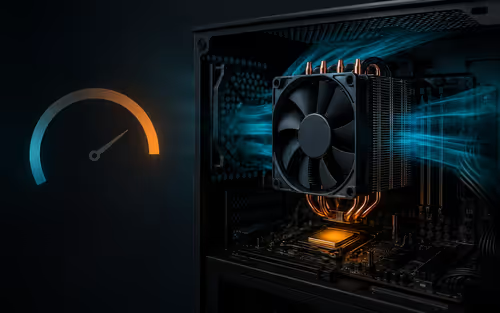
- Overheating: Are your CPU and GPU temperatures stable under load? Use software like HWMonitor to check. Poorly applied thermal paste or inadequate case airflow could be the cause.
- XMP Profile: If you enabled an aggressive XMP (Extreme Memory Profile) for your RAM in the BIOS, it might be unstable. Try disabling it to see if the crashes stop.
- Drivers: Ensure you have the latest drivers for your chipset and graphics card, downloaded directly from the manufacturer's website.
Even our carefully selected gaming PCs under R20k benefit from professional assembly and driver installation to ensure maximum stability from day one.
When It's Time to Call It ✨
There's no shame in knowing your limits. If you've spent hours on PC build troubleshooting and are getting nowhere, it might be a faulty component that needs professional diagnosis. This is where the warranty and support that come with a pre-built PC are invaluable. Instead of testing individual parts, you have a single point of contact for a solution.
This is where exploring the best gaming PC deals in South Africa becomes a smart move. You get a balanced, tested system without the potential for DOA (Dead on Arrival) parts or compatibility nightmares. Even if you're working with affordable budget gaming PCs, having a warranty and a support line to call is a massive advantage.
Tired of Troubleshooting? We've Got Your Back.
PC build troubleshooting is a rewarding skill, but sometimes you just want to game. If you're ready to skip the hassle and jump straight into the action, Evetech has your six. Explore our massive range of gaming PCs and find a rig that's tested, optimised, and ready to dominate.