Staring at another loading screen while your mates are already dropping into the action? That frustrating pause is often the fault of an old, slow hard drive. For a truly elite gaming rig in South Africa, the conversation isn't just about graphics cards or CPUs anymore. A high-speed PCIe SSD for gaming is no longer a luxury… it's the essential component that unlocks instant response times and seamless worlds. Ready to leave lag behind? 🚀
What Makes a PCIe SSD Essential for Gaming?
Let's cut through the jargon. Think of a traditional hard drive (HDD) as a massive library where a mechanical arm has to physically find the book you want. A SATA SSD is like having a digital catalogue, making it much faster. But a PCIe SSD? It's like having the book's data beamed directly into your brain.
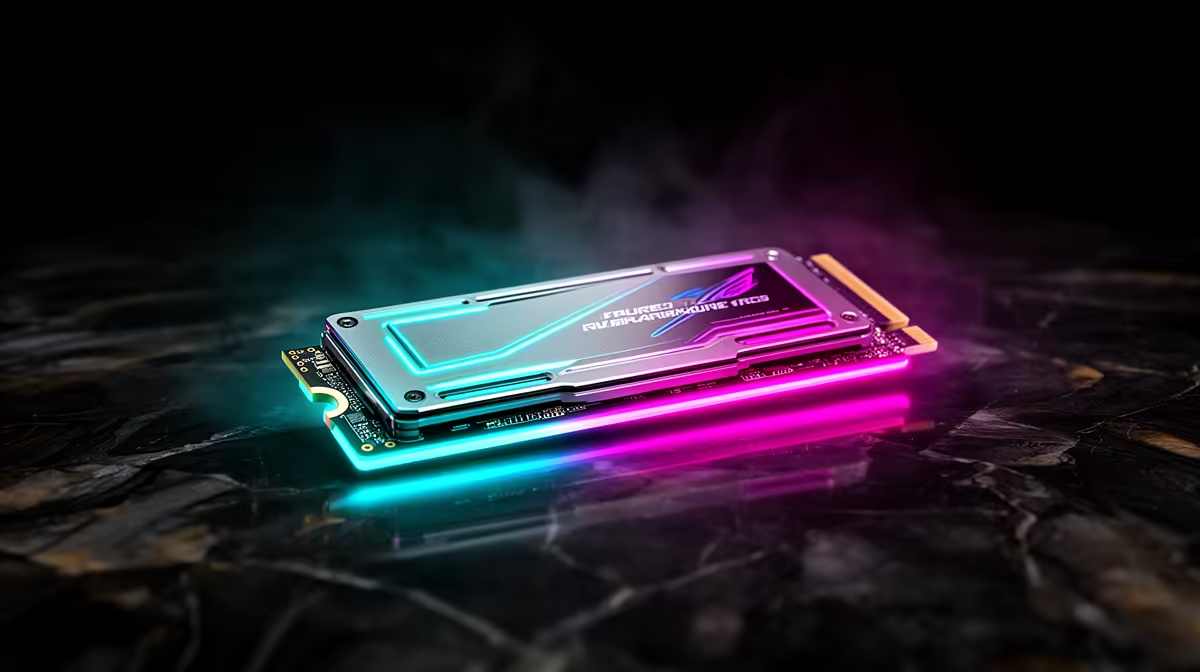
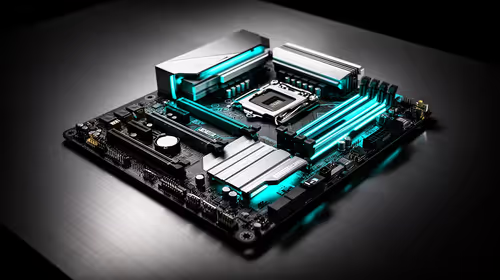
Instead of using older, slower SATA cables, a PCIe SSD for gaming plugs directly into your motherboard's high-speed PCIe slot—the same kind your graphics card uses. This direct lane to the CPU slashes latency and unlocks mind-blowing transfer speeds. This technology, often called NVMe (Non-Volatile Memory Express), is the current gold standard for storage, making everything from booting up Windows to loading massive game levels feel instantaneous. The difference in responsiveness across your entire system is something you have to feel to believe, and it's the foundation of all modern NVMe SSDs.
Beyond Loading Screens: The Real-World Impact
Sure, shorter loading screens are the most obvious benefit. But the true advantage of a PCIe SSD for gaming runs much deeper, fundamentally changing how you experience your favourite titles.
Imagine soaring through the neon-drenched streets of Night City in Cyberpunk 2077 or exploring the vast planets of Starfield. On an older drive, you might notice textures popping in late or experience jarring stutters as the game struggles to load assets from storage. A powerful PCIe SSD eliminates this. It feeds your graphics card a constant, ultra-fast stream of data, ensuring the world around you is always sharp, detailed, and immersive. This is especially crucial for open-world games and titles that leverage Microsoft's DirectStorage API, a technology designed specifically to take advantage of these incredible speeds. It's not just an upgrade; it's a transformation of your gameplay experience, and you can find some incredible SSD deals to make it happen.
Choosing the Right PCIe SSD for Your Gaming Rig: Gen 4 vs. Gen 5
When you start shopping, you'll see terms like "Gen 4" and "Gen 5." These refer to the generation of the PCIe standard, with each new version roughly doubling the potential speed. So, which is the right PCIe SSD for your gaming setup?
The Sweet Spot: PCIe Gen 4
For the vast majority of South African gamers right now, a Gen 4 drive is the perfect balance of price and incredible performance. With speeds that can exceed 7,000MB/s, these drives are more than fast enough to handle any current game with ease, eliminating bottlenecks and providing that snappy, responsive feel. They represent a massive leap over older drives and are the go-to choice for most new builds and upgrades. Evetech has a huge selection of top-tier Gen 4 NVMe SSDs that will revolutionise your rig.
The Elite Tier: PCIe Gen 5
Building a no-compromise, future-proof machine? Then you're looking at Gen 5. These are the fastest consumer drives on the planet, pushing speeds past the 12,000MB/s mark. ✨ While games are still catching up to fully utilise this power, a Gen 5 drive ensures your rig is ready for the next wave of demanding titles and technologies. If you're pairing it with the latest high-end CPUs and motherboards, investing in one of these bleeding-edge Gen 5 NVMe SSDs makes perfect sense for ultimate performance.
Check Your Motherboard! 🔧
Before buying a new PCIe SSD, always check your motherboard's specifications on the manufacturer's website. It will list which M.2 slots support which PCIe generation (e.g., Gen 3, 4, or 5). While a Gen 4 SSD will work in a Gen 3 slot, it will be limited to Gen 3 speeds. Matching the drive to the slot ensures you get the performance you paid for!
Is a PCIe SSD Worth the Upgrade?
Absolutely. Without a doubt. If your PC is still running on a mechanical hard drive, or even an older SATA SSD, upgrading your storage is one of the single most noticeable improvements you can make. It impacts not just your games, but your PC's entire boot process, application loading, and file transfers.
A quality PCIe SSD for gaming isn't just a component; it's a core part of the modern PC experience. It removes the last major bottleneck in your system, allowing your powerful CPU and GPU to work their magic without waiting for data. For a fluid, uninterrupted, and truly elite gaming experience, it's not just recommended… it's essential.
Ready to Annihilate Loading Screens?
An outdated drive is the biggest bottleneck in a modern PC. Upgrading to a PCIe SSD is one of the most impactful changes you can make. Explore our massive range of SSD deals and find the perfect drive to unleash your rig's true potential.