Quick Answer
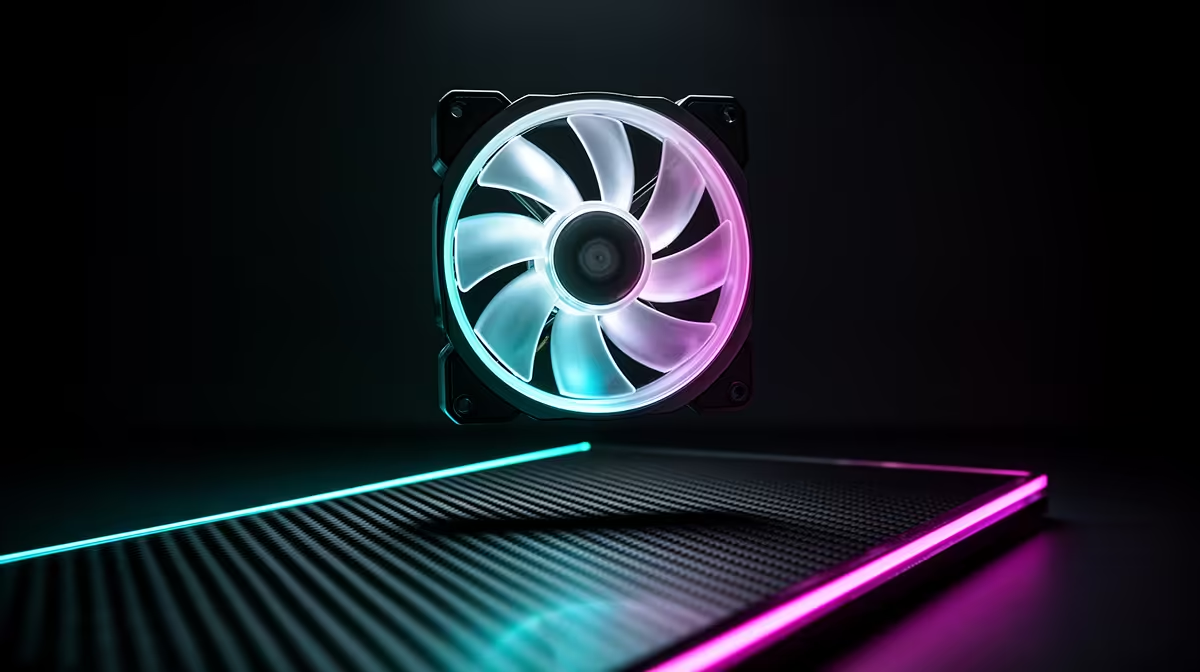
Choose non-RGB fans for pure airflow value and ARGB fans when the lighting is part of the build brief. cooling performance comes from blade design, static pressure, placement, and fan curve before colour. A good 120mm fan moving around 50-70 CFM at sensible noise is more useful than a bright fan with weak pressure.
Airflow numbers to compare
For case intake, look for decent CFM, low noise, and a smooth PWM range. For radiators, static pressure matters more because air must move through fins. Arctic P12-style value fans, Lian Li ARGB-style display fans, and Noctua premium airflow fans all solve different jobs, so compare dBA, CFM, warranty, and price rather than only lighting.
Cost in a gaming build
Non-RGB 120mm fans can sit around R150-R400 each, while ARGB packs and controller kits can push R600-R1,800+. If the choice takes money away from the GPU, CPU cooler, or case, pick airflow first. Stable 144Hz or 240Hz esports is helped by lower heat and noise, not by lighting.
Best setup pattern
Use two or three front intakes, one rear exhaust, and top exhaust only when it does not steal fresh air from the CPU cooler. Match fan direction before closing the case. ARGB is perfectly fine when the fan also has strong specs and the controller cabling is tidy.
FAQ
Are ARGB fans worse for airflow?
Not automatically. Some ARGB fans perform well, but cheaper light-first models can have weaker pressure or louder motors.
How many fans does a gaming PC need?
Most towers work well with three to five case fans. More fans help only when placement and curves are sensible.
What should SA buyers spend?
Start with R500-R1,500 for a practical fan upgrade. Spend more only if noise, radiator pressure, or lighting control matters.
Pro Tip
Set the airflow direction on the table before installation; reversed ARGB fans are a common reason a nice build runs hot.
For Should I use ARGB or non-RGB fans for airflow?, keep the checkout test practical: exact model name, warranty term, connector list, and physical fit must all be clear. A useful SA shortlist should show at least one concrete spec such as 32GB RAM, 1TB NVMe storage, 850W power, 144Hz refresh, or 7,000MB/s SSD speed. It should also show a cautious ZAR band like R8,000-R15,000 or R20,000-R35,000 so the buyer can compare value without relying on old live prices.