again. Your ranked match? Gone. Your stream? Dead. For South African gamers, this is a painful reality. But what if you could disconnect from the grid's chaos entirely? A solar gaming setup isn't just a dream anymore; it's your ticket to total power independence. This guide will show you how to build a rig that runs on pure sunshine, ensuring you never drop a frame... or a match... again. 🇿🇦
Everyday Reliability
Let's be honest, a UPS only buys you time to save and shut down. It won't get you through a four-hour outage during a tournament. A solar gaming setup offers true energy freedom. It's not just about surviving an unexpected outage; it's about creating a stable, clean power source dedicated to your rig. This means no more voltage spikes or dips from a struggling grid, which can damage sensitive components over time. It’s a long-term investment in uninterrupted gameplay and peace of mind.
Core Components for Your Solar-Powered Rig
Building a solar-powered gaming station involves more than just panels on the roof. You need a balanced system where every component works in harmony. The goal is efficiency... getting the most performance for every watt you generate.
The Heart of Your PC: The Power Supply
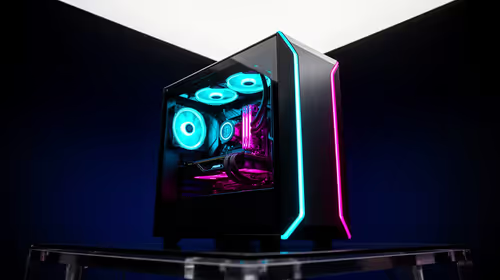
Your journey to a solar gaming setup starts inside your PC case. An inefficient power supply unit (PSU) is like a leaky bucket, wasting precious solar energy as heat. Modern, high-efficiency PSUs are crucial.
Look for units with an 80 Plus Gold rating or higher. These convert more power from your inverter into usable energy for your components. A top-tier high-quality power supply unit (PSU) is the non-negotiable first step. For an even cleaner and more air-flow-efficient build, consider fully modular power supplies, which let you use only the cables you absolutely need.
Calculate Your Wattage ⚡
Before buying solar gear, you need to know your total power draw. Use an online PSU calculator or a simple plug-in watt meter. Add up the wattage of your PC (under full gaming load), your monitor(s), your router, and any speakers or chargers. This total wattage figure is essential for sizing your inverter and battery bank correctly. Aim for a solar system that can handle at least 1.5x your peak load.
The Lifeline: Uninterrupted Internet
j
What good is a powered-up PC if your internet is down? An unexpected outage often knocks out local fibre nodes and cell towers. Your solar system must also power your networking gear to keep you online.
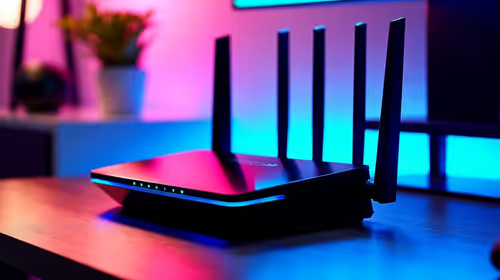
Your primary goal is to keep your main connection alive. This means plugging your ONT (Optical Network Terminal) and primary router into your solar-backed power source. Investing in modern, power-efficient fibre routers can reduce the overall load on your system. From there, you can optimise your home network.
For a stable connection across your home, reliable wireless networking is key, but don't discount the stability of stable wired networking solutions for your main gaming rig. If your solar setup is in a different part of the house, you might need wireless range extenders to ensure a strong signal everywhere. When choosing the right wireless router, look for features like QoS (Quality of Service) to prioritise gaming traffic. For a serious multi-device setup, dedicated network switches can provide the lowest latency for your consoles and PCs. Sometimes, the bottleneck might even be your PC's onboard LAN, making it worthwhile to upgrade with dedicated network adapters for the best possible performance.
Future-Proofing Your Setup for 2026 and Beyond 🚀
Building a solar power system for gaming is a modular process. You don't have to do it all at once. Start with a system that can comfortably handle your current rig and essential networking gear. As your needs grow or you upgrade your PC, you can add more panels or battery capacity. Planning for this scalability from day one is the smartest way to invest in your power independence, ensuring your solar gaming setup remains relevant and powerful for years to come.
Ready to Build Your Uninterruptible Battlestation?
Achieving power independence starts with smart, efficient components. Use our advanced PC Builder to configure a power-optimised rig that's ready for any outage.