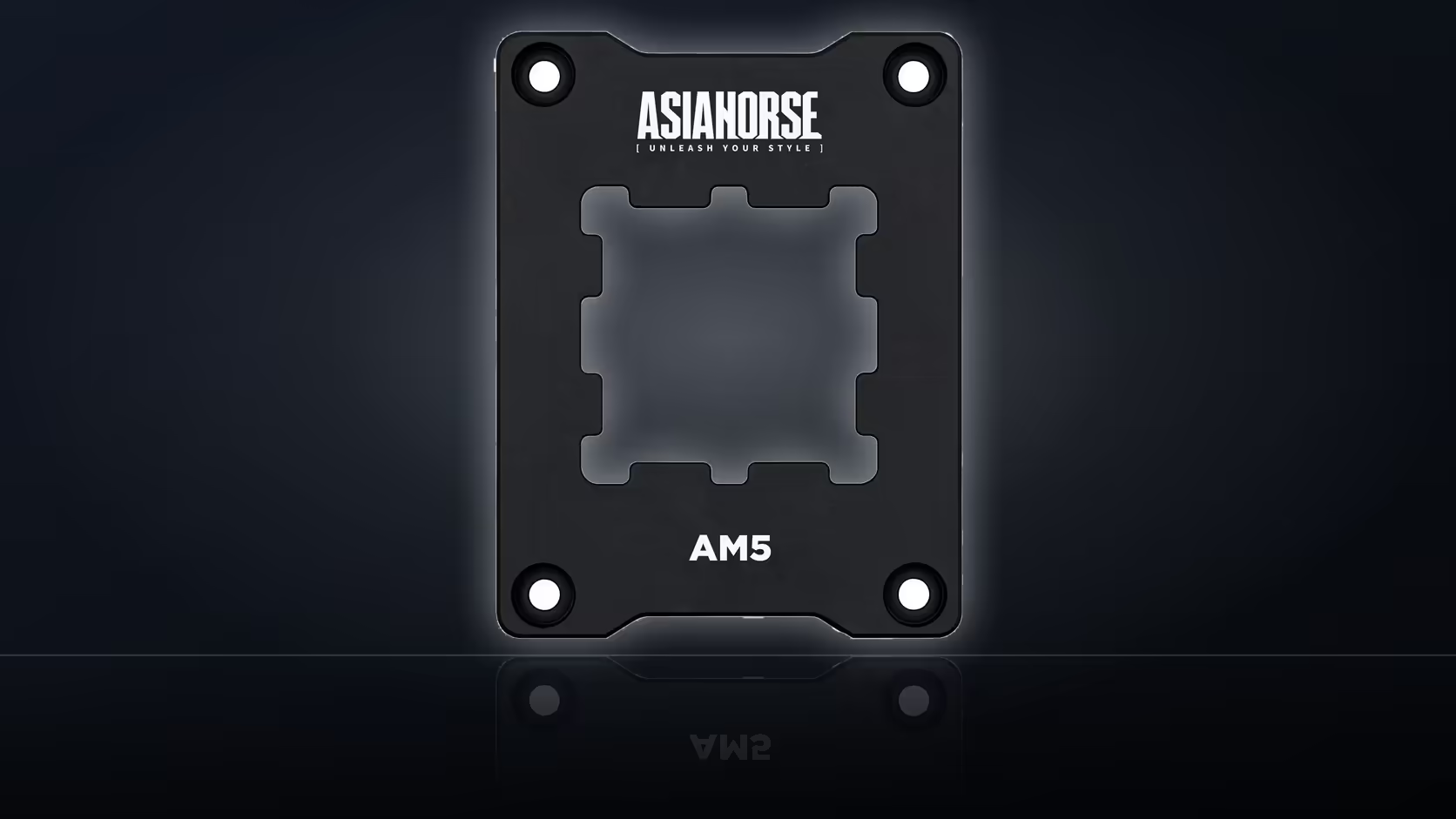
A hex wrench that only gets used once every couple of years is exactly the kind of small tool that ends up in a drawer, forgotten, by the time it is actually needed again. Storing the CPU contact frame wrench with the AM5 hardware it belongs to, rather than wherever it happened to land after the fitting, is a small habit that pays off the next time a cooler comes off.
Quick Answer
Keep the Pulsar's hex wrench (R299) bagged together with the original AM5 retention arms, ideally inside or alongside the motherboard's own accessory box, rather than separated into a general tool drawer. Both relate to the same job around the same socket, so when the next cooler change happens, everything needed to work on or reverse the frame is already in one place.
🗝️ Why these two things belong together
The wrench exists for one purpose - loosening or re-tightening the frame's four screws - and the original retention arms exist for one purpose too, which is putting the socket back to its stock configuration if that is ever wanted. Neither is useful without the frame or board they relate to, and neither is something you reach for often. That makes them easy to lose track of separately, but simple to keep together once you decide to.
The case for one bag, not two drawers
A wrench in the toolbox and retention arms in a parts bin somewhere else means two separate places to remember and two separate chances of one going missing before the other is needed. One labelled bag, stored with the board's own paperwork or accessory box, removes that problem entirely - open one thing, and both pieces of hardware relevant to this particular socket are right there.
📍 Where to actually put it
The motherboard's own retail box, if you still have it, is usually the most sensible home - it already holds the manual, any driver disc or USB stick, and other small accessories specific to that board. Adding a small labelled bag with the wrench and the original AM5 hardware keeps everything board-specific in one container, which matters more than it sounds once a household has more than one machine with similarly-sized small parts floating around.
Matching hardware to the right machine
The wrench is sized specifically to fit the frame's own screws, so a generic hex key from a general toolkit is not guaranteed to be the right size if this one goes missing. That is one more reason the labelled-bag approach earns its keep - a note of which board and which machine the contents belong to means nobody has to guess months later.
🔁 When it actually gets picked up again
Any future cooler change on this board needs the wrench, since the frame's screws will need loosening to lift the cooler clear and re-tightening once it goes back on. The same wrench is also what is needed if the change is ever reversed back to stock retention arms entirely - both scenarios draw on the same bag, at times that could be months or years apart from the original fitting.
A check after the first few thermal cycles is worth doing too, since fasteners near a heat source can settle slightly as the system runs through its early use - another small reason to know exactly where that wrench lives rather than hunting for it.
Passing the machine on
If this PC is ever sold or handed to someone else in the household, passing along the original hardware and wrench with it turns what could be an awkward "I'm not sure what's compatible" conversation into a straightforward one. Whoever inherits the build has everything needed to service or revert the cooler mounting without having to track anything down separately.
Whenever that next refit happens, the cpu coolers range has the options worth considering, and a tube from thermal solutions belongs on the same shopping list as the wrench comes back out of storage.
Frequently Asked Questions
Why store them together?
Because both relate to the same area of the board, so a future cooler change needs the wrench and possibly the original arms.
Where is a sensible place?
With the board's own box or accessories, in a labelled bag, so the parts stay associated with the machine they belong to.
Is the wrench a standard size?
It is supplied to fit the frame's screws, so a generic replacement is not guaranteed to match if it goes missing.
When would it be needed again?
At any cooler refit, since the frame screws may need loosening, and at any point the change is reversed.
Should a note go in the bag?
Noting which board the hardware came from helps, particularly in a household with more than one machine.
Does the frame need re-tightening over time?
A check after the first thermal cycles is sensible, which is another reason to keep the wrench accessible.
What if the PC changes hands later?
Passing on the original hardware with it makes the machine a simpler proposition for whoever gets it next.
Sorting out storage for your build's small parts?
Browse Evetech's cooler range so you know what the wrench will be needed for next time round.