You’re one kill away from clutching the round. The tension is electric. Then, darkness. The familiar hum of your rig dies, the screen goes black, and your Discord chat cuts out. It’s not just frustrating; it’s a direct threat to your components and your rank. Investing in the right UPS for your gaming PC isn’t a luxury in South Africa… it’s essential gear for anyone serious about protecting their hardware and their K/D ratio.
Why Your Gaming PC Needs a UPS, Not Just a Plug Strip
First, let's clear something up. A standard multi-plug or surge protector is not a UPS. A surge protector's only job is to shield your electronics from a sudden, massive voltage spike, like a lightning strike. It does absolutely nothing when the power simply disappears.
An Uninterruptible Power Supply (UPS), however, is your personal power guardian. It contains a battery that kicks in the instant Eskom's grid fails. This gives you a clean, stable flow of outage-ready power, allowing you precious minutes to save your progress, safely shut down your machine, and avoid the catastrophic data corruption or hardware damage that a sudden outage can cause. ⚡
The Ultimate UPS Sizing Guide for Gamers
Choosing the right size UPS is crucial. Too big, and you've wasted money. Here’s how to find the perfect UPS for your gaming PC.
Step 1: Calculate Your Total Power Draw (Watts)
Your rig's power supply unit (PSU) wattage is a starting point, but your PC rarely uses the full amount. A more accurate way is to check the power consumption of your key components.
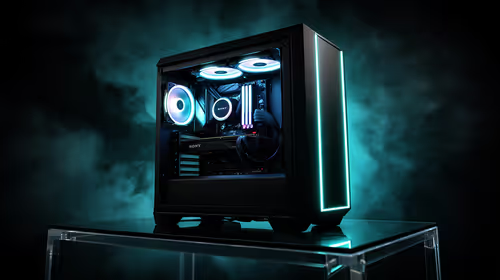
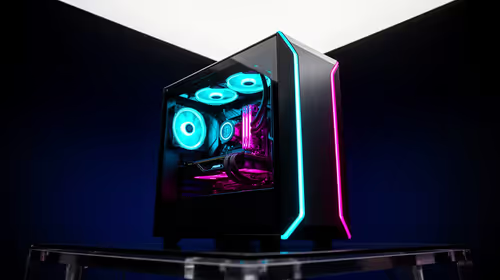
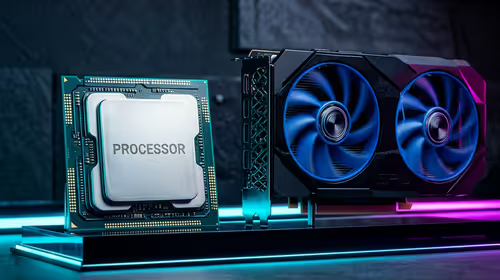
- Your PC: Add up the typical power draw of your CPU and GPU under load. A high-end setup (e.g., Core i9 + RTX 4080) might pull 500-600W while gaming. Don't forget to account for extras like your motherboard, RAM, and vibrant NZXT case lighting.
- Your Monitor(s): A standard 27-inch gaming monitor uses about 30-50W. An ultrawide or a multi-monitor setup will use more. Check the back of your monitor for its power rating.
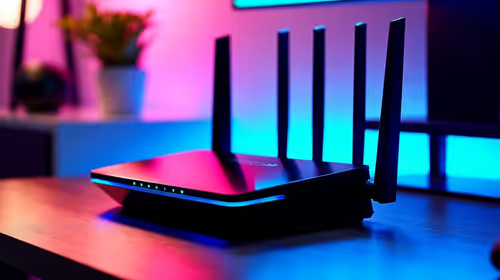
- Your Router/Fibre Box: These are low-draw (around 10-20W) but absolutely essential for staying online.
Example Calculation:
- Gaming PC: 550W
- One 27" Monitor: 40W
- Router & ONT: 15W
- Total Load: 605W
Step 2: Convert Watts to VA (Volt-Amperes)
UPS systems are rated in VA, not Watts. The quick rule for modern gaming PCs with good Power Factor Correction (PFC) is to multiply your total wattage by 1.4 to get a safe VA estimate.
- Calculation: 605W x 1.4 = 847 VA
This means you should look for a UPS rated at 900VA or, even better, 1000VA to give yourself a healthy buffer. This ensures the UPS isn't stressed and provides a few solid minutes of runtime. A complete, high-end rig like one of the pre-built Arrozi gaming setups deserves this level of protection.
Pro Tip: What NOT to Plug In 🔌
UPS battery has a limited capacity. Only connect your essential gear: PC tower, monitor(s), and internet hardware (router ONT). NEVER plug in high-draw appliances like printers, heaters, or kettles. They can overload the UPS instantly, leaving your critical components unprotected when you need them most.
Everyday Reliability
A reliable gaming PC UPS is the heart of a resilient setup, but don't stop there. True peace of mind comes from building an entire environment that’s ready for anything. Ensure your hardware rests on a sturdy gaming desk with enough space for your UPS unit to ventilate properly.
And since you'll be able to game right through the outage, make sure you're comfortable. Investing in one of our ergonomic gaming chairs in South Africa means you can outlast the blackout without straining your back. Your setup is an ecosystem, and a UPS is the key to keeping it alive. ✨
Ready to Build a More Reliable Gaming Pc?
Stop letting power cuts dictate your gaming sessions. A correctly sized UPS protects your investment and secures your victory. Explore our wide range of UPS solutions and find the perfect power guardian for your rig.