Quick Answer
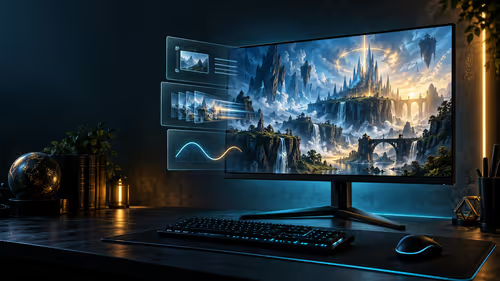
A 240Hz monitor that keeps crashing is most often caused by an unstable refresh overclock fighting a stale GPU driver. The safe first move is to drop any refresh overclock to the native 240Hz profile and clean-install the latest driver, which resolves it for most SA gamers without a return.
Why a 240Hz panel keeps crashing
Running at 240Hz stresses the cable, GPU and panel far more than 60Hz, so marginal faults surface. In this case the usual cause is an unstable refresh overclock fighting a stale GPU driver, and confirming it before a return saves both time and a wasted courier trip.
The fix, from lowest risk first
Start safe: drop any refresh overclock to the native 240Hz profile and clean-install the latest driver. If the symptom persists at a lower 144Hz or 120Hz refresh with a known-good DisplayPort 1.4 cable, the panel or cable is the likely culprit and warranty becomes the next step.
FAQ
Why does my 240Hz monitor crash only in games?
Game load pushes the GPU and panel hardest, exposing an unstable overclock or driver. Reverting both usually stops the crashes.
Could my DisplayPort cable cause crashes?
Yes. A marginal cable can drop the high-bandwidth 240Hz signal under load; a certified DisplayPort 1.4 cable rules this out.
Is the GPU or the monitor at fault?
Test at 120Hz and on a second PC; if crashes vanish, the driver or refresh profile is to blame rather than the panel itself. If the fault survives a clean driver, a known-good cable and a lower 120Hz refresh, treat the panel as defective and lodge the warranty claim. Plan one clean upgrade at a time and size each part to your monitor and budget, and your setup stays balanced and cost-efficient for years of gaming in South Africa. If the fault survives a clean driver, a known-good cable and a lower 120Hz refresh, treat the panel as defective and lodge the warranty claim.
Pro Tip
Reproduce the fault at 120Hz first; if it disappears, the cause is signal, refresh or settings related rather than a dead panel.