Quick Answer
A gaming PC overheats for three main reasons: dust-clogged fans and heatsinks, dried-out thermal paste, or weak case airflow - and all three are cheap to fix. If your CPU or GPU passes 90 degrees under load, clean the dust, reapply paste (a tube costs around R250-R450), and add intake fans before assuming a part has failed. Sustained temps above 85-90 degrees cause throttling, which is the real reason your FPS drops mid-game.
Clean, repaste, and check airflow
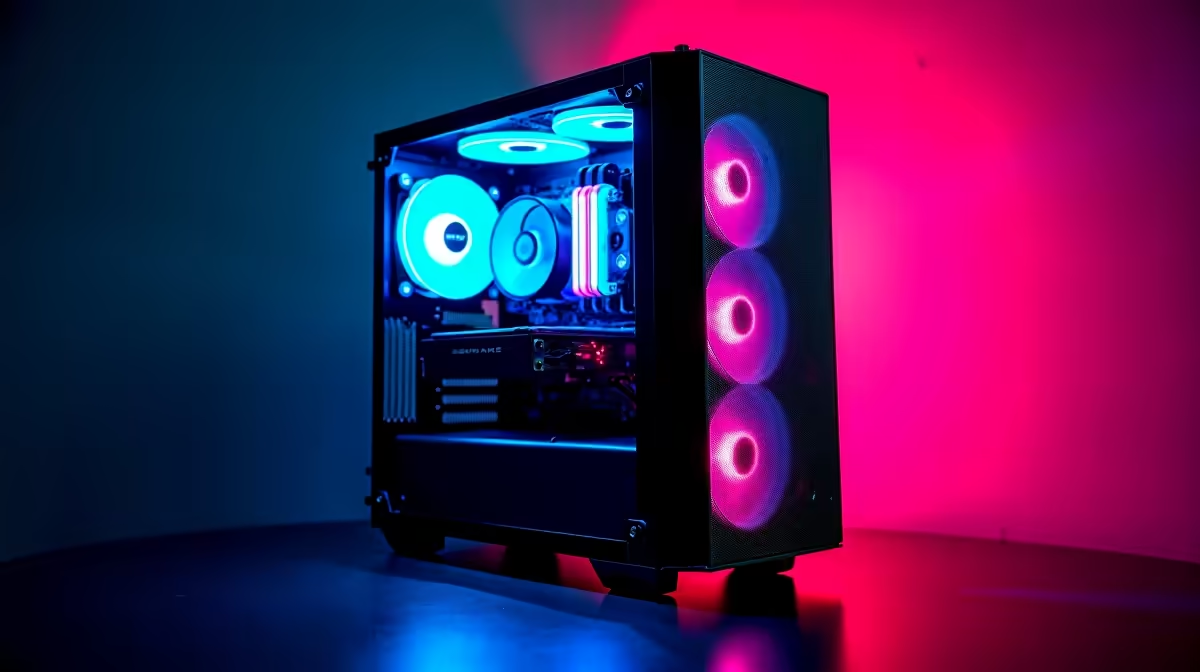
Dust is the number one cause in SA homes, especially carpeted rooms. Power off, open the side panel, and blow out the heatsink fins and fan blades. If the PC is over two years old, reapply thermal paste like Arctic MX-6 (around R250-R450 at Evetech) - dried paste alone can add 10-15 degrees. Confirm you have at least two intake and one exhaust fan moving air front-to-back.
Match the cooler to the chip
A high-end CPU on a stock or budget cooler will throttle under sustained load. A Ryzen 7 or Core i7 wants at least a strong tower air cooler or a 240mm AIO; a Ryzen 9 or Core i9 is happier on a 280-360mm AIO. A quality air cooler runs around R600-R1,200 locally, and a 240mm AIO around R1,500-R2,500.
Watch your numbers
Use HWMonitor or your GPU software to log temps. Healthy load temps sit under 85 degrees for the CPU and under 80 degrees for the GPU. If the GPU spikes past 85 and fans scream, improve case intake; if only the CPU is hot, the cooler or paste is the issue. Throttling at 90+ degrees is what robs you of 10-30 FPS in long sessions.
FAQ
What temperature is too hot for a gaming PC?
Sustained CPU temps above 90 degrees or GPU temps above 85 degrees trigger throttling and lost FPS. Aim to keep the CPU under 85 and the GPU under 80 under full gaming load.
Will reapplying thermal paste lower temps?
On a PC over two years old, yes - dried paste can add 10-15 degrees. A fresh application of Arctic MX-6 (around R250-R450 locally) is one of the cheapest cooling fixes available.
How many fans do I need to stop overheating?
At minimum two front intakes and one rear exhaust to move air front-to-back across the GPU and CPU. High-end builds benefit from a third intake or a top exhaust to clear hot air faster.
load temps with HWMonitor first - if the CPU passes 90 degrees, clean the dust and reapply paste before buying anything; that fix alone often drops temps 10-15 degrees.