An R8,500 32GB memory reference tells you where one 2026 basket has landed. It does not prove that every kit followed the same path. To understand the year, track exact models, restock dates and the Rand instead of drawing a straight line between two vague averages.
Quick Answer
The move towards an R8,500 32GB reference can reflect tighter DRAM supply, data-centre demand, currency and new-stock cost. Compare a named 32GB kit with its own earlier price before calling the rise. For a purchase today, measure whether 32GB removes a real limit and strip premium styling from the shortlist.
A one-year chart needs the same product
Memory families change. A retailer can replace a 32GB 6000MT/s kit with a tighter-timing or RGB model, making the new figure look like pure inflation. Keep the full model code in every row.
Module count must match. One 32GB stick and 2x16GB have different channel and upgrade implications. DDR4 and DDR5 belong on separate charts.
Promotions need a label. A 2025 sale price compared with a 2026 normal price exaggerates the movement. Record normal and discounted figures where both are clear.
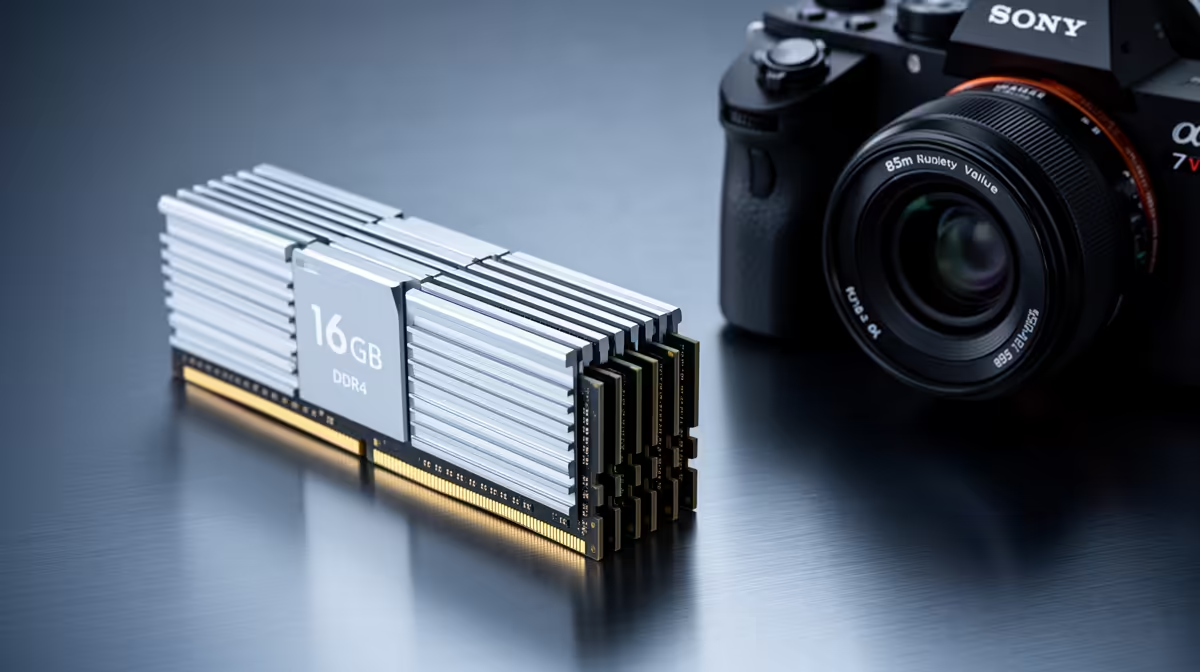
Use the DDR5 memory catalogue and RAM products buyers currently choose for a fresh check. The named Kingspec 16GB DDR4-3200 desktop module carried a R2,699 price in July 2026. That DDR4 product cannot create a 32GB DDR5 total by multiplication.
Supply pressure explains part of the curve
Manufacturers choose how much production and investment reaches consumer DRAM. AI and server demand can offer stronger returns, reducing the attention available for desktop kits.
Capacity additions take years to build and qualify. A forecast of more supply does not lower a local listing immediately. Existing contracts and stock have to move through the channel.
Different memory chips and bins can rise at different rates. A mainstream kit may hold while a premium low-latency model jumps, or old stock can create the reverse.
The Rand shapes the South African result
Memory components move through an international supply chain. The exchange rate at ordering and settlement affects replacement cost. A weaker Rand can amplify a global increase.
Older local stock can retain an earlier price until it sells. New units then appear with a visible step. This produces a jagged one-year chart instead of a smooth climb.
Freight and distributor terms also matter. Do not apply an overseas percentage to a South African kit and call it a local forecast.
Decide whether R8,500 earns a return
Open the heaviest normal workload and watch physical and committed memory. Look for paging, slow task switching, project failures or repeatable game stutter. Close background tools and repeat the test.
If 16GB has headroom, an R8,500 step buys unused capacity today. Keep the current kit and track two 32GB alternatives. If memory pressure stops paid work, time saved can justify the spend.
Check whether another upgrade offers more. A GPU can improve frame rate when graphics is the limit. A larger SSD can solve space. Neither fixes true RAM exhaustion, so diagnose before redirecting the money.
Find a lower-premium 32GB route
Compare plain 2x16GB kits with RGB and tight-timing products. Capacity solves the bottleneck. Styling and aggressive bins should have their own value.
Check motherboard support and cooler clearance. A stable mainstream profile can be better than a costly speed the CPU memory controller cannot hold.
Adding a second kit can work, but mixed production batches and four-module loads may need lower settings. Price one matched final-capacity kit before planning the cheaper-looking addition.
For laptops, check soldered memory and SO-DIMM access. A factory 32GB premium may be the only route on a fixed design, while an upgradeable model gives another option.
Break the Rand change into evidence
Save the exchange rate only as context, not as a formula that explains the retail shelf. Add the date a model came back into stock and whether the figure is promotional. New stock can carry a different landed cost while an older unit keeps its previous price.
Look for movement across several comparable kits. If one RGB model reaches R8,500 while plain kits stay lower, styling and binning are part of the story. If matched mainstream products rise together, the supply explanation becomes stronger.
Decide whether 32GB earns the premium
Watch committed memory and page-file activity during the heaviest real session. Include the game, browser, voice chat and capture tools you use together. A system that remains smooth below 16GB use has no urgent capacity problem.
Creators should test their largest project, not an empty application. Video timelines, virtual machines and local data work can turn 32GB into time saved. In that case, waiting for an old price can cost more than the difference.
When the upgrade is justified, compare matched 2x16GB kits and confirm board support. Start from default settings, update firmware if needed and test before tuning. Keep the replaced kit until the new configuration proves stable.
Avoid the multiplication shortcut
Never double a 16GB module price and call it a 32GB kit quote. Kits include two tested modules, their own product code and sometimes different timings. The July DDR4 reference in this article shows one product only. It cannot create a current DDR5 total or a market average.
Keep tax-inclusive totals and delivery treatment consistent across every observation. A chart built from mixed checkout stages can create a movement that never existed on the final invoice.
Frequently Asked Questions
Review the chart at a fixed monthly interval. Daily noise can encourage an emotional purchase, while a monthly point still catches a sustained move. Keep the planned build date on the sheet so the tracker supports a decision instead of becoming an endless project.
Did every 32GB kit rise to R8,500?
No. Model, speed, timings, styling, stock and DDR generation create different price paths.
Why did prices rise through 2026?
Tighter supply, data-centre demand, currency and replacement-stock cost can all contribute.
Is 32GB worth the premium?
It is when 16GB causes measured paging or lost work. Unused capacity is harder to justify.
Can I add another kit later?
Yes, though mixed kits and four modules can require conservative settings.
How should I track the next year?
Save full model codes, module layout, normal or sale status, date and Rand price.
Compare the R8,500 scenario with exact 32GB kits, then pay for capacity only when your workload can use it.