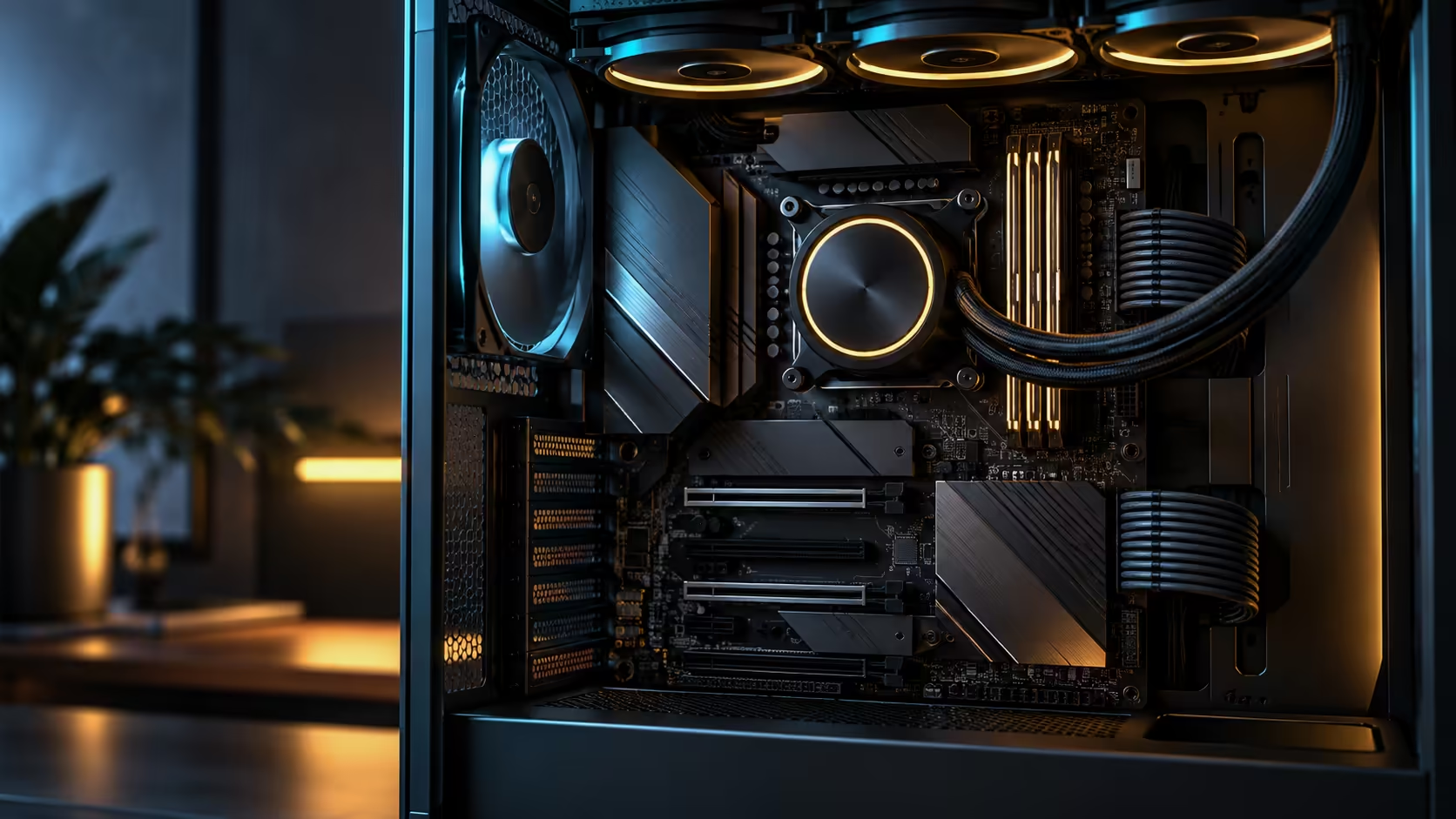
Air versus liquid arguments usually get settled by brand loyalty rather than a thermometer, which is a shame because the real answer for a 360mm AIO vs air cooling decision on a high-core-count Ryzen chip is measurable and consistent. A 360mm liquid loop holds a lower sustained temperature under sustained all-core load; a large air tower closes most of that gap in short bursts. The R54,999 ROG Crosshair X870E, one of the flagships in the AMD motherboard lineup, already settles the question for its own buyers, since a Ryujin 360 arrives in the box.
Quick Answer
Under long, all-core loads such as a lengthy render, a 360mm AIO typically sustains several degrees lower than even the best dual-tower air coolers on a high-core-count Ryzen chip, because the radiator's larger surface area sheds heat faster than any air tower's fin stack can match once the load runs for minutes rather than seconds. In short bursts, such as a quick compile or a few minutes of gaming, a good air tower keeps pace closely enough that the difference rarely matters. The R54,999 ROG Crosshair X870E Edition 20 ships with a Ryujin 360 Edition 20 already fitted, so this comparison is already decided for anyone buying that board specifically.
🌡️ Why the gap widens the longer the load runs
A CPU cooler's job is moving heat away from the die faster than the chip generates it. In the first 30 seconds of a heavy load, both a large air tower and a 360mm AIO have similar thermal mass to absorb the initial spike, which is why short bursts show little difference between the two.
Once a load runs for several minutes, the difference in total heat-shedding capacity starts to matter. A 360mm radiator's combined surface area, spread across three 120mm fans pulling air through fins, dissipates heat faster on a sustained basis than an air tower's smaller fin stack, however well designed. On a 16-core Ryzen doing a long video render or a lengthy compile, that gap between the two typically settles at several degrees in the liquid loop's favour by the time the load has run for 10-15 minutes.
A rough range to expect: a well-reviewed dual-tower air cooler often lands somewhere in the low-to-mid 80C range on a 16-core chip under a sustained all-core render, while a good 360mm loop holds closer to 75C under the identical load. That 5-10 degree gap is not dramatic on a single run, but it decides whether the chip sustains its highest boost bin for the full duration of a long job or steps down partway through it.
🔊 Noise is where air coolers claw some of it back
Sustained temperature is not the only measure that matters, and noise is where a well-chosen air tower can win outright. A quality air cooler at a moderate fan speed is often quieter than a 360mm AIO's three radiator fans plus pump running at the speed needed to hold the same temperature, especially at idle and light load where the AIO's pump noise, however small, is a constant rather than an occasional sound.
For someone doing video calls or working in a quiet room most of the day, and only occasionally pushing the CPU to its limit, a good air cooler that stays near-silent at idle can be the more comfortable daily choice even if it gives up a few degrees during the rare sustained load.
🏠 What ambient heat and household dust change
Neither cooler type is immune to a hot room, but they respond differently. A 360mm AIO's larger radiator surface has more thermal margin to spend before a warm room pushes it into throttling territory, which matters directly in a Gauteng study running without air conditioning through summer. An air tower with less total surface area loses that margin faster as ambient temperature climbs.
Dust affects both, but differently. An air tower's dense fin stack traps dust deep inside where a can of compressed air struggles to reach fully, while a radiator's flatter fin surface is comparatively easier to clean from either side. In a dusty environment, that difference in maintenance effort over a few years is worth factoring in alongside the raw thermal numbers.
🔩 What happens when the loop or the fan eventually fails
An AIO is a sealed unit; if the pump fails, the whole cooler needs replacing, and a pump failure is rare but not unheard of after several years of continuous running. An air tower has no pump to fail, only fans, which are cheap and simple to replace individually if one wears out.
Neither failure mode should decide the purchase on its own, since both are uncommon within a normal warranty period, but it is worth knowing which risk you are accepting. A board that already bundles its cooler, such as the Crosshair X870E Edition 20 with its included Ryujin 360, ties that risk to the board's own warranty rather than a separate cooler purchase, which simplifies a claim if it is ever needed. Compare the wider liquid cooler range if you are building around a different board and choosing separately.
Frequently Asked Questions
Does a 360mm AIO always beat air cooling on temperature?
Under sustained, all-core load on a high-core-count chip, usually yes, by several degrees. In short bursts the gap narrows enough that a good air tower keeps pace closely.
Is a 360mm AIO quieter than a large air cooler?
Not necessarily. A quality air tower at moderate speed can be quieter at idle than an AIO's pump and three radiator fans running to hold the same temperature.
Which cooler type handles a hot room better?
A 360mm radiator's larger surface area gives it more thermal margin before ambient heat starts to matter, which helps in a warm study without air conditioning.
Is an AIO pump likely to fail?
Rarely within a normal warranty period, but a failure means replacing the whole sealed unit, unlike an air cooler's fans, which are simple and cheap to swap individually.
Which is easier to keep clean in a dusty environment?
A radiator's flatter fin surface is generally easier to clear with compressed air than an air tower's dense fin stack, which traps dust deeper inside.
Ready to cool a high-core Ryzen chip properly instead of guessing?
Weigh sustained-load temperature against noise and maintenance for your own room, then choose the cooler that matches how you actually use the machine.