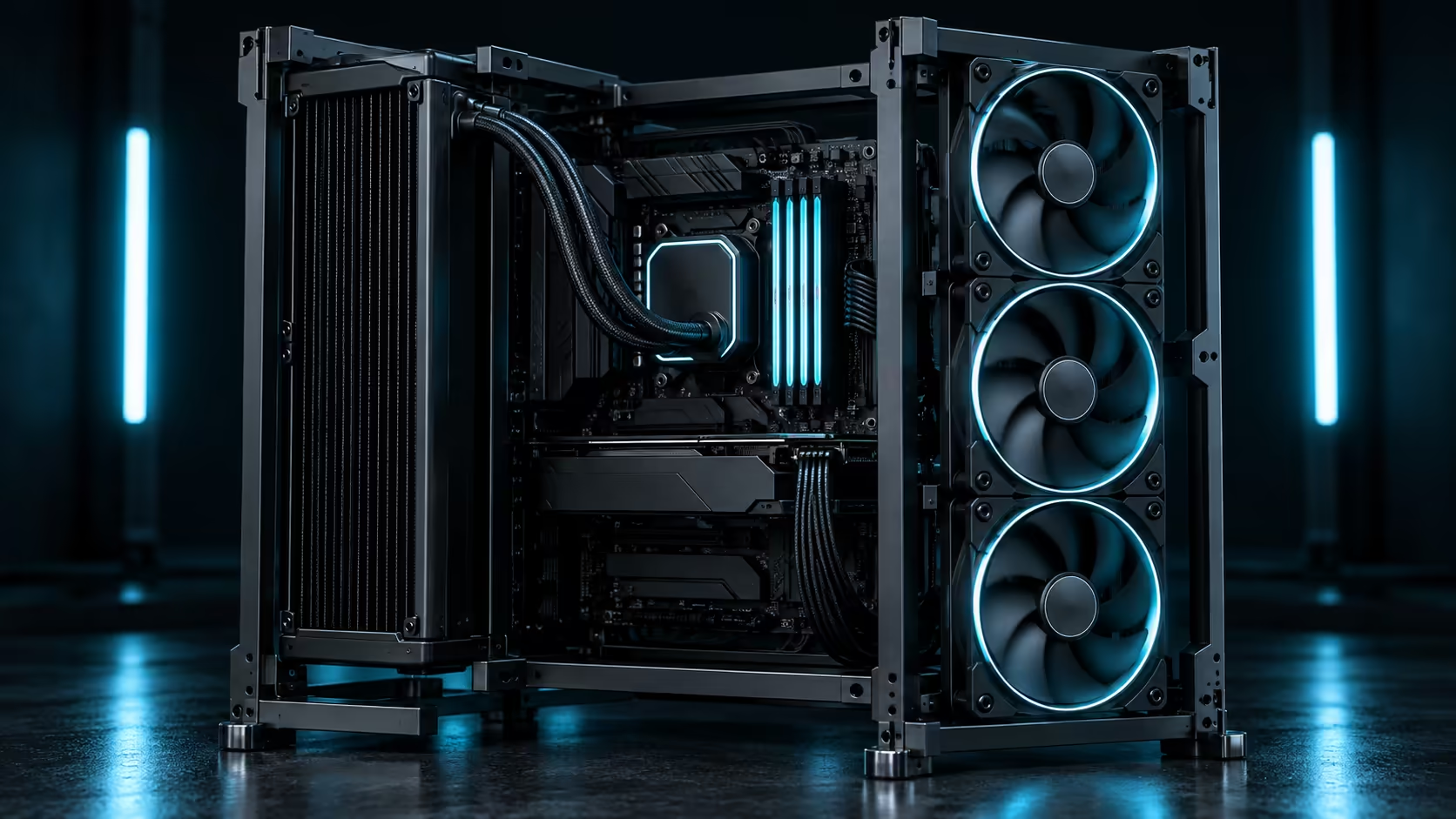
One mounting row on an open-frame case is built to accept either a full liquid loop or a trio of fans, and that shared slot is the reason the decision keeps coming up at the same point in every build. A 360mm radiator and three cooling fans are not two versions of the same idea; one carries processor heat out through moving liquid, the other only pushes room air past whatever heatsink is already doing the work.
Quick Answer
A 360mm all-in-one liquid cooler wins on peak cooling for a hot processor and stays quieter at high load, at a higher price and with a pump that is one more thing that can eventually fail. Three 120mm fans feeding a large air cooler is cheaper, has nothing to leak, and is often the quieter choice at idle. The ROG GR20 Edition 20 takes either setup in the same position for R15,999, so the fit question is really a budget and workload question.
🔥 What each setup is actually cooling
A 120mm air cooler, even a large one, moves heat from the processor to a stack of fins through direct contact and a handful of heat pipes, then relies on fans to carry that heat away in moving air. Three 120mm case fans in this context are not cooling the CPU directly; they are supplying the air that an air tower cooler, mounted separately, uses to shed its own heat.
A 360mm all-in-one moves heat differently. A pump circulates liquid through a block on the CPU, out to a 360mm radiator, and back, with the radiator's own three fans doing the final job of pushing that heat into the room. The liquid is doing the transport work that heat pipes do in an air cooler, just over a longer distance and with a larger radiator surface at the far end.
That distinction is why a hot, high-power processor under sustained load usually runs several degrees cooler on a 360mm loop than on the best air cooler that fits the same footprint. The radiator surface area available to a 360mm unit is larger than almost any air tower can offer in the same space.
💰 Where the money actually goes
A quality 360mm all-in-one costs meaningfully more than a large air cooler, and the gap is not just the radiator and tubing. You are also paying for a pump with a sealed loop and a warranty on that pump, because unlike a fan, a failed pump usually means replacing the whole unit rather than one part.
Three 120mm fans plus a large air tower cooler is the cheaper route to nearly the same everyday result for most processors that are not pushed to their absolute limit. The saving is real, and it buys you something else too: nothing in an air-cooled setup can leak. A case fan failing is a fan you replace for a small amount of money; a pump failing on a loop is rarer but is the one liquid-cooling failure mode that air cooling simply cannot have.
🔊 Noise tells a more complicated story than price does
At idle and light load, three well-chosen case fans spinning slowly are often quieter than a pump that hums even at its lowest setting, because a pump rarely stops entirely the way a fan curve can let fans do.
Under sustained heavy load, that reverses. A 360mm loop's much larger radiator surface lets its fans run at a lower speed for the same amount of heat rejected, while an air cooler working near its limit has to spin its fans hard to keep up, and a hard-spinning fan is usually the louder of the two at that point. If your workload is short bursts of gaming rather than hours of sustained rendering, the everyday noise difference between the two setups is smaller than either camp claims.
🧭 Picking the setup that actually fits your workload
Choose the 360mm radiator if your processor runs hot under sustained load, whether that is long gaming sessions, video export, or compiling code for hours at a time, and if keeping noise down during that load matters to you. Browse the liquid cooler options with the 360mm limit this frame allows already in mind, since a cooler rated one size larger simply will not mount here regardless of price.
Choose three 120mm fans and a good air cooler if your budget is tighter, your workload is mostly short and bursty rather than sustained, or you would rather remove the one component in either setup that can fail wet. Air cooling paired with a case fans upgrade is also the lower-maintenance path, since there is no pump to eventually replace on its own schedule separate from the rest of the build.
Either way, the mounting position on this frame does not force the decision for you. It is genuinely built to take both, which means the choice comes down to what your processor and your patience actually need, not what the case allows. Not every case in the wider mid-tower range offers that same flexibility, so check a chassis's radiator and fan mounting specification before assuming it will take whichever setup you eventually pick.
Frequently Asked Questions
Does a 360mm radiator always cool better than air?
For a hot, high-power processor under sustained load, usually yes, because of the larger heat-rejection surface. For a moderate processor under light use, a good air cooler often gets close enough that the difference is hard to feel.
Can a pump fail on a 360mm all-in-one?
It can, though it is not a common failure. It is the one risk that three fans and an air cooler simply do not carry, since there is nothing sealed or liquid-filled in that setup.
Is air cooling always quieter?
Only at idle and light load. Under sustained heavy load, a 360mm loop's larger radiator usually lets its fans run slower than an air cooler working near its limit.
Do I need to decide before I buy the case?
No. The mounting position takes either setup, so you can buy the frame first and choose the cooling method once you know your processor and budget.
Which setup is cheaper overall?
Three 120mm fans and a large air cooler, by a meaningful margin, since a 360mm all-in-one's pump and sealed loop carry most of the extra cost.
Ready to match your cooling method to your actual workload?
Weigh sustained heat output and budget before choosing between a loop and a stack of fans.