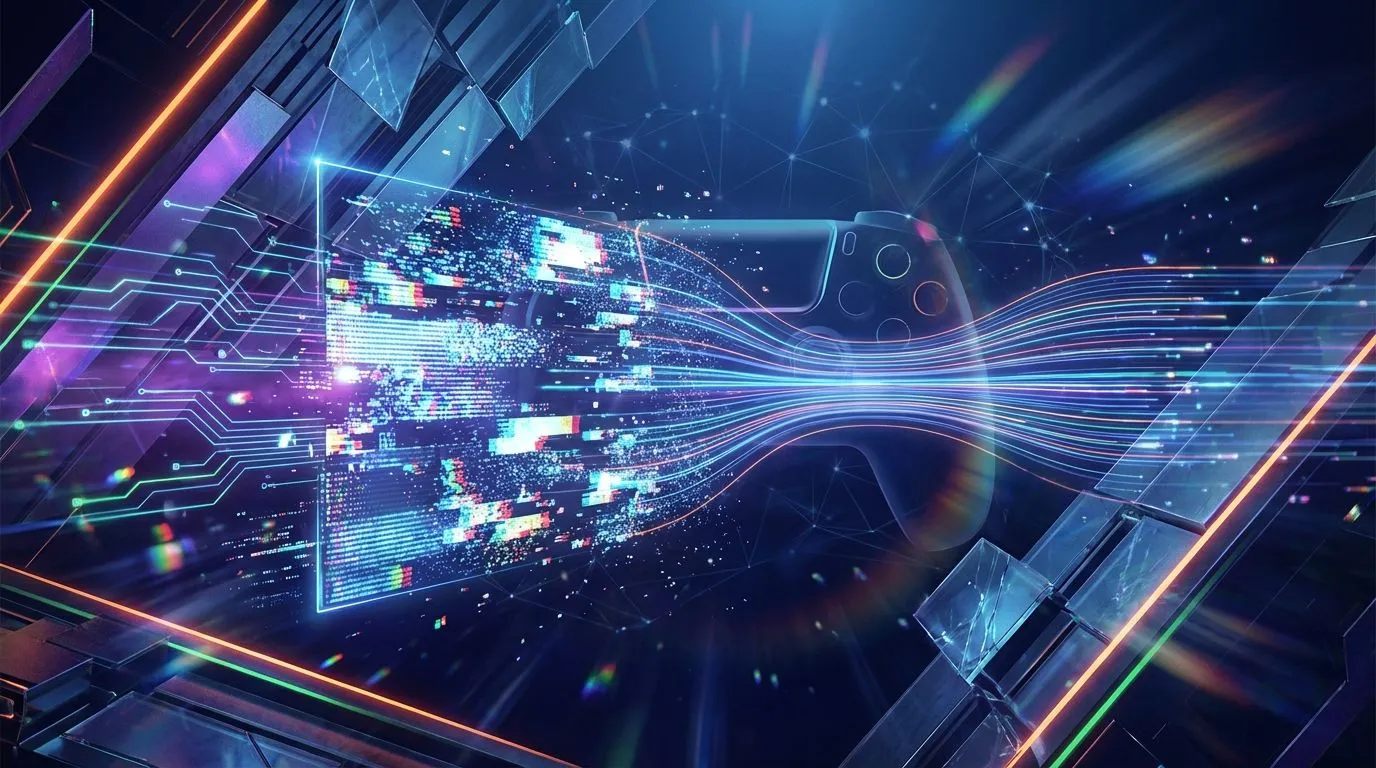
You're about to clutch the round in Valorant... the final enemy in your sights. But then it happens: a jarring horizontal line rips across your screen, shattering your focus. That's screen tearing, the immersion-killer that plagues gamers everywhere. What if you could fix screen tearing without the input lag of old-school V-Sync? That’s where Adaptive Sync technology comes in, and understanding it is key to unlocking buttery-smooth gameplay. 🚀
What Causes That Horrible Screen Tearing?
Ever wonder what's actually happening when your screen tears? It’s a simple mismatch. Your graphics card (GPU) is rendering frames at a variable rate, while your monitor is refreshing its image at a fixed rate (like 60, 144, or 240 times per second).
When your GPU sends a new frame while the monitor is only halfway through drawing the last one, you get a tear… two different frames displayed at once. It’s most common when your frame rate fluctuates wildly, which happens all the time in demanding games. The traditional fix, V-Sync, forces your GPU to wait for the monitor, which solves tearing but introduces noticeable input lag. Not ideal for competitive play.
Adaptive Sync Explained: The Ultimate Fix
This is where the magic happens. Adaptive Sync explained simply is this: the technology allows your monitor to change its refresh rate in real-time to perfectly match the frame rate of your GPU. If your GPU is pumping out 97 frames per second, your monitor refreshes at 97Hz. If it drops to 58 FPS in a heavy explosion, your monitor adjusts to 58Hz instantly.
The result?
- No more screen tearing: The GPU and monitor are always in perfect harmony.
- No V-Sync input lag: Your actions feel responsive and immediate.
- Smoother gameplay: Even when your frame rate isn't hitting the max, the experience feels much less stuttery.
This seamless synchronisation is the key to a fluid, competitive, and immersive gaming experience, making the right PC monitor one of the most important parts of your setup.
G-Sync vs. FreeSync: What's the Difference?
You’ll see two main names when it comes to adaptive sync technology: NVIDIA G-Sync and AMD FreeSync. While they both aim to fix screen tearing, they get there in slightly different ways.
NVIDIA G-Sync
Initially, G-Sync required a dedicated hardware module inside the monitor, which often meant a higher price tag but guaranteed a premium, rigorously tested experience. Today, there are also "G-Sync Compatible" monitors, which are FreeSync displays that NVIDIA has certified to work well with their GPUs.
AMD FreeSync
FreeSync is an open standard built into the DisplayPort connection. This makes it royalty-free for monitor manufacturers to implement, leading to wider availability and generally more affordable options. There are different tiers (FreeSync, FreeSync Premium, and FreeSync Premium Pro) that offer features like low framerate compensation and HDR support.
For most South African gamers, the choice will depend on their graphics card. Got an NVIDIA card? Look for G-Sync or G-Sync Compatible. Rocking an AMD card? FreeSync is your go-to. You can browse our full range of gaming monitors to find options for either team.
Quick Tip: Enable Adaptive Sync 🔧
Make sure you actually turn it on! For NVIDIA, open the NVIDIA Control Panel, go to "Set up G-SYNC," and enable it. For AMD, open Radeon Software, navigate to the "Gaming" tab, then "Display," and toggle AMD FreeSync on. You'll also need to enable it in your monitor's on-screen display (OSD) menu.
Is It Worth the Upgrade? Absolutely.
Once you’ve experienced gaming on a monitor with adaptive sync, there’s no going back. The visual smoothness completely changes how games feel. It's especially crucial for players with high-end rigs pushing pixels on premium 4K monitors, where maintaining a locked 144 FPS can be a challenge. The technology smooths out the inevitable dips, keeping you in the zone.
This enhanced fluidity is even more impactful on immersive curved monitors, where a seamless picture fills your entire field of view. The tech has become so essential that you can now find it in almost every type of display, from massive desktop screens to even some high-end portable monitors for gaming on the go. Paired with the right monitor accessories for an ergonomic setup, it's a perfect combination for long gaming sessions. ✨
Ready to Banish Screen Tearing for Good?
A smooth picture is a competitive advantage. Stop letting screen tears and input lag hold you back. Explore Evetech's massive range of gaming monitors and find the perfect Adaptive Sync display to elevate your gameplay today.