



Marvel Rivals launch in South Africa
Marvel Rivals launch needs a balanced parts plan, not a random basket. Map the CPU, GPU, RAM, SSD, cooling, and monitor target to the budget so SA builders know where to spend first.
Read moreAddressing Overheating: a triple 120mm fan pack with LCP blades shifts more air at the same RPM than standard PBT plastic units, by a clear margin. Read on for the short version, then the detail for SA tech buyers. The breakdown stays practical and SA focused.
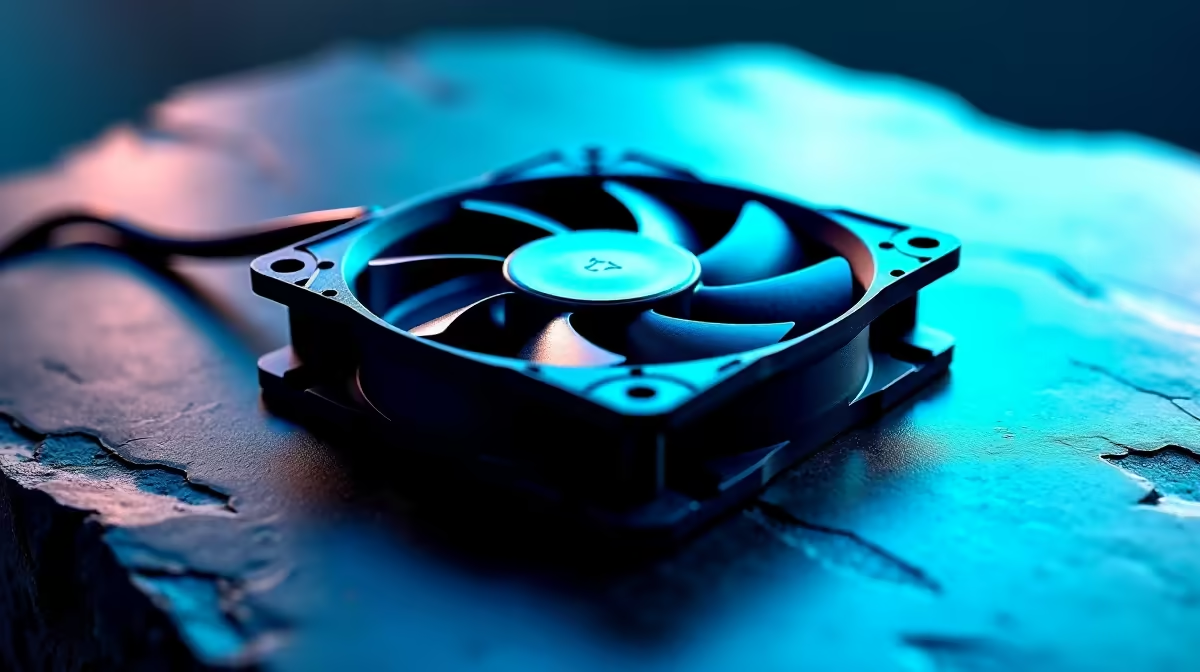
Small form factor cases overheat because restricted airflow paths create back-pressure that standard airflow fans cannot overcome. High-static-pressure fans are designed for exactly this: they generate enough pressure differential to push air through dense radiator fins, tight mesh filters, and narrow passages where airflow fans stall completely.
In a full-size ATX tower, air moves largely unobstructed from front intake to rear exhaust. In an SFF case like the Cooler Master NR200P or Dan A4-SFX, the GPU often sits millimetres from the CPU cooler. Every cubic centimetre restricts natural convection, and front dust filters add further resistance. An airflow-optimised fan rated at 65 CFM may deliver only 30 to 40 CFM in a restricted SFF environment. A high-static-pressure fan rated at 3 to 4 mmH2O maintains useful airflow even through those restrictions.
SA builders face compounded challenges: ambient temperatures in Johannesburg, Pretoria, and Cape Town regularly hit 28 to 35 degrees Celsius in summer. An SFF case running an RTX 5070 and a Ryzen 7 9800X3D in a 32-degree room will see GPU junction temps exceed 90 degrees Celsius without adequate static-pressure cooling.
For a radiator mount in an SFF case, target fans rated at 2.5 mmH2O or higher. The Arctic P12 PWM delivers 2.2 mmH2O at around R200 per fan locally, while the Noctua NF-A12x25 reaches 2.34 mmH2O at 22.6 dBA. For mesh-panel intakes without a radiator, 1.5 to 2 mmH2O is sufficient. Avoid using static-pressure fans in open rear exhaust positions, where airflow-optimised fans perform better and more quietly.
After fitting high-static-pressure fans, validate improvement with temperature monitoring software. Aim for CPU temps under 85 degrees Celsius under Prime95 or Cinebench R24, and GPU temps under 83 degrees during extended gaming or rendering. Set your fan curve to begin ramping at 55 degrees Celsius CPU temp and reach full speed by 80 degrees Celsius. Fan replacements in this class cost R200 to R600 per unit locally, currently stocked at Evetech.
In SFF builds where airflow is always compromised, dried thermal paste on a CPU running two or more years adds 5 to 10 degrees Celsius to idle temps. Before buying new fans, remove the cooler and apply fresh thermal compound. Combined with high-static-pressure fans, this can bring peak temps down 15 degrees Celsius in a hot SA summer environment.
You can, but they perform below their rated spec in an unobstructed exhaust position. Standard balanced fans are quieter and equally effective for rear exhaust. Reserve static-pressure fans for restricted intake and radiator positions.
Most 120mm-compatible SFF cases fit two to three fans total. Two high-static-pressure intake fans plus one rear exhaust is the standard optimised configuration for builds up to an RTX 5080 in SA ambient conditions.
A 240mm AIO with two static-pressure fans outperforms dual air fans for CPU cooling in SFF builds, reducing CPU temps by 8 to 15 degrees Celsius under sustained all-core loads. GPU case airflow from intake fans still matters regardless of AIO presence.
Struggling with SFF overheating during SA summer gaming sessions? Browse high-static-pressure 120mm fans and AIO coolers at Evetech, with local stock available now.
Marvel Rivals launch needs a balanced parts plan, not a random basket. Map the CPU, GPU, RAM, SSD, cooling, and monitor target to the budget so SA builders know where to spend first.
Read more
Path of Exile 2 launch needs a balanced parts plan, not a random basket. Map the CPU, GPU, RAM, SSD, cooling, and monitor target to the budget so SA builders know where to spend first.
Read more
Black Myth Wukong launch needs a balanced parts plan, not a random basket. Map the CPU, GPU, RAM, SSD, cooling, and monitor target to the budget so SA builders know where to spend first.
Read more
Hollow Knight PC requirements should be mapped to resolution, settings and upgrade budget before choosing a tier. Verify current requirements, then balance GPU, CPU, RAM and SSD around SA pricing.
Read more
Hollow Knight build planning should focus on the target resolution, settings and total system balance. Treat launch wording as time-sensitive, then verify requirements before choosing SA PC parts.
Read more
Fallout 4 PC requirements should be mapped to resolution, settings and upgrade budget before choosing a tier. Verify current requirements, then balance GPU, CPU, RAM and SSD around SA pricing.
Read more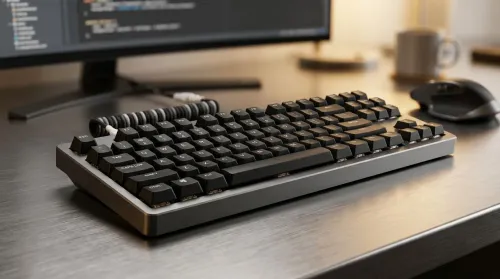
Wondering if a TKL wireless mechanical keyboard is worth it for everyday productivity? We break down latency, battery life, comfort, and workflow gains for real work. ⚡⌨️

Maximise battery life on a fanless 15-inch laptop using efficiency core architecture. Cut idle drain, tune power profiles, and improve thermals for longer runtime. 🔋⚙️
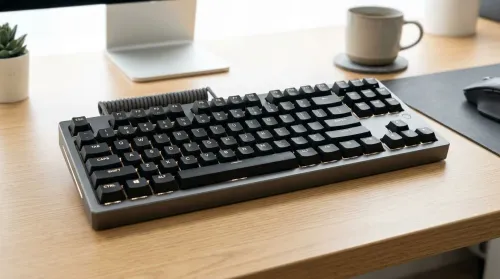
Learn how to reduce desk clutter with a TKL wireless keyboard using fewer cables, smart placement, and tidy essentials. Get a faster, calmer workspace with better ergonomics. ✅🧼
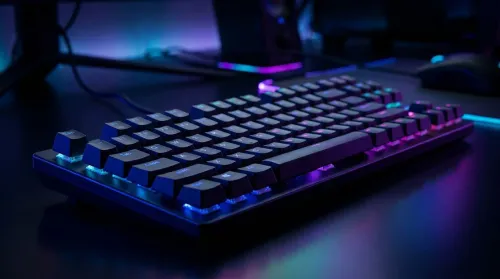
RGB keyboard lighting too distracting? Learn how to manage backlight modes, set brightness, and reduce distraction for focus and productivity 😌🖱️

Are themed gaming keyboards worth the extra cost? Compare build quality, switch options, features, and resale value to find the best fit for your setup 🎮⌨️

Full-Size vs Tenkeyless mechanical keyboards for gaming: find out if a smaller layout truly improves aim, speed, and comfort. We break down layout, desk space, latency-feel, and keybinds 🎮⌨️

Dedicated media rollers vs function key shortcuts: learn which setup gives you better workflow control, faster media access, and fewer mistakes. 🖱️🎧

Best Mechanical Switch Type for Gaming: Clicky vs Linear vs Tactile. Find your feel, speed, and noise balance with practical guidance for FPS, MOBA, and productivity 😄🎮

Direct mouse answer: Mouse not keeping up with your work? Everything that matters about dual-mode 2.4GHz + BT 5.0: DPI behaviour, channel switching, battery curves and per-app button mapping. Covers when 2.4GHz USB wins (low-latency desk) and when BT 5.0 wins (laptop, d

Plain wireless mouse guide: Mouse not keeping up with your work? Everything that matters about wireless productivity mouse: DPI behaviour, channel switching, battery curves and per-app button mapping. Includes DPI tuning tips, channel switch shortcuts, and ZAR-aware fea
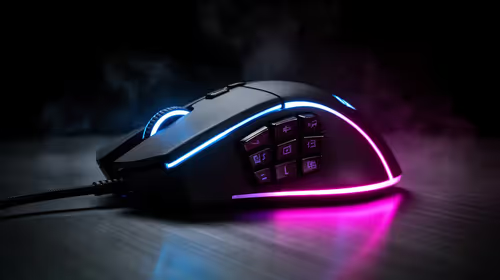
Real productivity numbers: Set up your wireless mouse in this order: everything that matters about wireless productivity mouse: DPI behaviour, channel switching, battery curves and per-app button mapping. Includes DPI tuning tips, channel switch shortcuts, and ZAR-aware
Pen not feeling like paper? Stylus lag and skipping usually trace to old drivers, dirty nibs, or display refresh mismatches, not the pen itself. Covers pressure curve tuning, tilt thresholds, nib swap timing, and SA pricing brackets.