Quick Answer
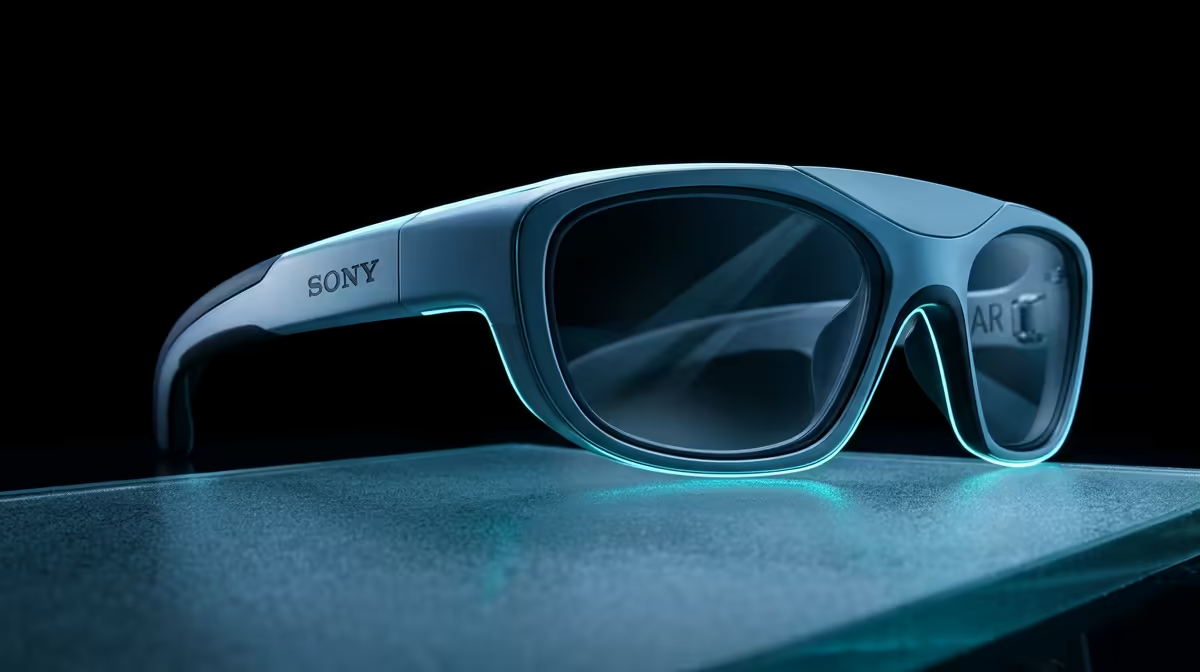
For architecture portfolio work, the must-have AR-glasses feature is a sharp virtual display you can read all day: a 1080p-per-eye pair around R5,000-R8,000 lets you review drawings and renders on a large private screen. Head tracking and spatial model review are nice-to-have upgrades, not essentials for most portfolio tasks.
The must-have versus nice-to-have split
Portfolio work means staring at fine linework, dimensions and renders for long stretches, so display clarity is the must-have. A pair with a 1080p-per-eye panel and a comfortable virtual screen size (the feel of a 100-inch display a few metres away) lets you review layouts without a monitor, useful in a studio, library or on the train. Comfortable fit and low eye strain matter just as much, since you wear them for hours.
Nice-to-have features include head tracking that anchors the screen in space, and full spatial computing for placing 3D models around you. These are pleasant but not required to mark up a 2D portfolio.
Buying order
Buy first for display quality and comfort, then for connectivity (a USB-C DisplayPort link to your laptop). Add head tracking or spatial features later if you move into 3D presentation. A clip-on prescription insert is worth budgeting for if you wear glasses, since it keeps the virtual image sharp.
FAQ
What is the most important AR-glasses feature for architecture?
A sharp 1080p-per-eye display you can read comfortably for hours, since portfolio work involves fine linework and dense text. Comfort and low eye strain matter alongside resolution.
Is head tracking essential for portfolio review?
No, it is a nice-to-have. Anchoring the screen in space is pleasant but not needed to review 2D drawings; it matters more for walking around 3D models.
Do I need prescription inserts?
If you wear glasses, a clip-on prescription insert keeps the virtual image sharp and comfortable. Budget for it as part of the purchase rather than an afterthought.
sharp 1080p-per-eye display and all-day comfort first, confirm a USB-C DisplayPort link to your laptop, and add a prescription insert if you wear glasses.