Quick Answer
Reverse ARGB fans are worth it for SA glass-side builds where the front intake fans are directly visible through the tempered glass panel. The cleaner blade-face presentation and uninterrupted LED ring improve the visual quality of a showcase build meaningfully. For solid-panel cases or non-visible fan positions, they are an unnecessary premium over standard ARGB fans.
What Reverse ARGB Fans Offer Over Standard ARGB 🌈
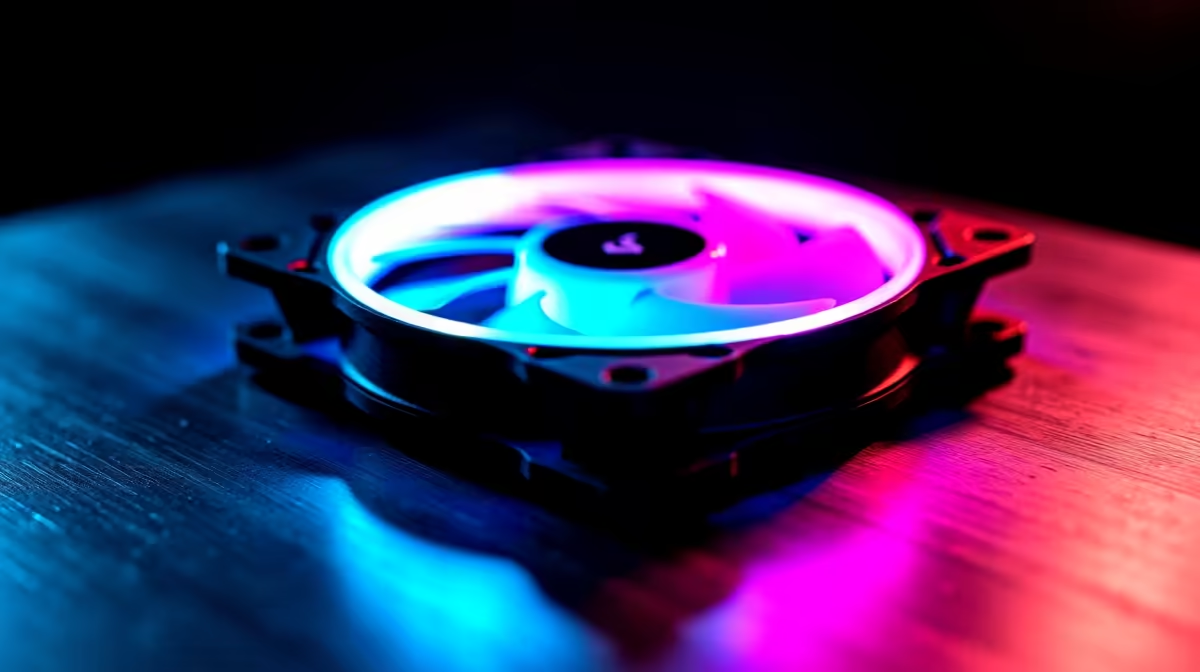
Standard ARGB fans mount with the motor hub facing inward, exposing the hub and strut assembly through the glass. Reverse ARGB fans flip this so the smooth, unobstructed blade disc faces the glass panel. With ARGB LEDs on the blade disc and outer ring, this orientation produces a continuous illuminated circle rather than a segmented light pattern interrupted by hub struts.
The Visual Payoff in a Glass-Side SA Build 🖥️
The most popular PC cases in the SA gaming market at R1,200 to R3,000 include tempered glass side panels as standard, from brands like Phanteks, DeepCool, and Lian Li at mid-market price points. In these cases, the front intake fan stack is prominently visible whenever the PC is running. A three-fan reverse ARGB intake stack shows three clean spinning discs with smooth LED rings, creating a symmetric visual element that makes the entire build look more considered and premium.
Cooling Performance: Any Difference? 🌡️
Purpose-built reverse ARGB fans cool as effectively as standard ARGB fans of equivalent spec. Airflow and static pressure ratings within 2 to 5% between same-line reverse and standard variants are the norm in bench testing. The only underperformance case is physically flipping a standard fan not designed for reverse orientation, reducing static pressure by 10 to 20%. Purchasing purpose-engineered reverse fans avoids this entirely.
Practical SA Buying Considerations 💰
Reverse ARGB fans cost R50 to R200 more per unit than equivalent standard ARGB fans. A three-fan front intake upgrade costs R150 to R600 more total. For an SA build targeting a clean glass-side aesthetic, this premium is modest relative to the total build cost. Check whether the reverse fan includes its own hub or requires one separately, since hub cost affects the true total comparison price. Availability of reverse-specific models in SA is more limited than standard ARGB ranges, so confirm stock at Evetech before building the fan selection around a specific model.
Test the Effect With Your Specific Case First ⚡
If possible, view the same case model with standard ARGB fans before committing to the reverse premium. Some case designs position the front fans behind a shroud or bezel cutouts where neither orientation is clearly superior through the glass. The reverse premium only pays off when the fan face is fully and directly visible.
FAQ
Do reverse ARGB fans require different software than standard ARGB fans?
No. Both connect to 5V ARGB 3-pin headers and are controlled identically through the same motherboard or hub software. Reversing the fan's physical orientation does not change how the LED data is addressed.
Are reverse ARGB fans available in both 120mm and 140mm?
Yes, though 120mm is the more common format for reverse-specific designs currently stocked in SA. 140mm reverse ARGB fans are available but in fewer model options locally.
Will reverse fans be compatible with any SA PC case?
Any case with standard 120mm or 140mm screw-hole pattern fan mounts accepts reverse fans physically. The visual benefit only applies in cases where that mount position is visible through glass, typically front intake positions in glass-panel mid-towers.
Considering reverse ARGB fans for your glass-side build?
Browse Evetech's selection of reverse-orientation and standard ARGB case fans to find the right visual and thermal combination for your SA gaming setup.