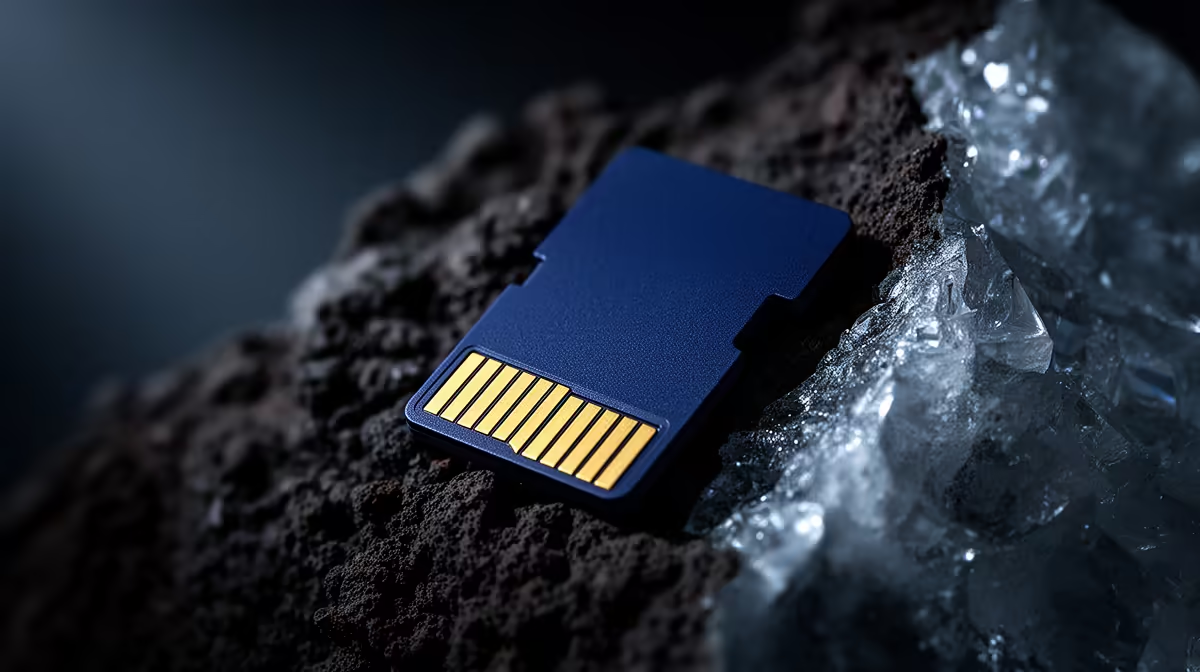
The biggest number on a microSD card box is almost never the one that matters for a retro handheld. Manufacturers shout about sequential speeds like 200MB per second, but emulation lives and dies on something printed in tiny letters: random access. The A2 application performance class is the spec to chase, because it guarantees the random read and write performance that actually decides how fast your games and menus load on a handheld.
Quick Answer
For a retro handheld, buy an A2-rated microSD card. The A2 class guarantees 4,000 random read and 2,000 random write IOPS, and that random performance, not the headline sequential MB per second, is what cuts emulation load times and keeps menus snappy. Trusted A2 options like the SanDisk Extreme and Samsung EVO Select or PRO Ultimate are widely available locally, so you skip the import wait on a low-cost upgrade.
Sequential Versus Random: The Whole Point
Sequential speed is how fast a card reads one big continuous file, like copying a single large video. Random speed, measured in IOPS (input/output operations per second), is how fast it handles many small scattered reads and writes at once. A retro handheld does the second kind of work constantly: loading thousands of small files, scraping box art, running a Linux or Android operating system off the card, and pulling game assets in fragments.
That is why a card with a huge sequential number can still feel sluggish in a handheld while an A2 card feels quick. The handheld almost never reads one big file; it reads countless little ones, and random IOPS is exactly the metric for that.
What The A2 Rating Guarantees
The SD Association defines two application classes, A1 and A2. A2 is the higher tier, specifying at least 4,000 read IOPS and 2,000 write IOPS. A1 guarantees far less random performance. For a device that boots an operating system and juggles huge game libraries off the card, that gap is the difference between waiting and playing.
A Caveat On Real-World IOPS
It is worth knowing that A2's full performance relies on host-side features, and real measured IOPS can fall short of the rated figure depending on the device and how it accesses the card. The A2 rating is still the right thing to buy, because it sets a meaningful floor and signals a card engineered for random workloads, but do not expect a benchmark to print exactly 4,000 every time. The practical experience, faster loads and smoother menus, is what you will actually notice.
Speed Class And Capacity Still Matter
A2 is not the only marking to read. The speed class (U3 and V30) ensures the card sustains enough write speed for large transfers and recording, which helps when you first load a big game library onto it. Pair A2 with U3 or V30 and you have a card that is fast both ways.
On capacity, size to your library. Retro libraries balloon quickly once you add disc-based systems and box art, so a card that feels generous today fills faster than expected. Buying one size up from what you think you need is usually the cheaper decision than re-buying later.
Brands Worth Trusting
Two names dominate for good reason. SanDisk's Extreme line is widely regarded as a gold standard for portable gaming, carrying A2 and U3 ratings and a strong reliability record. Samsung's EVO Select offers excellent value with U3 and A2 speeds at a friendlier price, while the PRO Ultimate sits above it for those who want headroom. Any of these is a safe pick; the key is confirming the A2 marking on the exact model, since brands sell both A1 and A2 cards that look similar.
Format And Longevity Matter Too
Two practical points decide whether your card stays fast and reliable. First, format it correctly for the handheld: many emulation devices want exFAT for cards above 32GB, and using the format the device or your operating system recommends avoids file-size limits and odd corruption. Format on the device itself where possible so the allocation suits how it reads the card.
Second, treat the card as the wear item it is. Flash memory has a finite number of write cycles, and running an operating system off the card writes to it constantly. That is rarely a problem within a handheld's normal life, but it is a reason to keep backups of your game library elsewhere, so a worn or failed card costs you time rather than your whole collection. Buying a quality A2 card from a reputable brand also reduces the early-failure risk that plagues cheap, unbranded cards.
Avoiding Counterfeits
Fake high-capacity microSD cards are a real hazard, especially when chasing the lowest price. A counterfeit might claim 512GB but actually hold a fraction of that, silently losing data once you exceed the real capacity, and counterfeits almost never deliver genuine A2 random performance. Buying from a trusted local retailer rather than an unknown marketplace seller is the simplest protection, because you get a genuine card with a warranty behind it. If you do test a new card, a quick capacity-verification tool will confirm the real size before you trust it with a full library.
Why Buy Locally Instead Of Importing
A microSD card is a small, low-cost upgrade, which makes importing one a poor trade. Add international shipping, the customs and VAT charges on the way in, and the clearance wait, and any saving evaporates on an item that is cheap to begin with. Buying A2 cards from local stock means you have them in hand the same week, taxed and warranted, with none of the import hassle. You can match a card to your device alongside the handheld gaming consoles at Evetech, and if you are also weighing a small gaming machine, the Evetech PC best sellers put the value in context.
Frequently Asked Questions
Why does A2 matter more than the MB per second on the box?
Because a handheld constantly reads many small files rather than one big one. A2 guarantees random IOPS performance, which governs how fast games, menus and the operating system load. The large sequential MB per second number mostly affects big single-file transfers, which a handheld rarely does in play.
What is the difference between A1 and A2 cards?
A2 is the higher application class, rated for at least 4,000 read and 2,000 write IOPS, far more random performance than A1. For running an operating system and a big game library off the card, A2 is the meaningful upgrade.
Will I actually get 4,000 IOPS in real use?
Not always exactly. Real measured IOPS depend on the host device and can come in below the rated figure, since A2 relies partly on host-side support. The rating still sets a useful floor and marks a card built for random work, and you will feel the faster loads in practice.
Do I need U3 or V30 as well as A2?
It helps. A2 covers random performance while U3 and V30 ensure sustained write speed for large transfers, like loading a big library onto the card. A card carrying both A2 and U3 or V30 is fast for both kinds of work.
Which brands are safe to buy?
SanDisk Extreme and Samsung EVO Select or PRO Ultimate are reliable, widely available choices with A2 ratings. Just confirm the A2 marking on the specific model you choose, because the same ranges include A1 cards that look almost identical.
Want faster load times on your handheld without the import wait? Browse devices and pair them with the right A2 storage in the handheld console range at Evetech and get a card that matches how your games actually load.