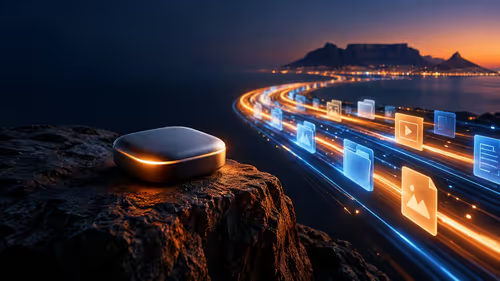
A media box that sits silently under the TV, boots in seconds, plays your own 4K library and never nags you with ads is exactly what a Raspberry Pi media streamer delivers. Running Kodi through LibreELEC, a small Pi turns into a tidy living room player that handles local and network libraries, sips power, and disappears into the entertainment unit. The question is not whether a Pi can do it, but which Pi, and the answer has shifted sharply with the latest hardware.
Quick Answer
For a living room media centre in 2026, the Raspberry Pi 5 with 4GB is the pick. Its BCM2712 chip does hardware HEVC decoding at 4K60 and outputs 8, 10 and 12 bit for proper 4K HDR through LibreELEC 11 or newer. Pair it with a fast microSD or an NVMe drive, run LibreELEC for a boot under 15 seconds, and you have a near silent 4K streamer for a fraction of a commercial media box.
Why the Pi 5 changed the calculation
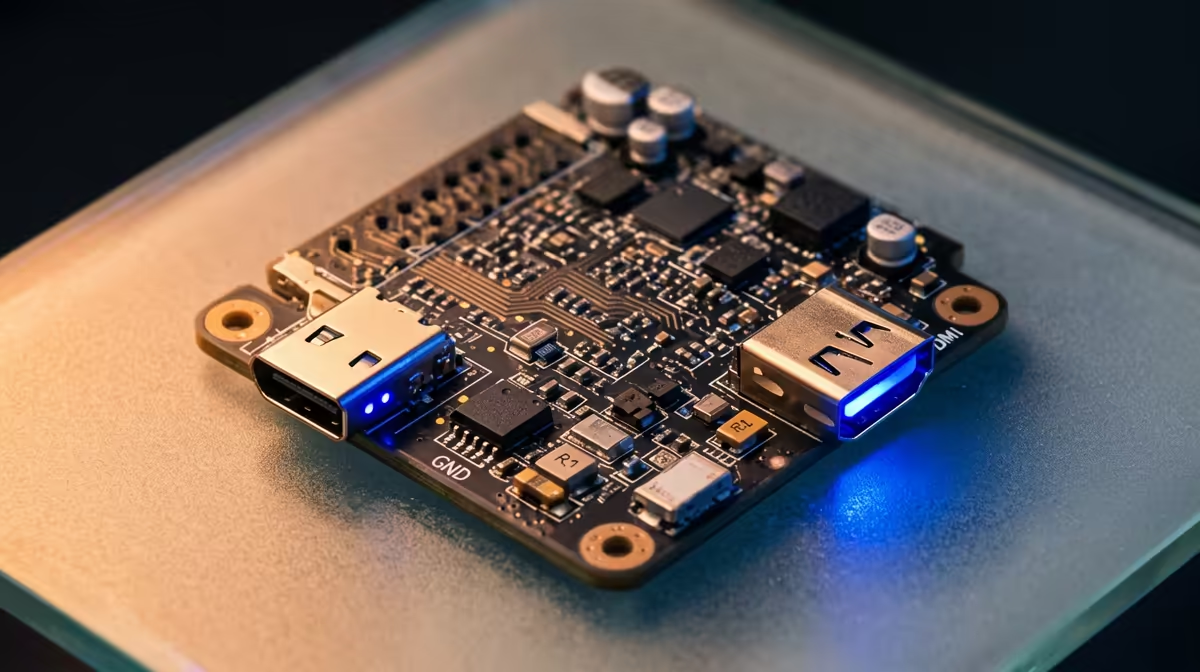
Earlier Pi media boxes leaned on a hardware H.264 decoder that topped out at 1080p. The Pi 5's BCM2712 took a different route: it dropped that old H.264 hardware decoder but added a dedicated HEVC decoder that handles 4K60. Since most 4K content today is HEVC encoded, that is exactly the codec you want accelerated, and it is the headline reason the Pi 5 is the first Pi truly comfortable as a 4K living room player.
There are honest limits worth knowing. The Pi 5 decodes HEVC in hardware, but H.264, AV1, VP9 and VC1 lean on software decoding. At 1080p those play fine, but 4K in those non native formats can drop frames. In practice most libraries are dominated by HEVC 4K and H.264 1080p, both of which the Pi 5 handles cleanly, so the gaps rarely bite. The Raspberry Pi 4 and 5 remain among the only small boards with native HEVC hardware decode at all.
Choosing the software: LibreELEC versus full Kodi
LibreELEC is a minimal operating system whose only job is to run Kodi. It strips everything else away, which is why it boots in under 15 seconds, uses very little RAM, and behaves like an appliance rather than a computer. For a dedicated media box that lives under the TV and gets used with a remote, LibreELEC is the right choice almost every time.
The Pi 5 needs LibreELEC 11.x or newer specifically, because that is where Pi 5 support and the 8, 10 and 12 bit output for 4K HDR landed. Installing it is a matter of flashing the image to your storage and booting; the first run wizard sets up your display and library sources.
You can instead run Kodi on top of full Raspberry Pi OS if you want the Pi to do other jobs as well, but you trade the fast boot and appliance simplicity for a general purpose desktop that needs more care. For most living room setups, the leaner LibreELEC path wins.
How much RAM and storage do you need
For a pure media centre, 4GB of RAM is plenty, since LibreELEC and Kodi are light. The 8GB model is only worth the premium if you intend to run extra workloads on the same board. Storage matters more for the operating system than for media: a quality fast microSD card works, but an NVMe drive via a HAT makes the interface noticeably snappier and is the upgrade most worth making. Your actual films and shows usually live on a network share or an external drive, not on the boot media.
Building it for the living room
A few practical choices separate a fiddly project from a box the whole household will use:
- Power and cooling. Use an official Pi 5 power supply, since the board is more power hungry than older models, and fit it in a case with at least passive cooling so it stays quiet and stable during long 4K playback.
- Networking. Wire it to the router with Ethernet if you can. Streaming large 4K HEVC files from a network share is far more reliable over a cable than over Wi Fi, and it keeps playback from stuttering.
- Remote control. A Pi paired with a small remote or a phone app behaves just like a commercial streamer, so anyone can use it without touching a keyboard.
- Library sources. Point Kodi at your network shares or attached drives and let it scrape metadata so the interface fills with posters and descriptions.
The compact size and silent, fanless or near silent operation are the real appeal: it tucks behind the TV and draws minimal power even left on all day. If you would rather have a slightly more flexible box that also doubles as a light desktop, a small mini PC covers similar ground with broader codec support, and the mini PC range at Evetech sits right alongside the single board options. For a sense of what people are actually buying for compact builds, the current best selling small systems are a useful gauge.
Who this is for
A Pi 5 media streamer suits anyone with a local or network 4K library who wants a quiet, low power, ad free player they fully control. If your viewing is mostly subscription apps on a smart TV, you may not need it. But for a tidy Kodi front end over your own files, it is hard to beat on size, silence and running cost.
Frequently Asked Questions
Can a Raspberry Pi 5 really play 4K HDR?
Yes. The Pi 5 has a hardware HEVC decoder rated for 4K60, and LibreELEC 11 and newer support 8, 10 and 12 bit output for proper 4K HDR. Since most 4K content is HEVC, this is the format you most want accelerated, and it plays well.
Should I pick LibreELEC or full Kodi on Raspberry Pi OS?
For a dedicated living room box, LibreELEC. It boots in under 15 seconds, uses minimal RAM, and runs Kodi like an appliance. Choose full Kodi on Raspberry Pi OS only if you also want the board to handle other desktop tasks.
Which Pi model is best for a media centre?
The Raspberry Pi 5 with 4GB is the sweet spot for a media box, thanks to its HEVC hardware decode. The 8GB version is only worth it if you plan to run extra services on the same device alongside Kodi.
Do I need an NVMe drive, or is a microSD card enough?
A good fast microSD card runs LibreELEC fine. An NVMe drive on a HAT makes the interface feel snappier and is the upgrade most worth doing, but your actual media usually lives on a network share or external drive rather than the boot storage.
Will every video file play smoothly?
HEVC 4K and H.264 1080p, which cover most libraries, play cleanly. Formats like AV1, VP9 and VC1 use software decoding, so 4K in those can drop frames. In normal use those formats are uncommon enough that it rarely causes a problem.
Want a silent, low power player under the TV? Explore compact systems in the mini PCs range at Evetech and find the right base for your living room media build.