Plenty of people want the Steam Deck experience on their TV without giving up the power of a desktop, and that is exactly the niche a couch-ready SteamOS PC fills. The best SteamOS PC build for a console-style couch gamer is a small-form-factor machine that boots straight into a controller-driven Gaming Mode, suspends and resumes like a console, and plays your Steam library at a clean 1080p on the living room screen, all without ever needing a keyboard on the coffee table.
Quick Answer
Build a Mini-ITX system running SteamOS or Bazzite around an AMD Radeon RX 7600 class GPU. It boots directly into Gaming Mode for full controller navigation with suspend and resume, fits neatly under a TV, and handles 1080p couch gaming comfortably. AMD hardware is the sweet spot because Bazzite and SteamOS run best on it.
Why SteamOS or Bazzite, Not Windows
A console feels like a console because you never see a desktop. You press a button, you are in your library, you pick a game, you play. SteamOS, the same Linux-based system that powers the Steam Deck, delivers exactly that on a desktop PC, and Bazzite is a community-built system that brings the Deck's Gaming Mode experience to a wider range of hardware.
Both boot straight into a full-screen, controller-first interface. You navigate your library, adjust settings, and launch games entirely with a gamepad. Crucially, they support suspend and resume, so you can pause a game, switch the TV off, and pick up exactly where you left off later, the behaviour that makes a console feel effortless. Windows can be coaxed into something similar, but it never stops being a desktop underneath, with updates and pop-ups that break the illusion.
Why AMD Is the Right Choice Here
Linux gaming has come a long way, and AMD graphics cards are the reason a SteamOS build is so painless. AMD's open-source drivers are built into the system, so the card works the moment you boot, with no driver hunting. The Steam Deck itself uses AMD hardware, which means SteamOS and Bazzite are tuned around AMD first.
An RX 7600 class GPU is the practical sweet spot for this build. It has the muscle for a smooth, high-framerate 1080p experience, which is the resolution most couch gamers actually want on a TV anyway, and it does not push the cost or the power draw into territory that a small living-room box struggles to cool quietly. Pairing it with a capable AMD or Intel CPU keeps the whole system balanced.
Picking the Form Factor
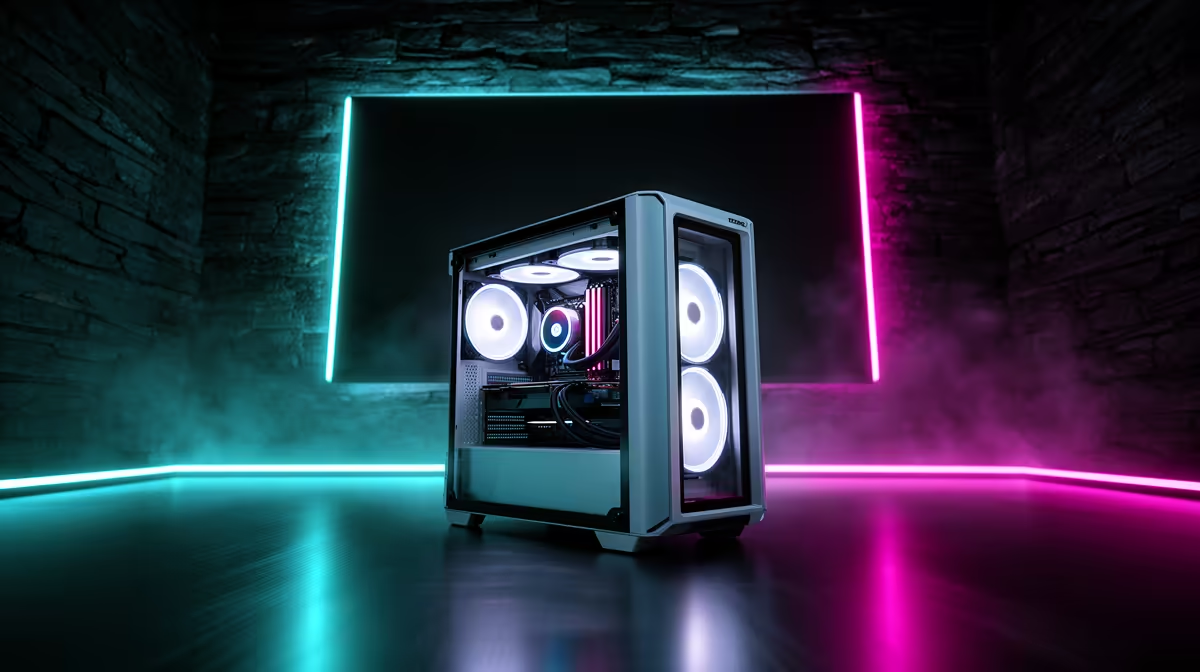
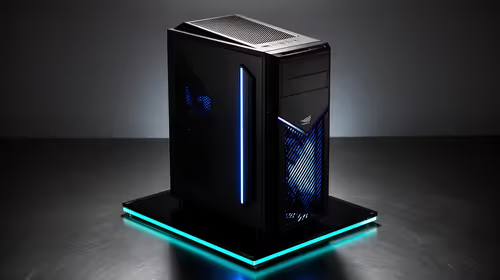
The "console-style" part of the brief is about the box, not just the software. A Mini-ITX build gives you a chassis small enough to sit beside or under the TV without dominating the room. The trade-off is that a smaller case runs warmer, so cooling and a sensible component choice matter more than in a full tower.
Keeping It Quiet and Cool
A living-room PC that roars like a jet defeats the purpose. Choose a case with decent airflow, a CPU cooler rated comfortably above your processor's heat output, and a GPU that does not need to scream to stay cool at 1080p. The RX 7600 tier helps here precisely because it is not a furnace. A quiet box that disappears into the lounge is the goal.
Storage and Memory
A fast NVMe SSD makes the console feel instant: games load quickly and the system resumes in a blink. A roomy drive matters because modern games are large and a couch library grows fast. For memory, 16GB is a comfortable floor for 1080p gaming, with 32GB giving headroom if you also stream or keep a browser open on the side.
Power, Ports, and the TV Connection
A couch build has a couple of practical needs a desk PC ignores. Plan the rear ports around how the box meets the TV: an HDMI output that supports the resolution and refresh rate of your screen, and enough USB for a wireless controller dongle and the occasional keyboard during setup. A power supply with comfortable headroom over the GPU keeps fans calm and gives the build a long, stable life, which matters more in a small warm case than in an airy tower. If your lounge sits a distance from the router, a reliable wired or strong wireless connection is worth sorting early, since couch gaming leans heavily on downloads and updates from your library.
Setting Up the Couch Experience
Once the hardware is built, the software does the heavy lifting. Install SteamOS or Bazzite, pair a controller, and the system boots into Gaming Mode ready to go. Set it to launch straight into Gaming Mode on power-up and you have a machine that behaves like a console from the first button press.
A handheld or controller-first mindset suits this whole category, and you can see related gear in the handheld gaming range at Evetech if you want a portable companion to the living-room box. For the build itself, comparing prebuilt options in the PC best sellers at Evetech is a useful sanity check on what comparable hardware costs in Rand before you commit to sourcing parts.
Who This Build Suits
This is for the gamer who loves their Steam library, wants it on the big screen, and wants the lean-back simplicity of a console without locking into a console ecosystem. It is also for anyone who already games on PC and wants a second, dedicated lounge machine that family members can use with nothing but a controller.
It is less ideal if you need a do-everything Windows desktop in the lounge, since SteamOS is gaming-first by design. But for pure couch play, that focus is the feature, not a limitation.
Frequently Asked Questions
Do I need a keyboard and mouse for a SteamOS couch PC?
No. SteamOS and Bazzite boot into a controller-driven Gaming Mode, so you navigate your library, change settings, and launch games with a gamepad alone. A keyboard is only handy for occasional setup tasks, not day-to-day couch gaming.
Why AMD instead of NVIDIA for this build?
AMD's open-source Linux drivers are built into SteamOS and Bazzite, so the card works out of the box, and the Steam Deck uses AMD hardware, meaning the software is tuned around it. That makes an AMD GPU the smoothest path for a couch SteamOS build.
Will every Steam game run on SteamOS?
Most do, thanks to the Proton compatibility layer, and a large share of the library runs well. A small number of titles with certain anti-cheat systems may not, so it is worth checking your most-played games' compatibility before committing.
What resolution should I target?
1080p is the sweet spot for this class of build, giving smooth high framerates on a TV without demanding a power-hungry GPU. An RX 7600 tier card handles 1080p comfortably while staying cool and quiet in a small case.
Can it suspend and resume like a real console?
Yes. Suspend and resume is a core feature of Gaming Mode, letting you pause a game, switch off the TV, and return exactly where you left off. It is a big part of what makes the build feel console-like rather than desktop-like.
Want a lounge PC that plays like a console? Spec a compact AMD build or compare ready-made options in the PC best sellers at Evetech and bring your Steam library to the big screen.