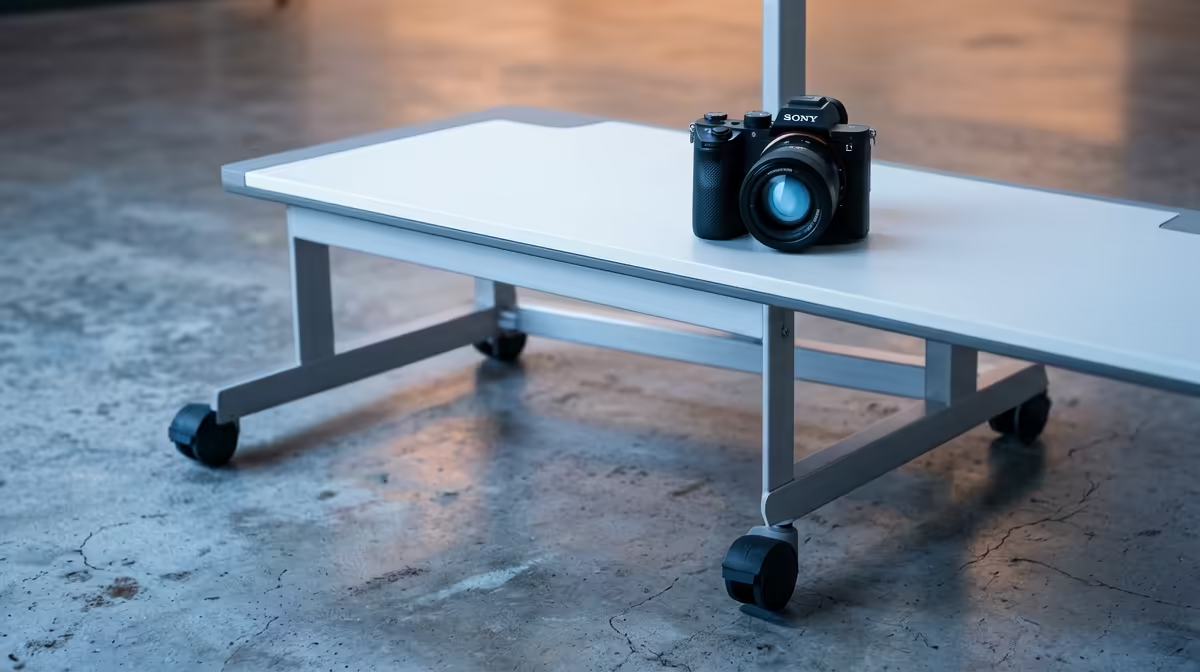
Powered height adjustment used to mean spending serious money. That has changed: a sit-stand desk with a dual-motor electric frame and memory presets now lands under R5,000 in South Africa, as long as you buy the frame on its own and supply your own top. For anyone who wants to stop sitting all day without overspending, that is the sweet spot worth understanding before you buy.
Quick Answer
The best value sit-stand desk under R5,000 in South Africa is an entry-level electric frame with dual motors and memory height presets, sold without a desktop to keep the price down. You add your own top, an old door, a butcher block, or a board cut to size, and end up with smooth powered standing function at a price that once only bought a manual crank desk.
Why the frame-only approach wins on value
The desktop is where a lot of the cost hides. A finished standing desk bundles a branded laminate or solid top into the price, and that surface is often the most replaceable part. Buy the frame alone and you spend your budget on the part that matters: the lifting mechanism.
This is why frame-only configurations let you reach a genuinely useful spec under R5,000. You are paying for motors, a controller, and a stable column, not for a slab of laminate you could source cheaper locally.
Dual motor versus single motor
A single-motor frame uses one motor to drive both legs through a shared shaft. It is cheaper but slower, noisier under load, and less stable as you load up monitors and gear.
A dual-motor frame puts a motor in each leg. It lifts faster, handles more weight smoothly, and stays level even with an uneven load. For a long-term desk, dual motor is the spec to hold out for, and the good news is it now fits the budget.
The features that actually matter under R5,000
Not every feature is worth chasing at this price. Focus on these.
Memory height presets. A controller that stores two to four heights lets you tap one button to move between your seated and standing positions. Without presets you hold the button and eyeball it every time, which kills the habit fast. Presets are the single feature that makes a sit-stand desk get used.
Lift range. Check the minimum and maximum heights against your body. A taller user needs a frame that reaches higher when standing, and a shorter user needs it to drop low enough when seated. The travel range, not just the top number, is what to read.
Weight capacity. Even a modest setup with a monitor, a PC, and the desktop itself adds up. A frame rated well above your real load lifts more smoothly and lasts longer.
Stability at full height. Wobble appears most when the desk is fully raised. A wider foot and a quality column matter more here than the marketing photos suggest.
Lifting speed and noise. A dual-motor frame lifts faster and quieter than a single-motor one, which sounds minor until you adjust the desk several times a day. A slow, loud lift is another reason people stop bothering to stand, so it quietly undermines the whole point.
Cable management. Once a desk moves up and down, every cable needs slack and a tidy path, or you tug a plug loose mid-lift. A frame with a cable tray or clips makes a powered desk far less frustrating to live with.
How to read the price gap honestly
Under R5,000 buys a genuinely capable frame, but it pays to know what you are and are not getting at this tier. You are getting dual motors, presets, and a stable lift. You are usually not getting the heaviest weight ratings, the widest travel ranges, or the quietest premium motors found on far pricier desks.
For most home and student setups that is the right trade. A single monitor, a PC, and a keyboard sit well within an entry dual-motor frame's capacity, and the preset-driven daily use is identical to a desk costing several times more. The premium tiers earn their price for very tall users, very heavy multi-monitor loads, or commercial daily abuse, none of which describe a typical SA home office.
Making the habit stick once it arrives
Buying the desk is the easy part, using it is where the value lives. The research on long sitting is consistent: alternating between sitting and standing through the day eases back strain and keeps energy steadier than sitting for hours unbroken. But a sit-stand desk only delivers that if you actually move it.
A simple routine helps. Set one preset for your seated height and one for standing, then commit to switching at a natural trigger, the start of each meeting, the top of each hour, or after lunch. Begin with shorter standing spells and build up, since standing flat-out all day is as tiring as sitting all day. The point is variety, not heroics. Because the entry frames now include the presets that make this one-button easy, the cheaper desk no longer means a worse habit, which is the real reason the under-R5,000 tier is worth taking seriously.
Choosing your own desktop
Since the frame comes bare, the top is your call. A few practical pointers:
- Match the top width to the frame's mounting span so the brackets line up.
- Keep the top reasonably light, since a very heavy slab eats into weight capacity.
- A depth of around 60cm to 80cm suits most monitor setups and keeps the desk from dominating a small room.
If you are kitting out the whole workspace, it is worth browsing the full gaming and standing desk range at Evetech to compare frames and find one that suits the space and budget you are working with.
Is it worth it over a fixed desk
For the price gap, a powered sit-stand frame earns its keep if you will actually alternate positions. The health case for breaking up long sitting is well established, and presets are what turn good intentions into a habit you keep. If you know you will never stand, a fixed desk is cheaper. If you will, this is the tier where powered standing finally makes financial sense. To see what other SA buyers are choosing alongside their desks, the best-selling workspace accessories at Evetech is a useful gauge of what other SA buyers pair with their new desks.
Frequently Asked Questions
Can you really get a sit-stand desk under R5,000 in South Africa?
Yes, by buying a dual-motor electric frame on its own and supplying your own top. The bundled desktop is what pushes finished desks over budget, so going frame-only keeps the powered function affordable.
Is a single-motor frame fine to save money?
It works, but it lifts slower, runs louder under load, and is less stable than a dual-motor frame. For a desk you will use daily for years, dual motor is the better long-term value.
Do I need memory presets?
They are the feature that makes a sit-stand desk get used. One-touch presets let you switch between seated and standing instantly, while a hold-to-move controller turns adjusting into a chore you start skipping.
What desktop should I put on a frame-only desk?
Anything that fits the frame's mounting span and is not too heavy: a board cut to size, a solid wood top, or a repurposed surface. Aim for roughly 60cm to 80cm deep for a comfortable monitor setup.
How much weight should the frame handle?
Pick a frame rated comfortably above your real load of monitors, PC, and the top itself. Extra headroom means smoother, quieter lifting and a longer service life.