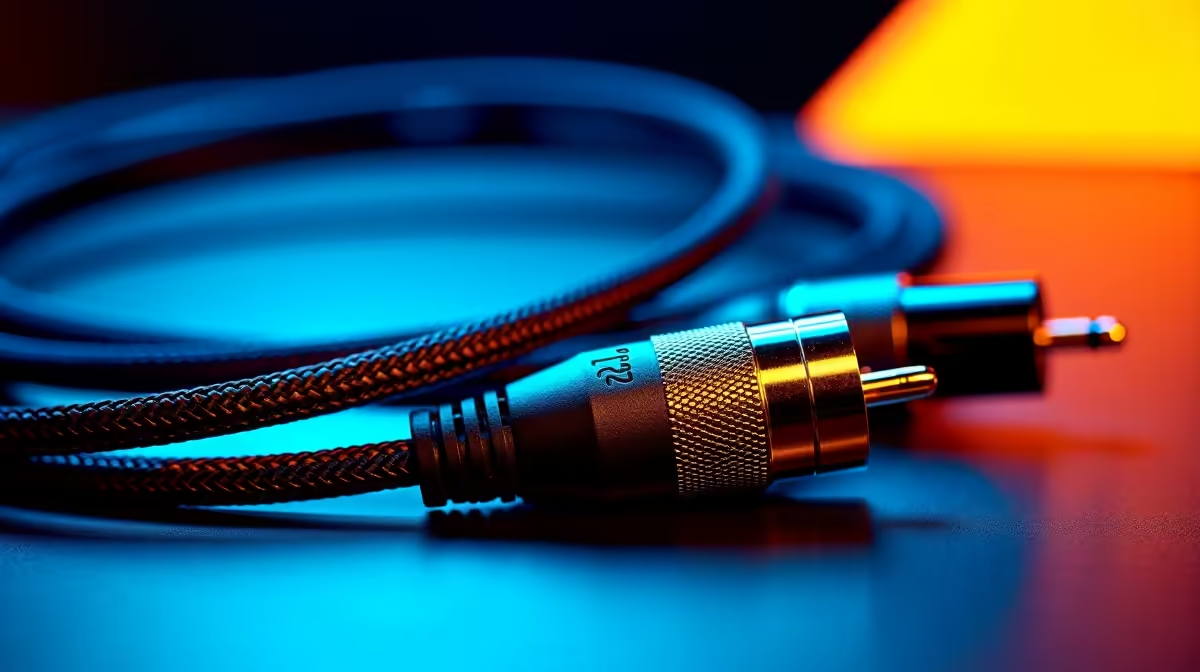
A microphone cable does one quiet, critical job: carry a fragile signal from your mic to your interface without picking up hum, buzz or radio interference along the way. The best XLR cables for home recording and streaming earn their keep through a balanced design, where your signal travels on two wires of opposite polarity so any noise the cable catches gets cancelled at the input. Cable quality matters most on longer runs and in electrically noisy rooms, which describes plenty of South African home setups.
Quick Answer
For a home studio or streaming desk, a balanced XLR cable with Neutrik or Switchcraft connectors, a tight braided shield, and a wire gauge around 20 to 24 AWG covers you for life. Expect to spend more on the connectors and shielding than the length: a quality 3 to 5 metre cable is a buy-once item.
How Balanced Cables Reject Noise
This is the whole reason XLR is the standard for microphones, so it is worth understanding.
An XLR cable carries the audio on two inner conductors plus a shield. The two conductors carry the same signal but with opposite polarity. Any interference the cable picks up along its length, mains hum, fluorescent light buzz, nearby wireless, lands on both conductors equally. At the interface input, the two signals are recombined in a way that flips one back, so the matched interference cancels out while your actual audio survives. That cancellation is why a balanced cable can run long distances cleanly while an unbalanced cable would arrive full of noise.
The practical takeaway: in a quiet room with a short cable run, even a modest XLR cable sounds the same as an expensive one. The difference shows up over longer runs and near electrical interference, exactly where the balanced design is doing its hardest work.
The Specs That Actually Matter
Ignore the exotic marketing and focus on four things.
Connectors come first. Neutrik and Switchcraft are the names to look for, because cheaper knock-off connectors are not made to the same tolerances and are the part most likely to crackle or fail after repeated plugging. The connector is also the part that takes the most physical abuse, so it is where quality counts.
Shielding is second. A dense braided shield, ideally covering most of the cable, blocks more interference than a thin spiral or foil shield. This is what keeps a high-gain microphone quiet in a room full of computers, routers and chargers.
Wire gauge is third. Core thicknesses typically run from about 20 to 26 AWG, where the lower number is thicker. Thicker conductors, around 20 to 22 AWG, transfer the signal with less resistance and are favoured for studio cables you will not move much.
Length is last, and it is the cheapest variable. Buy roughly the length you need plus a little slack, not a coil of excess that clutters the desk. A properly built balanced cable runs very long distances without audible signal loss, so for a home setup, length is almost never the limiting factor.
Matching the Cable to Your Setup
Your room and your run length decide how much to spend.
For a desk where the mic sits on a boom arm a metre or two from the interface, a well-made 3 metre cable is ample, and connector and shield quality matter more than anything else. For a setup where the cable snakes across a room, past a PC and a power strip, lean toward a longer cable with a heavier shield to keep that longer run quiet.
If you are buying the mic and the cable together, it is worth seeing them side by side in the headphones and headsets range at Evetech, where the wider audio category lives. To gauge what other South African creators are pairing with their setups, the headset best sellers give a quick, honest read on popular choices.
Cable Brand and Build Quality
If you are choosing a cable by brand, the names that repeatedly come up in home studio and live sound circles are Mogami, Belden, and Canare for the inner cable material, paired with Neutrik or Switchcraft ends. These brands are not marketing names for the cable itself but rather for the conductor material and construction method, and they matter because tolerances in both affect noise rejection and long-term reliability.
A Mogami or Belden cable fitted with genuine Neutrik ends will outlast several cheaper alternatives and will not develop intermittent crackles at the connector the first time the lead gets tugged or bent sharply. For a permanent desk setup this matters less since the cable rarely moves, but for any rig where the cable gets coiled and uncoiled regularly, build quality at the connector is the thing most likely to fail first.
Spiral copper shielding offers around 97% coverage and remains flexible through repeated coiling, which makes it a common choice for studio cables that do get moved. Braided shielding gives similarly high coverage and is more resistant to lateral compression, which is why you see it on heavier, fixed installation cables. Either approach delivers far better noise rejection than the thin foil-only shielding found in bargain-bin options.
Frequently Asked Questions
Does an expensive XLR cable sound better?
In a short run inside a quiet room, no, a quality budget cable performs the same. The premium pays off in connector durability and in heavier shielding that keeps longer runs and electrically noisy rooms clean.
What length XLR cable should I buy?
Buy the distance from your mic to your interface plus a little slack, usually 3 to 5 metres for a home desk. Balanced cables run very long without signal loss, so there is no audio reason to overbuy length.
What does balanced actually mean?
It means the signal travels on two opposite-polarity conductors so interference picked up along the cable cancels out at the input. This is what lets XLR cables stay quiet over distance, unlike unbalanced cables.
Which connectors should I look for?
Neutrik and Switchcraft are the reliable choices. Cheaper unbranded connectors vary in tolerance and are the most common point of failure, so the connector is worth paying attention to.
Will a better cable fix a noisy recording?
Only if the noise is interference the cable is picking up. Hum from a longer run or a noisy room can improve with better shielding, but a noisy preamp, room echo or a low-quality mic will not be solved by the cable.