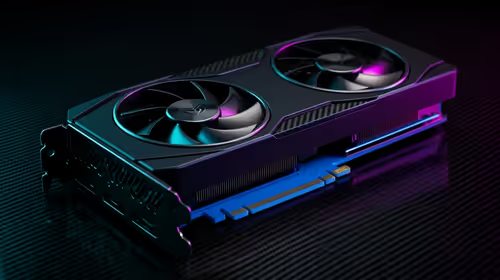
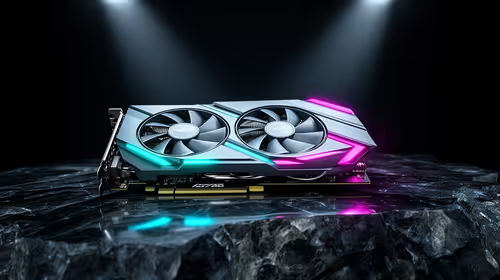
Ever stared at a graphics card price list in disbelief, wondering how one GPU can cost R40,000 while another, promising solid 1080p gaming, is under R6,000? It’s not magic, it's a fascinating process. Forget the marketing hype; we're taking you behind the factory curtain to reveal the secrets of budget graphics card manufacturing. This is the insider's guide to understanding how powerful, affordable GPUs are made for South African gamers like you. 🚀
The Silicon Lottery: Where Budget GPUs Begin
The journey of every graphics card starts on a large, circular silicon wafer. Think of it like a giant, high-tech pizza. This wafer is etched with hundreds of identical graphics processing units (GPUs). But here's the secret: manufacturing at such a tiny scale is never perfect.
Not all chips on the wafer perform equally. The flawless ones, the "perfect slices" from the centre, become flagship models like the RTX 4090. Chips with minor, non-critical imperfections are "binned" and repurposed. A section of a chip might be disabled, or its clock speed might be slightly reduced, turning what could have been a high-end failure into a perfectly functional, brand-new budget hero. This smart recycling is central to how the industry makes today's graphics cards accessible.
More Than the Chip: The Art of Smart Savings
The GPU itself is just one piece of the puzzle. The process of budget graphics card manufacturing involves clever cost-saving decisions across the entire board, all without sacrificing core performance for its target audience.
VRAM, Coolers, and Power
Board partners—the companies that actually assemble the final product—play a huge role. Leading brands like MSI create different versions of the same GPU. A budget model might have:
- Less VRAM: 6GB or 8GB instead of 16GB, which is often plenty for 1080p gaming.
- Simpler Coolers: A single-fan aluminium heatsink instead of a triple-fan vapour chamber. It's all you need for a less power-hungry chip. 🔧
- Basic Power Delivery: Fewer power phases (VRMs) because the chip doesn't draw as much electricity.
These aren't "cheap" parts; they are components specifically engineered for the thermal and power requirements of that binned GPU. This is a very different design philosophy compared to specialised, high-end workstation graphics cards built for sustained, heavy rendering loads.
VRAM Check for 1080p Gaming ⚡
While 6GB of VRAM is still viable, many new titles in 2024 push past it at high settings. For a bit more future-proofing on a budget, aim for an 8GB card. It's the sweet spot for textures and performance in games like Alan Wake 2 or Helldivers 2 without needing to drop every setting to low.
Competition is King for Your Wallet
For years, the GPU market was a two-horse race. But now, new players are shaking things up. The introduction of competitive Intel Arc graphics cards has forced everyone to get more aggressive on pricing, especially in the entry-level to mid-range sector.
This fierce competition benefits you directly. It means that to win your business, manufacturers have to pack more performance into every rand. Whether you're looking at Nvidia's entry-level RTX cards or the ever-popular AMD Radeon graphics cards, the value proposition has never been better. A "budget" GPU today can often outperform a high-end card from just a few years ago. ✨
Understanding how these affordable cards are made shows they aren't compromises; they're triumphs of engineering designed to hit that perfect price-to-performance ratio.
Ready to Find Your Perfect Match?
A budget GPU doesn't mean a budget experience. It means smart gaming. Armed with this knowledge, you can choose a card with confidence. Explore our massive range of graphics cards and find the perfect engine for your gaming rig today.