Best Gaming PC for Party Games: Essential Components Guide
Picture this: the braai is sizzling, mates are over, and someone suggests a chaotic round of Overcooked. You fire up the PC, but the mayhem of four frantic chefs turns your gameplay into a stuttering slideshow. A great party deserves seamless gaming. Building the best gaming PC for party games isn't about bleeding-edge power; it's about smart, stable performance that keeps the fun flowing without needing a massive budget. Let's get it sorted.
What Defines a Great Gaming PC for Party Games?
Unlike a rig built for solo adventures in Cyberpunk 2077, a party PC has different priorities. You're not chasing maximum graphical settings at 4K. Instead, the goal is flawless stability, instant loading times, and the ability to handle multiple controllers without a hiccup.
Think about the most popular couch co-op titles: Jackbox Party Packs, Gang Beasts, Moving Out, or Pummel Party. These games rely on CPU performance to manage physics and player inputs, and on fast storage to keep the action moving between rounds. A well-optimised gaming PC for party games ensures the only thing lagging is your friend who can't make a simple burger. 🍔
The Essential Components for Your Party Powerhouse
Building a PC specifically for social gaming is one of the most cost-effective ways to get a brilliant experience. You can prioritise components that matter for this specific use case and save money where you don't need to overspend. Here’s a breakdown of the essential components.
The CPU: The Party's Host 🧠
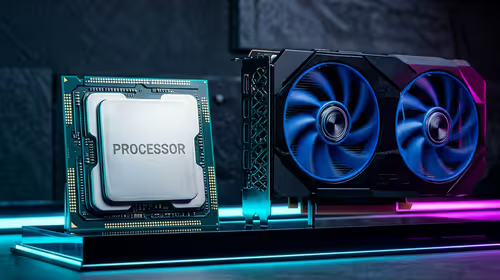
The Central Processing Unit (CPU) is the brain of your operation, managing all the game's logic. For party games, where multiple things are often happening on screen at once, a CPU with solid single-core performance and a decent number of cores is key.
You don't need a top-of-the-line Intel Core i9 or AMD Ryzen 9. A modern mid-range processor like an Intel Core i5 or AMD Ryzen 5 is the sweet spot. These chips provide more than enough power to prevent bottlenecks and ensure a smooth experience, even when the on-screen action gets intense.
Controller Chaos, Controlled
Don't rely on a single Bluetooth dongle for four controllers. Invest in a dedicated USB hub or use the official wireless adapters for Xbox controllers to ensure a stable, lag-free connection for everyone. 🎮
The GPU: Keeping it Smooth, Not Sweaty
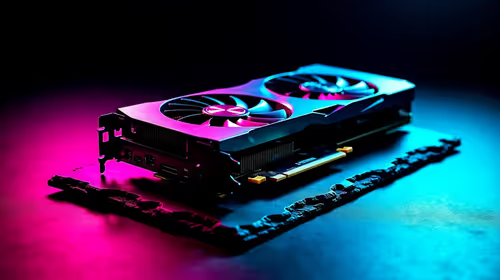
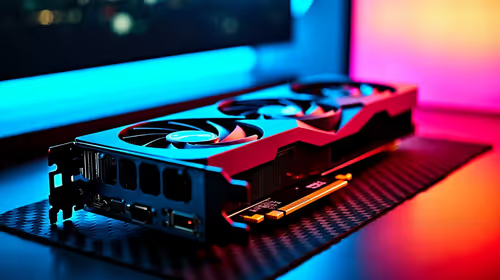
Your Graphics Processing Unit (GPU) renders the visuals. While important, you can be tactical here. Most party games are not graphically demanding. Your goal is a rock-solid 60 frames per second (FPS) at 1080p or 1440p on your TV or monitor.
A GPU like the NVIDIA GeForce RTX 4060 or AMD Radeon RX 7600 offers fantastic value. It delivers smooth performance for couch co-op titles and still has enough grunt to handle more demanding AAA games if you decide to play solo. This is a core part of building the best gaming PC for party games without wasting a cent.
RAM & Storage: No More Awkward Silences ⚡
Waiting for a game to load is a vibe killer. This is where your storage and memory (RAM) come in.
- Storage: A fast NVMe M.2 SSD is non-negotiable. The speed difference compared to an old hard drive is massive, slashing loading times between levels and getting you back into the action instantly. A 1TB drive is a great starting point.
- RAM: For most party games, 16GB of DDR4 or DDR5 RAM is the perfect amount. It provides enough headroom to run the game, your operating system, and a few background apps (like Discord or Spotify) without any stuttering.
Beyond the Core: Case and Connectivity
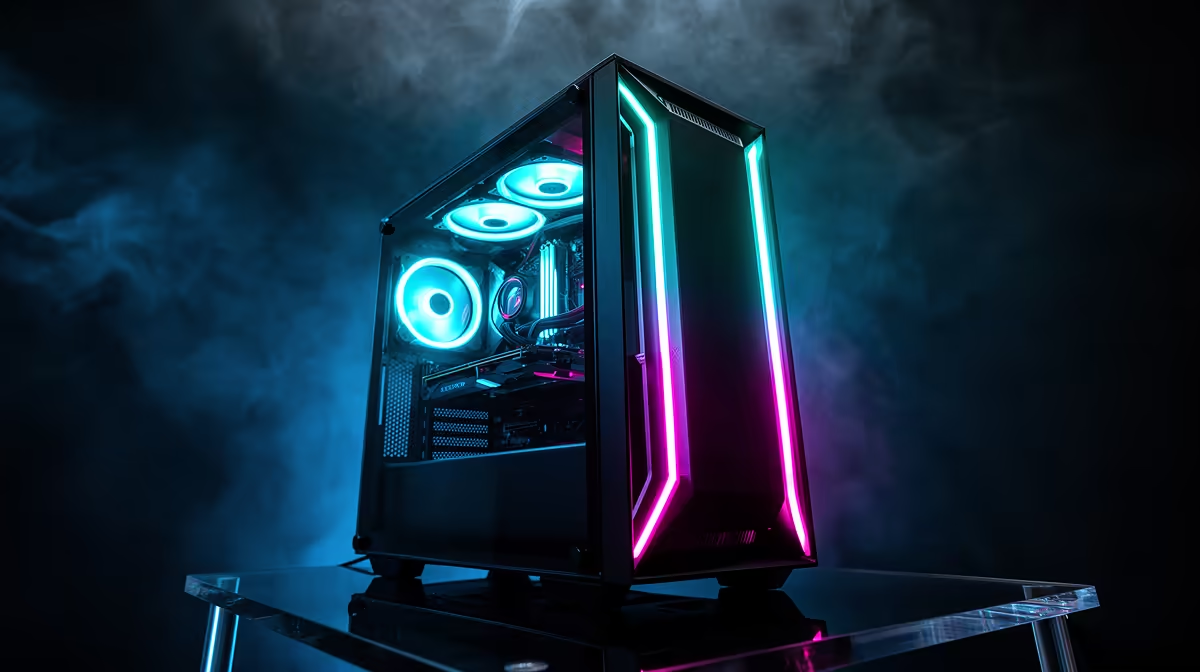
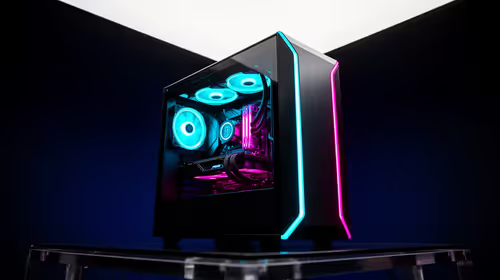
Finally, think about where this PC will live. If you plan on moving it from your desk to the living room TV, a smaller case like a Micro-ATX or Mini-ITX build is a fantastic choice. They are more compact and easier to transport.
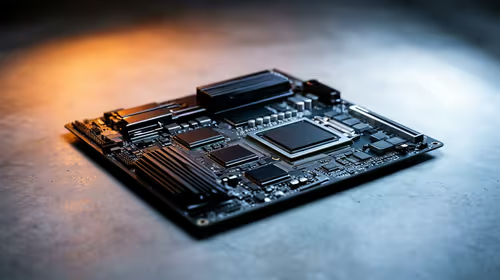
Also, check for a good number of USB ports on the case and motherboard. With four controllers, keyboard, mouse, and maybe a headset, you'll need them. A motherboard with built-in Wi-Fi and Bluetooth is also a huge plus for easy connectivity. ✨