Mini PCs trade upgrade room for size and silence, so the whole decision is about specifying RAM and storage correctly the first time.
Quick Answer
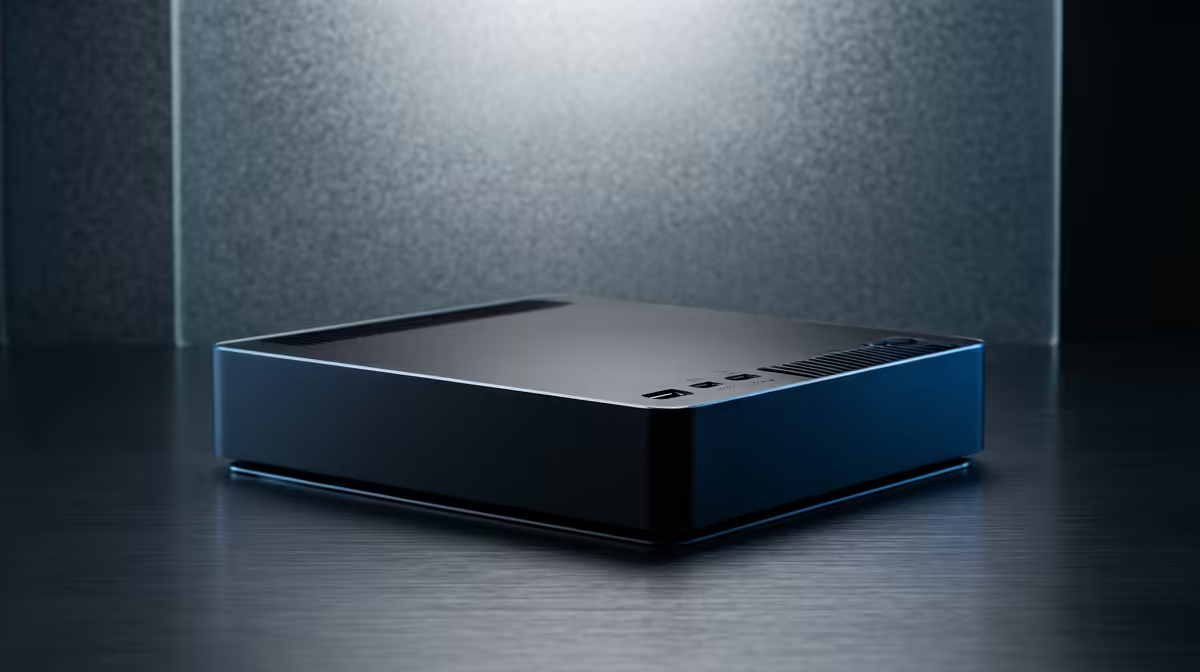
Entry-level mini PCs are enough for data-science coursework if you fit at least 16GB RAM (32GB recommended). A Beelink SER8 or Minisforum UM790 Pro (R11,000-R14,500) runs Anaconda, JupyterLab and pandas/scikit-learn comfortably. They handle CPU-bound work well; for serious deep learning you'll eventually want a desktop with an NVIDIA GPU for CUDA.
What coursework actually needs
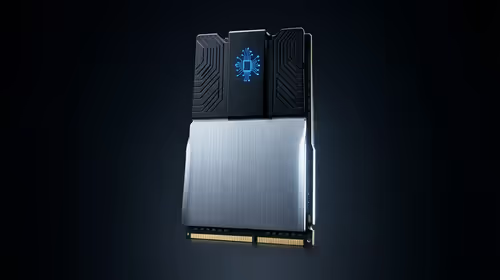
Most undergraduate data science is CPU and RAM bound, not GPU bound. Anaconda alone wants 3-5GB of disk, JupyterLab keeps notebooks resident, and pandas/numpy/scikit-learn love RAM. A modern mini PC with a Ryzen 7 8845HS, 32GB RAM and a 1TB NVMe chews through tabular datasets and model training on scikit-learn without complaint. 16GB is the floor; 32GB removes the swapping that slows big DataFrames.
When you'll need more
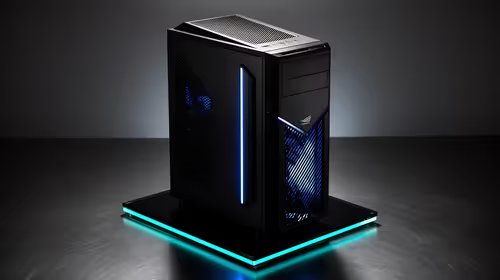
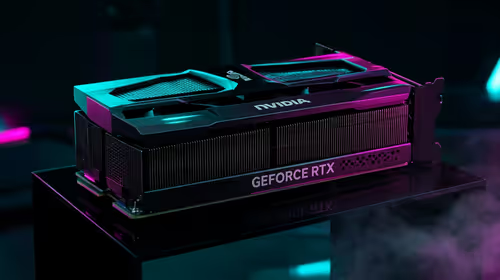
TensorFlow or PyTorch GPU training, large image datasets and heavy deep learning need CUDA cores a mini PC's integrated graphics can't provide. For coursework you can run those CPU-only or in the cloud; for a final-year deep-learning project, plan a tower with an NVIDIA RTX GPU. For everything short of that, a well-specced mini PC is a tidy, quiet, desk-friendly choice for res or digs.
FAQ
How much RAM for data-science coursework?
16GB is the realistic floor; 32GB is recommended so large pandas DataFrames and multiple notebooks don't force swapping. RAM matters more than raw CPU speed for most coursework.
Do I need a GPU for data science?
Not for typical coursework - scikit-learn and pandas are CPU-bound. You only need an NVIDIA GPU with CUDA for serious deep learning in TensorFlow or PyTorch.
Will a mini PC run Anaconda and Jupyter?
Yes, easily. Anaconda needs 3-5GB of disk and Jupyter is light; any modern mini PC with 16GB+ RAM and an NVMe runs the full data-science stack smoothly.
Spec 32GB RAM and a 1TB NVMe on your mini PC, and lean on cloud or campus GPUs for the rare deep-learning task rather than overbuying.