Quick Answer
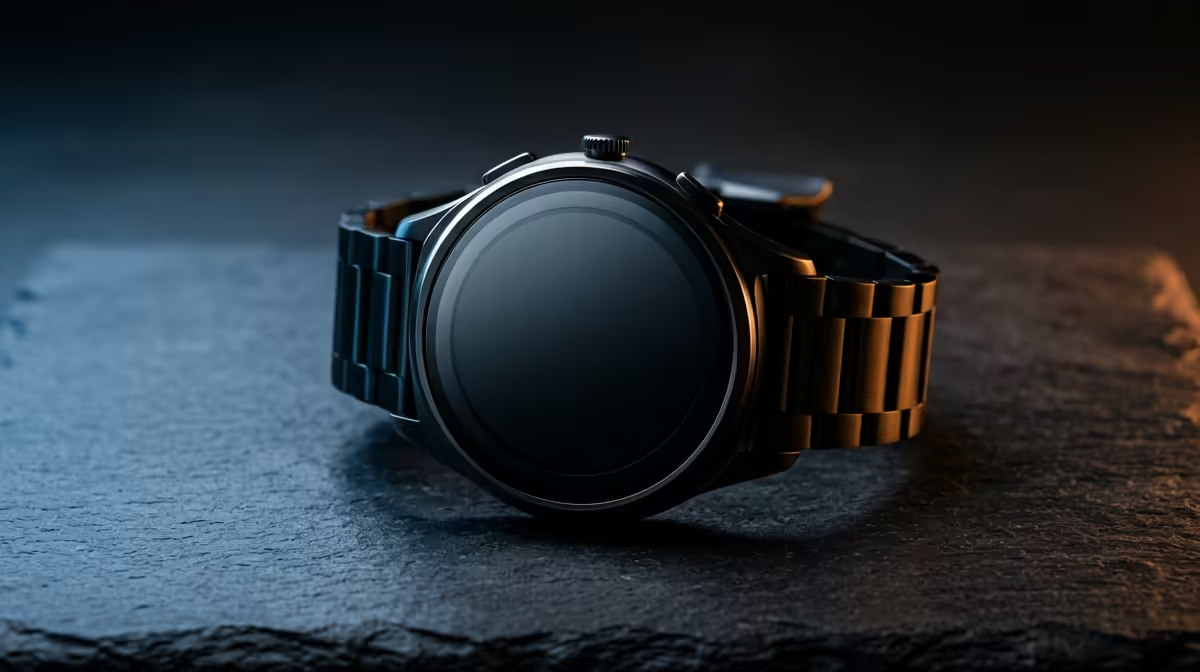
Buy now only if the smart watch fixes a daily problem for a first-year student handling lectures, residence rules, assignments, and a tight setup budget; upgrade later if the main PC, laptop, monitor, or network still slows the work. Start with reliable phone sync, 18 to 40 hours of battery life, calendar alerts, and a readable 40mm to 45mm screen. Keep this price anchor in mind: R1,200 to R3,000 suits starter watches, while stronger sensors and longer battery life often sit around R4,000 to R8,000. Move up only when the premium feature removes a real bottleneck.
Battery and app support
Start with the parts that can be checked on a spec sheet. The baseline is reliable phone sync, 18 to 40 hours of battery life, calendar alerts, and a readable 40mm to 45mm screen. For a first-year student handling lectures, residence rules, assignments, and a tight setup budget, this matters more than a flashy bundle because the device must survive daily use without becoming another thing to troubleshoot. Use numbers such as 65W, 1Gbps, 1080p 30fps, 60Hz, 120mm, or 16GB where they fit the product.
When the watch is useful
The upgrade earns its cost when it removes a repeated bottleneck: dropped peripherals, noisy 900rpm cooling, weak audio, cramped mouse space, unstable Wi-Fi, or 60fps to 120fps gaming that does not feel consistent. Work from R1,200 to R3,000 suits starter watches, while stronger sensors and longer battery life often sit around R4,000 to R8,000. That range is broad because live prices move, but it keeps the comparison honest.
What to skip
Use named models as reference points, not live-stock promises. Samsung Galaxy Watch6, Apple Watch SE, Garmin Venu 3, and Huawei Watch GT models are useful references. Compare warranty path, cable needs, adapter cost, room size, and whether the item moves between home, campus, office, or LAN sessions. The right pick meets the spec target without rare extras.
FAQ
What is the safest starter spec for a smart watch?
Choose the starter spec that covers the daily job without risky workarounds. A measurable anchor such as 65W, 1080p, 1Gbps, 60fps, 120mm, or 16GB makes the comparison clearer.
When should first-year student spend more?
Spend more when the upgrade fixes a repeated failure such as slow setup, weak battery life, poor capture quality, cramped space, or unstable connections. Skip features that will stay unused after the first week.
How should SA buyers compare prices without live pricing?
Use broad ZAR bands and compare the full basket, including cases, mounts, cables, adapters, storage, or stands. If accessories push the total past the next better model, the cheaper pick is no longer the value option.
Compare the daily problem, measurable spec, and full ZAR basket before deciding whether this smart watch deserves upgrade spend.