Quick Answer
The cheapest viable motherboard for a Core Ultra 9 285K is a well-built B860 board around R5,000-R6,000 with a 16-phase VRM, which handles the 24-core chip's power cleanly for gaming. For overclocking, extra Gen5 lanes and the strongest power delivery, a Z890 board (R7,000-plus) is the better long-term home, but it is not required for stock gaming performance.
The Affordable Floor: Strong B860
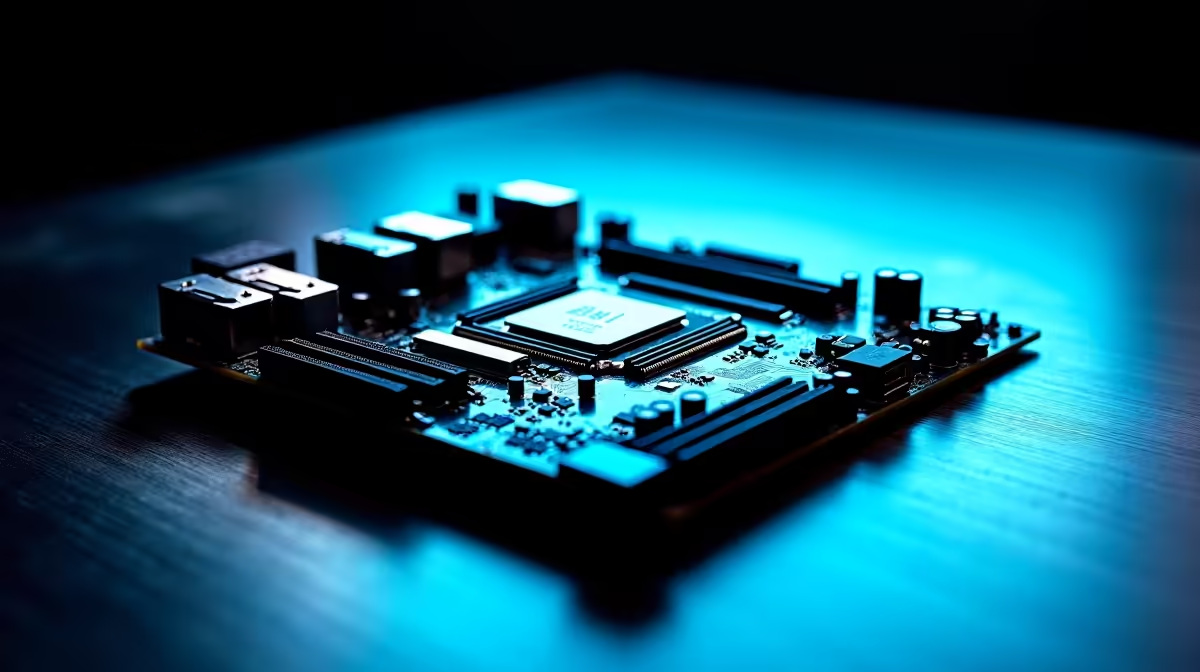
Skip the cheapest budget boards for a flagship CPU. A solid B860 board with a 16-phase-plus VRM and proper heatsinks runs the 285K at stock without throttling. Confirm a BIOS supporting Core Ultra Series 2 out of the box so it boots first time, and check DDR5-6400 on the QVL. This is the lowest sensible spend for a 24-core chip; cheaper boards risk VRM throttling under all-core loads.
When Z890 Is Worth The Step Up
Z890 boards add 18-22 phase VRMs, more Gen5 M.2 slots, BCLK and memory overclocking, and 10G or dual LAN. If you render, encode or run multiple fast drives, those features let the 285K stretch its legs. A 360mm AIO is the right cooler at either tier, since the chip runs warm under sustained load.
Pairing It Sensibly
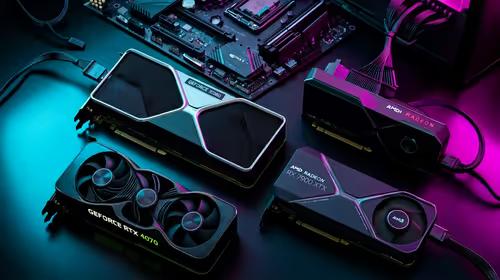
Pair the 285K with DDR5-6400 CL32 (a 32GB kit around R2,500-R3,000) and an 850W PSU if you add a high-end GPU. Match the GPU to your resolution; the card sets frame rates more than the board tier.
FAQ
What is the minimum board for a 285K?
A strong B860 board with a 16-phase VRM around R5,000-R6,000 is the sensible floor. Avoid bargain boards that cut VRM cooling under a 24-core chip.
Do cheap boards throttle the 285K?
They can. Weak VRMs overheat under sustained all-core loads and drop clocks, so spend on adequate power delivery and heatsinks.
Is Z890 mandatory?
No. Z890 is for overclocking, extra Gen5 lanes and richer I/O. A capable B860 board runs the 285K at full stock gaming performance.
24-core 285K, do not buy a bargain board; a 16-phase B860 with proper VRM heatsinks is the safe minimum to avoid throttling.