Quick Answer
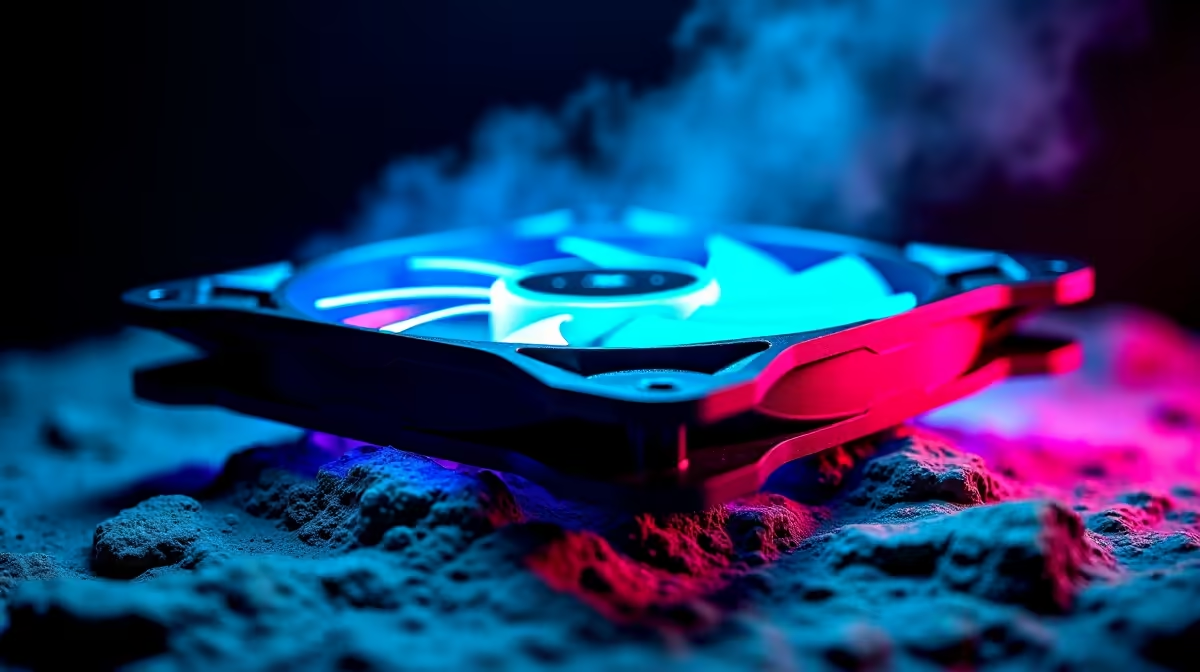
For SA gaming setups in warm rooms, prioritise ARGB fans with static pressure ratings above 2.0mmH2O, maximum RPM above 1,800, and fluid dynamic bearings. Higher ambient temperatures (28 to 35 degrees Celsius in Gauteng and Limpopo summers without air conditioning) compress thermal headroom, so fans must deliver genuine cooling performance, not just look good.
How SA Room Temperatures Affect Fan Selection 🌍
Fan specifications are measured in laboratory conditions at 20 to 23 degrees Celsius ambient. In a Gauteng gaming room during a December afternoon without air conditioning, ambient temperatures regularly reach 30 to 35 degrees Celsius. This shifts every component's thermal starting point upward: a CPU that idles at 40 degrees Celsius in a 22-degree room idles at 50 to 55 degrees in a 32-degree room.
Prioritising CFM and Static Pressure for Warm Conditions 💨
SA builders in warm rooms should target front intake ARGB fans with at least 60 CFM per 120mm fan and 2.0mmH2O or higher static pressure. Running a Ryzen 7 9800X3D or RTX 5070 system in a 32-degree room, a three-fan front intake producing 180+ CFM combined maintains GPU temperatures 8 to 12 degrees Celsius lower than a two-fan setup, a material difference for long gaming sessions that extend beyond two hours. For the rear exhaust position, prioritise CFM over static pressure since there is minimal restriction.
ARGB Features That Do Not Sacrifice Cooling ✨
Many premium ARGB fans are engineered with cooling performance as a primary criterion, with LED aesthetics layered on top. Look for ARGB fans that list their airflow specs prominently rather than only showcasing LED features. Fans where the ARGB hub draws power from a SATA connector avoid the small but real risk of underpowering LEDs at high fan load on systems with many ARGB components.
Building for Both Acoustics and SA Heat 🔇
The challenge in warm SA rooms is balancing the desire for a quiet PC against the need for more active cooling. PWM fan curves tuned for SA conditions should start the ramp earlier: begin increasing fan speed at 45 degrees Celsius CPU temp rather than the 55 to 60 degrees commonly recommended in cooler climates. A fan that ramps from 30% to 60% PWM between 45 and 65 degrees Celsius provides near-silent idle while ensuring cooling engages proactively. Set your upper limit to 100% at 80 degrees Celsius rather than 90 degrees to preserve headroom on hot days.
Position Your PC Away From Direct Sunlight ⚡
In SA homes, afternoon sunlight through western-facing windows can raise localised room temperature around your desk by 4 to 8 degrees Celsius. Positioning your PC tower out of direct sun reduces the ambient temperature your fans must work against, meaningfully improving temperatures without any hardware change.
FAQ
How many ARGB case fans does a typical SA gaming setup in a warm room need?
At minimum three: two front intake and one rear exhaust. In consistently warm rooms above 30 degrees Celsius ambient, adding a top exhaust fan is strongly recommended to remove the heat rising off the GPU and CPU cooler.
Do ARGB fans run hotter than non-ARGB fans because of the LEDs?
No. ARGB LEDs consume milliwatts and contribute negligible heat. Thermal performance depends on CFM, static pressure, and bearing quality, not LED count. Choose ARGB fans freely without concern that the lighting affects cooling.
Should I buy 140mm ARGB fans instead of 120mm for SA warm rooms?
140mm fans move more air at lower RPM and quieter operation. If your case supports 140mm front intake, they are an excellent choice for SA warm-room conditions, delivering better airflow at noise levels equivalent to 120mm fans running harder.
Cooling a gaming setup in a warm SA room?
Evetech stocks ARGB case fans with the static pressure ratings, high-RPM maximums, and bearing quality that SA summer conditions demand, available in 120mm and 140mm formats.