Quick Answer
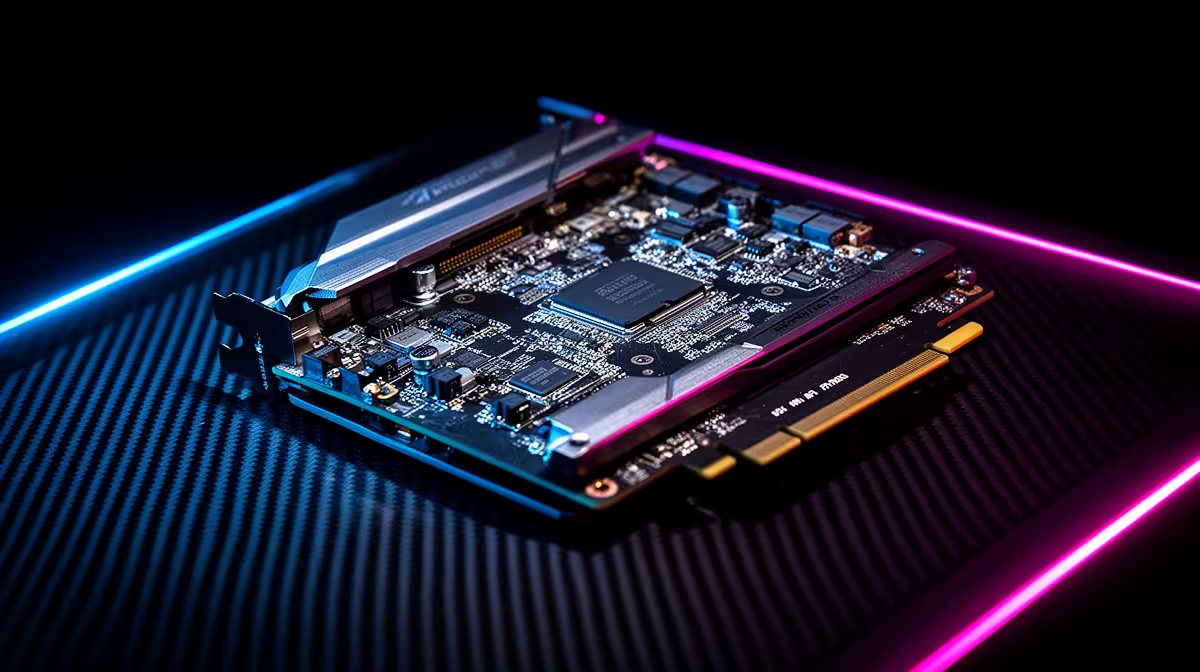
The right GPU tier for cinematic story games is the one that protects smooth minimums, not the one with the loudest launch-day label. Rank by VRAM, ray tracing, driver features, power use and monitor resolution, then check broad SA pricing before buying. Expect useful GPU upgrades to span roughly R4,000-R15,000 in the mid-range and much more at flagship level.
Tier list snapshot
S-tier: RTX 5090 for 4K and creator headroom. A-tier: RTX 5080 class cards for 1440p ultrawide and 4K high refresh. B-tier: RTX 5070 class cards for balanced 1440p builds.
How the use case changes the ranking
For cinematic story games, a balanced system matters more than a single hero part. Story games reward GPU strength and visual settings, esports rewards CPU minimums and high-refresh displays, and strategy or sim games often punish weak CPUs during busy scenes. Use 60fps at 4K, 120fps to 165fps at 1440p, or 240fps esports at 1080p depending on tier as the practical target range.
SA build pairing
Pair the shortlist with 32GB DDR5, a 1TB NVMe SSD and a quality PSU. A Ryzen 7 7800X3D, Ryzen 7 9700X, Core i7-14700K or Core Ultra 7 class CPU is the clean match for high-refresh gaming. For GPUs, make sure the case, PSU connectors and monitor resolution fit before paying.
FAQ
What is S-tier for cinematic story games?
S-tier means the part has enough headroom for the target resolution or refresh rate without forcing wasteful supporting upgrades. It must also make sense at SA pricing, because a lower tier can be the smarter buy when the monitor is modest.
Should I buy the flagship gpu?
Buy flagship only for 4K, heavy creator work or a monitor that can use the extra frames. For many SA gamers, the best value sits one or two tiers lower with more budget left for RAM, SSD and display quality.
What bottleneck should I check first?
Check GPU usage, CPU per-core load, RAM capacity and monitor refresh. If the game is already capped by the screen, a faster part will not feel dramatically better.
Buyer check
Choose the tier against your current monitor and the games you replay weekly; that prevents paying for performance you cannot see.