Strip away the marketing language and a display cable is really a handful of physical layers stacked around a signal path, each one solving a specific problem the others cannot. Conductor, shielding, sheath and connector all fail differently, which is why a genuinely well built cable needs all four handled properly rather than one standout spec covering for weak points elsewhere. An 8k displayport cable that gets every layer right, like the UGreen DP114 at R299, is worth taking apart conceptually to see why each choice matters on its own.
Quick Answer
At R299, the UGreen DP114 builds its 8K-rated signal path from oxygen-free copper conductors, foil-and-braid shielding, a braided outer sheath and gold-plated connectors, four layers that each address a different failure point a cable can develop, from signal resistance to physical wear.
🧵 The Conductor: Where the Signal Actually Travels
At the centre of any DisplayPort cable are the copper conductors carrying the actual video signal from GPU to monitor. Ordinary copper wire holds a small percentage of oxygen locked into its structure from the manufacturing process, and that oxygen slowly forms microscopic impurities within the metal that push the conductor's resistance up over months of use. Refining the copper to strip out most of that oxygen before drawing it into wire keeps the starting resistance lower and keeps it from creeping upward as quickly, a difference that counts most when the resolution and refresh rate being pushed through the cable leave little room for error to begin with.
This detail rarely appears on generic cable packaging, since conductor material is one of the easiest specs to cut corners on without a buyer noticing until performance issues show up months later. A cable that states its conductor type openly, rather than staying silent on it, generally reflects a manufacturer confident in that part of the build rather than one hoping it goes unquestioned.
🛡️ The Shielding: What Protects the Signal From Outside Noise
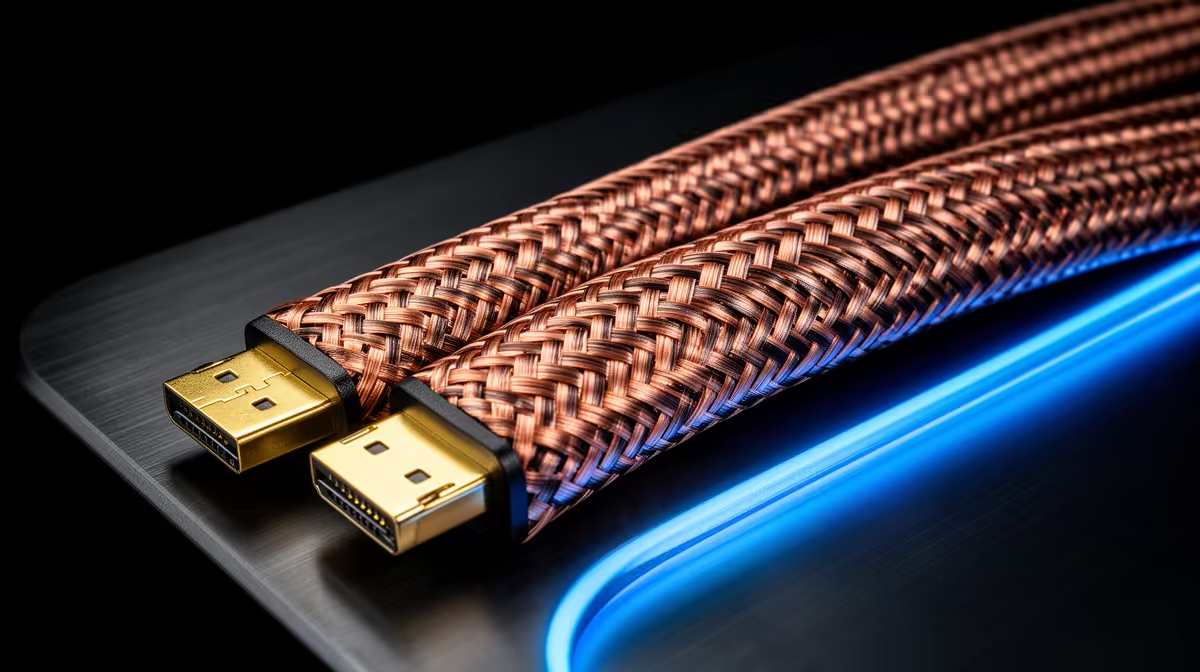
Wrapped around the conductors sits the next layer, and the DP114 does not settle for a single approach here. One sub-layer takes the form of a solid metal wrap sealed tightly around the core, catching the faster-oscillating noise that a gap-free barrier is best placed to stop, while a second, mesh-woven layer of interlaced strands sits alongside it, better suited to slower-oscillating noise and adding a degree of toughness the wrap on its own cannot match. Pairing the two means the cable is guarded against a wider spread of electrical noise than either sub-layer would manage solo, since the DP114's build brings both into play rather than picking just one. The DP114 itself states this dual approach openly rather than leaving buyers to infer it from the DisplayPort branding.
🧶 The Sheath: Physical Durability Around the Signal Path
Outside the shielding sits the outer sheath, the layer most people actually see and touch when handling the cable. On the DP114 this is a woven fibre jacket rather than a smooth rubber tube, and that weave lets the cable flex evenly along its full run instead of folding sharply at one weak point the way a plain jacket tends to under repeated coiling. Storage in a bag or drawer is kinder to it too, since the woven texture holds a loose loop shape rather than collapsing into tangles the way a soft jacket often does. This layer does not touch the signal itself, but it decides how long the layers underneath stay protected during everyday handling. Add in a sensible overall length, 1.5m on the DP114, and the result is a cable still looking and behaving the same after a year of desk use rather than one that has gone stiff, split or visibly tired in that same stretch of time.
🥇 The Connectors: Where Most Cables Actually Fail First
At each end of the cable sits the connector, arguably the part with the highest odds of causing trouble down the line, since it takes the brunt of every insertion and removal. The DP114 finishes both ends in gold rather than a cheaper plating, a metal that simply will not tarnish the way nickel or tin contacts eventually do, so the plug keeps making solid contact year after year of being pushed in and pulled out rather than slowly turning intermittent the way a lesser connector might. Where the braided jacket meets the plug also matters here, since that join is where strain concentrates most during handling, and this is realistically the toughest test the whole cable's construction faces in daily use. Plating thickness is also the one detail almost impossible to judge from a listing photo, since a connector finished with a thin, cheap layer of gold looks no different on day one from one finished properly, and only reveals the gap once the thin layer has worn through to bare metal underneath.
Comparing how these four layers are specified across Evetech's cable catalogue is a useful exercise, since two cables that look similar in a photo can differ significantly in conductor material, shielding type, sheath construction and connector plating, all of which affect how the cable performs and how long it lasts.
Once the cable itself is settled, Evetech's accessories selection is worth a look for the rest of a desk setup built with the same construction standard in mind.
Frequently Asked Questions
Which layer of a DisplayPort cable fails first, typically?
The connector tends to fail first in cables that get unplugged regularly, since repeated insertion gradually wears standard-plated contacts and stresses the strain relief point near the plug.
Does the conductor material matter if the shielding is already good?
Yes, shielding blocks outside interference while conductor material affects internal resistance, and both need to be handled well for a cable to perform consistently at demanding resolutions and refresh rates.
Is a braided sheath purely cosmetic?
No, the woven texture lets the cable flex evenly along its length instead of folding sharply at one point, which genuinely cuts down on the cracking and permanent kinks that repeated coiling causes.
Why use both foil and braid shielding instead of just one?
A solid metal wrap catches faster-oscillating noise with no gaps in its coverage, while the woven mesh layer handles slower-oscillating noise and adds toughness, so pairing them guards against a broader spread of interference than either sub-layer alone.
Do gold-plated connectors improve signal speed?
No, the plating is there to stop the contact tarnishing and keep the plug seated firmly over years of use, not to push data through the cable any faster.
Can two cables with the same headline specs still differ in build quality?
Yes, details like plating thickness, sheath weave density and exact shielding construction rarely appear in full on a product photo, so two cables listing similar headline specs can still differ in how long they actually last.
Ready to see what actually goes into a quality display cable?
The UGreen DP114 combines a braided jacket, oxygen-free copper and gold-plated connectors in one build. Evetech's DisplayPort cable selection carries it for R299.