Quick Answer
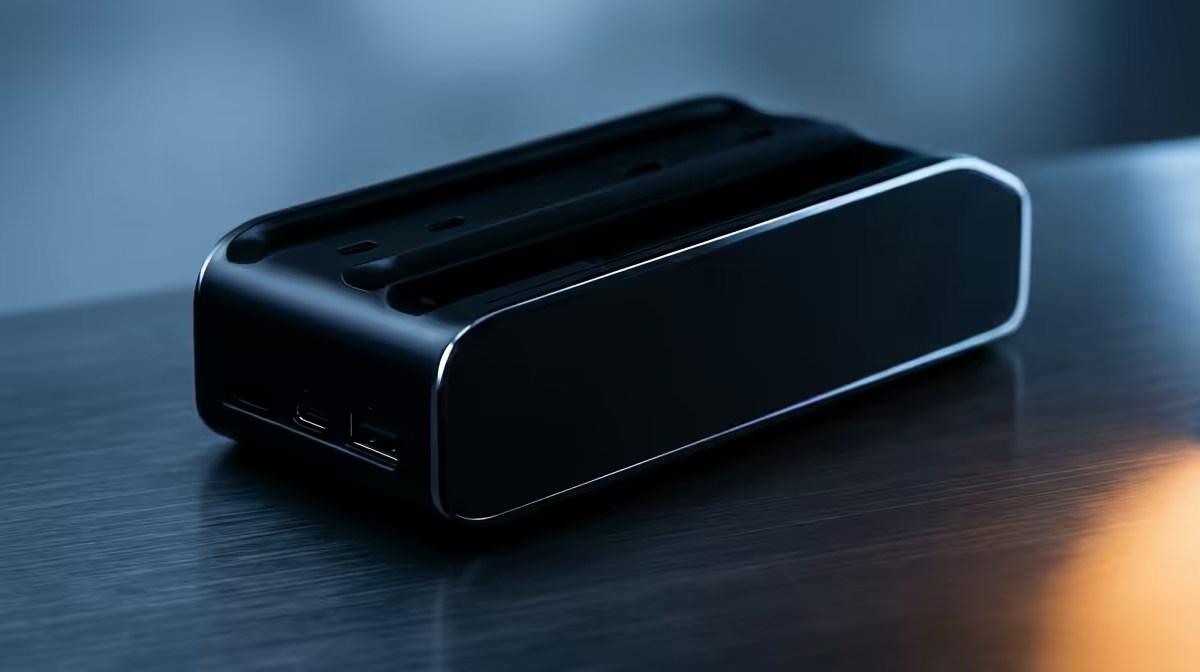
For South African home offices, the most useful docking station features are multiple USB-A ports for peripherals, at least one DisplayPort or HDMI 2.0 output for a second monitor, Gigabit Ethernet for Frogfoot or Vumatel fibre, and USB-C Power Delivery of 65W or higher for charging the laptop simultaneously through a single cable.
Connectivity That Matches SA Home Office Reality 🖥️
Most South African home office setups involve a laptop, a full-size keyboard and mouse, an external monitor, and a fibre connection from an ISP like Vumatel, Frogfoot, or Openserve. A good dock converts one USB-C connection into all of these simultaneously. A minimum useful dock includes two USB-A 3.0 ports for keyboard and mouse, one USB-C output for a phone or peripheral, one HDMI 2.0 or DisplayPort 1.4 output for the monitor, and Gigabit Ethernet for the wired fibre connection. Wired Ethernet through a dock consistently outperforms Wi-Fi for video calls and remote desktop sessions, particularly in apartment buildings where the 2.4GHz and 5GHz bands are crowded with neighbours' access points.
Power Delivery: The Feature That Determines Desk Cleanliness 🔌
A dock with USB-C Power Delivery (PD) charges the laptop through the same cable that carries data and video. Without PD, you need both the dock cable and the laptop's original charger on the desk, adding cable clutter. Docks with 65W PD cover most business ultrabooks; gaming-class laptops may need 90W to 100W PD to charge at full speed under load. In South Africa where cable management matters in shared home working spaces, a single-cable dock setup makes a meaningful practical difference. PD docks in the 65W to 100W range typically cost between R800 and R2,500 locally depending on port count and output options.
SD Card Reader, Audio, and Features Worth Paying For 🎯
For home office users who also create content, a built-in SD card reader on the dock eliminates a separate peripheral on the desk. A 3.5mm audio combo jack connects a headset directly for calls, more convenient than reaching to the laptop's audio port. Some docks offer dual 4K monitor output, useful for developers, designers, or analysts who benefit from two full-size displays. These premium features push dock pricing to R2,000 and above, but for a full-time home office worker paying Vumatel or Openserve for a 100Mbps or 1Gbps fibre line, the dock cost is a one-time investment.
Use Wired Ethernet from Your Dock for Video Calls ⚡
Even on a 100Mbps Frogfoot fibre line, switching from Wi-Fi to the Gigabit Ethernet port on your dock typically reduces packet loss and jitter on Microsoft Teams or Zoom calls. In Johannesburg or Cape Town apartment blocks with dense Wi-Fi environments, wired Ethernet through the dock can cut call drop frequency significantly during peak evening hours.
FAQ
Can any USB-C dock work with any laptop?
Most USB-C docks work with any laptop that has a USB-C port carrying DisplayPort Alt Mode and Power Delivery support. Some business laptops use proprietary docking connectors. Check whether your laptop uses standard USB-C or a proprietary connector before buying a universal dock.
Is Thunderbolt 4 docking worth the price premium for SA home offices?
Only if your laptop has a Thunderbolt 4 port. USB-C docks with 10Gbps throughput handle dual 1440p or single 4K displays without issue for standard office and creative workflows at a lower price point.
Does the dock brand matter for compatibility with South African ISP modems?
The dock's Ethernet port connects to your router, not the ISP modem. Any Gigabit Ethernet dock works with any standard router. Brand choice matters more for build quality, warranty support, and driver stability.
Setting up a cleaner, more connected home office?
Browse docking stations currently stocked at Evetech to find options with Power Delivery, Ethernet, and dual monitor output that match your laptop and workspace.