



Marvel Rivals launch in South Africa
Marvel Rivals launch needs a balanced parts plan, not a random basket. Map the CPU, GPU, RAM, SSD, cooling, and monitor target to the budget so SA builders know where to spend first.
Read moreMatch case to parts in this order: real difference for creator builders: E-ATX vs ATX PC Cases maps onto chassis depth, GPU clearance and airflow. Covers chassis-depth math, AIO clearance, GPU bracket support, and dust-control tips for SA homes.
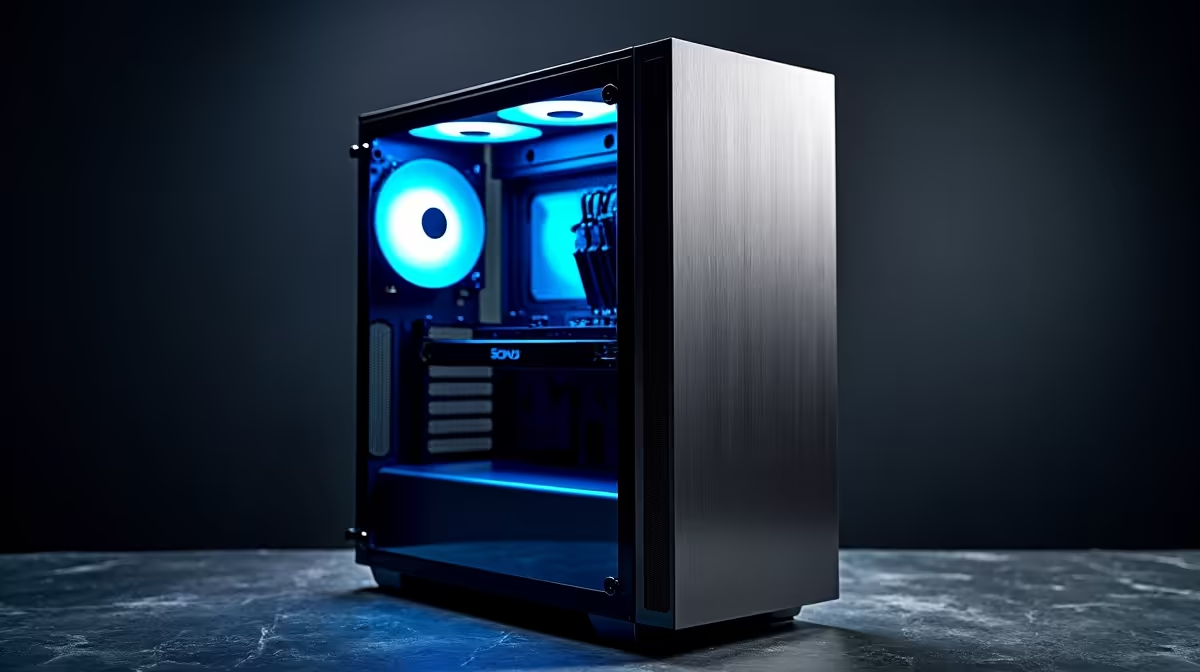
For most creator builds, an ATX case is the better choice unless you specifically need an E-ATX motherboard for Threadripper, additional PCIe slots, or quad-channel RAM. E-ATX cases offer more internal room but cost R500 to R1,500 more than comparable ATX cases and require physically larger footprints that may not suit all desk setups.
E-ATX motherboards measure 305mm x 330mm, giving 86mm more board height than ATX. This extra space accommodates additional memory slots (up to 8 DIMMs versus 4 on standard ATX), more PCIe expansion slots for multi-GPU compute or additional NVMe cards, and wider VRM zones for high-TDP CPU support. For a creator running multi-stream video production with 128GB RAM, a dedicated GPU plus a compute card, and high-speed NVMe storage arrays, an E-ATX platform justifies the larger case. At the hobbyist creator level, ATX boards on AMD AM5 or Intel LGA1851 deliver four DIMM slots (up to 192GB DDR5 on some models), two or three PCIe slots, and adequate VRM capacity for a 65W to 125W CPU without stepping up to E-ATX.
E-ATX cases are physically larger. A typical E-ATX full-tower adds 50mm to 100mm to the width and height of an equivalent ATX mid-tower. This translates to more fan mount positions (often seven or more), support for 420mm radiators in multiple positions, and substantially more cable management room behind the tray. For creators who run long renders and need confident sustained cooling, the additional radiator support in an E-ATX case is a tangible benefit. ATX mid-towers, however, support 360mm radiators in most current designs and provide adequate airflow for builds with a 125W CPU and a high-end GPU. For a home studio setup where the PC sits on a desk or in a limited alcove, the extra 10cm of E-ATX chassis may be impractical.
ATX mid-tower cases in South Africa range from R800 for value options to R3,500 for premium tempered glass models with good airflow and cable management. E-ATX full-tower cases start at around R2,000 and reach R6,000 or more for flagship models with ARGB, high-airflow mesh fronts, and full tool-free design. If your motherboard is ATX, buying an E-ATX case wastes case volume and budget for no functional gain. If you are on AMD Threadripper or a high-end E-ATX Intel board, the case upgrade is necessary rather than optional. For the majority of SA creator builds on mainstream AM5 or LGA1851 platforms, an ATX mid-tower in the R1,500 to R2,500 range is the right call.
Confirm your exact motherboard form factor from the spec sheet before buying any case. Some boards marketed as "high-end" are still standard ATX. An E-ATX case adds unnecessary bulk and cost if your board is 305mm x 244mm ATX. The motherboard spec sheet lists form factor explicitly under the product overview section.
Yes. E-ATX cases include ATX mounting holes and support smaller board sizes. The extra case volume around the board is unused but causes no problems.
Generally yes, because their larger interior supports more fans and larger radiators. However, premium ATX mid-towers often match E-ATX cases for cooling quality through good airflow design.
No, they are typically easier due to more room for cable routing and component clearance. The challenge is their physical size, which can be awkward to carry or place in a small desk space.
Choosing a case for your creator build? Evetech stocks ATX and E-ATX PC cases across multiple brands and price points. Browse the selection to find the right size and airflow spec for your motherboard and workspace.
Marvel Rivals launch needs a balanced parts plan, not a random basket. Map the CPU, GPU, RAM, SSD, cooling, and monitor target to the budget so SA builders know where to spend first.
Read more
Path of Exile 2 launch needs a balanced parts plan, not a random basket. Map the CPU, GPU, RAM, SSD, cooling, and monitor target to the budget so SA builders know where to spend first.
Read more
Black Myth Wukong launch needs a balanced parts plan, not a random basket. Map the CPU, GPU, RAM, SSD, cooling, and monitor target to the budget so SA builders know where to spend first.
Read more
Hollow Knight PC requirements should be mapped to resolution, settings and upgrade budget before choosing a tier. Verify current requirements, then balance GPU, CPU, RAM and SSD around SA pricing.
Read more
Hollow Knight build planning should focus on the target resolution, settings and total system balance. Treat launch wording as time-sensitive, then verify requirements before choosing SA PC parts.
Read more
Fallout 4 PC requirements should be mapped to resolution, settings and upgrade budget before choosing a tier. Verify current requirements, then balance GPU, CPU, RAM and SSD around SA pricing.
Read more
Wondering if a TKL wireless mechanical keyboard is worth it for everyday productivity? We break down latency, battery life, comfort, and workflow gains for real work. ⚡⌨️

Maximise battery life on a fanless 15-inch laptop using efficiency core architecture. Cut idle drain, tune power profiles, and improve thermals for longer runtime. 🔋⚙️
Learn how to reduce desk clutter with a TKL wireless keyboard using fewer cables, smart placement, and tidy essentials. Get a faster, calmer workspace with better ergonomics. ✅🧼
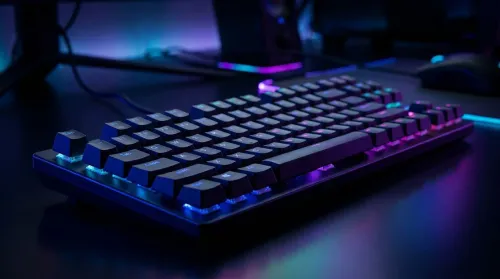
RGB keyboard lighting too distracting? Learn how to manage backlight modes, set brightness, and reduce distraction for focus and productivity 😌🖱️

Are themed gaming keyboards worth the extra cost? Compare build quality, switch options, features, and resale value to find the best fit for your setup 🎮⌨️

Full-Size vs Tenkeyless mechanical keyboards for gaming: find out if a smaller layout truly improves aim, speed, and comfort. We break down layout, desk space, latency-feel, and keybinds 🎮⌨️

Dedicated media rollers vs function key shortcuts: learn which setup gives you better workflow control, faster media access, and fewer mistakes. 🖱️🎧

Best Mechanical Switch Type for Gaming: Clicky vs Linear vs Tactile. Find your feel, speed, and noise balance with practical guidance for FPS, MOBA, and productivity 😄🎮

Direct mouse answer: Mouse not keeping up with your work? Everything that matters about dual-mode 2.4GHz + BT 5.0: DPI behaviour, channel switching, battery curves and per-app button mapping. Covers when 2.4GHz USB wins (low-latency desk) and when BT 5.0 wins (laptop, d

Plain wireless mouse guide: Mouse not keeping up with your work? Everything that matters about wireless productivity mouse: DPI behaviour, channel switching, battery curves and per-app button mapping. Includes DPI tuning tips, channel switch shortcuts, and ZAR-aware fea
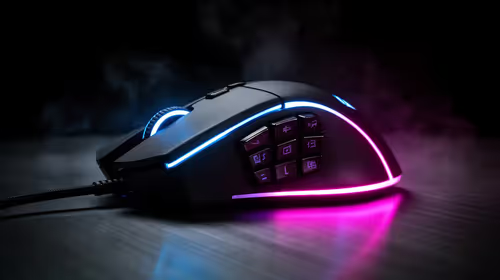
Real productivity numbers: Set up your wireless mouse in this order: everything that matters about wireless productivity mouse: DPI behaviour, channel switching, battery curves and per-app button mapping. Includes DPI tuning tips, channel switch shortcuts, and ZAR-aware
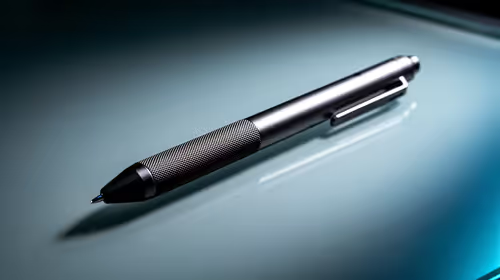
Pen not feeling like paper? Stylus lag and skipping usually trace to old drivers, dirty nibs, or display refresh mismatches, not the pen itself. Covers pressure curve tuning, tilt thresholds, nib swap timing, and SA pricing brackets.