Sizing a NSFAS-friendly laptop comes down to one honest question: does it remove a limit you can actually name in your build right now?
Quick Answer
The short version first. Battery life matters on campus: target 8-plus hours so a lecture day needs no charger. Fit and support often matter more than a single headline number.
Matching the part to your budget
NSFAS allocates about R5,200 for a device, so pairing it with R3,000 to R4,000 reaches a capable study laptop near R8,000. Check how the NSFAS-friendly laptop interacts with the rest of the rig before you commit.
When it is worth the spend
Aim for 16GB RAM if budget allows; a R8,500 laptop with 16GB lasts a full degree better than an 8GB model. Decide on evidence from your own use, not a reviewer's edge case.
What changes day to day
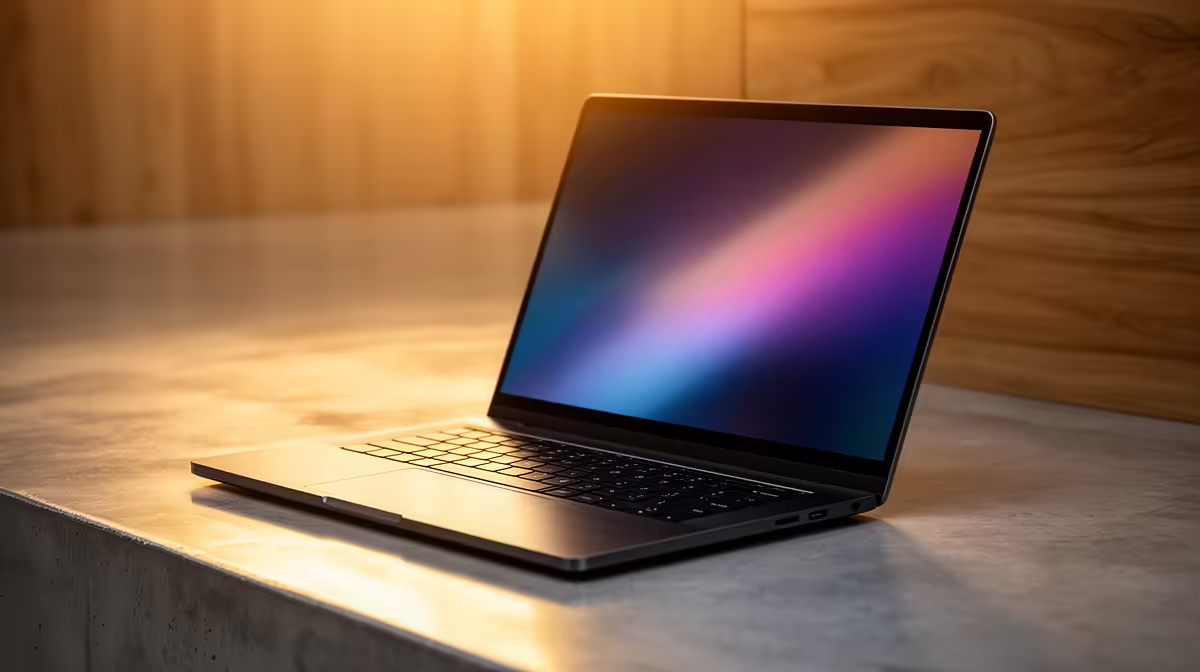
Under the allowance a Ryzen 5 or Core i3 laptop with 8GB RAM and a 256GB SSD covers notes, browsing and assignments. If two options tie on price, let warranty and local stock break the tie.
A quick note on value
Read the warranty terms and confirm local support before treating any deal as the best one. The cheapest path that clears your need beats the priciest that overshoots it.
FAQ
What is the most common NSFAS-friendly laptop buying mistake?
The usual mistake is buying for a spec you never use. A 14-inch 1080p IPS panel near R8,000 is easier on the eyes for long reading than a 768p TN screen.
Can I add a NSFAS-friendly laptop later instead of now?
Often yes, you can add it later once a real need appears. If you are unsure, the safer move is the option that clears your need by a modest margin and keeps the budget intact.
How do I know if a NSFAS-friendly laptop is the right fix?
It is the right fix when it removes a problem you can describe in one sentence. As a rule, size the part to the workload you can measure, then leave a small buffer rather than a large one.
Find the right NSFAS-friendly laptop
Check the NSFAS-friendly laptops range, weigh price against the feature you actually use, and choose with a clear reason.