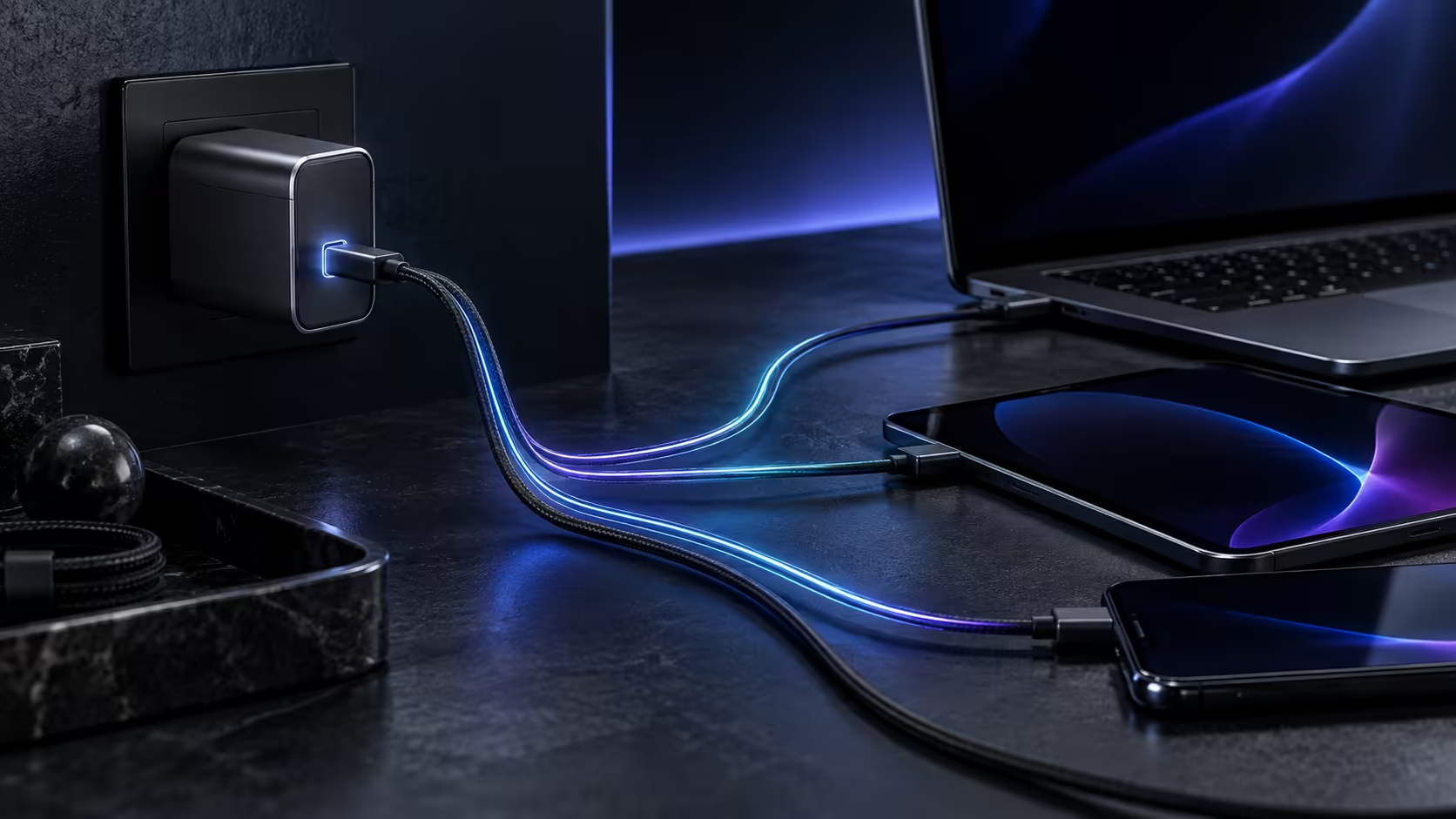
Every USB-C charging specification boils down to one simple formula and three separate ceilings, and understanding both is what turns a confusing spec sheet into something you can actually shop with confidence.
Quick Answer
Three ceilings decide your charging rate, and the lowest of them wins every time. Those are charger output, cable rating and device request, so knowing where the 60W, 100W and 140W lines fall is why a R399 certified cable is worth the attention it gets.
📖 Why this maths rarely gets explained upfront
USB-C product pages sell on the finished wattage figure because it is the number shoppers actually search for, not because the underlying maths is hidden on purpose. Once you know that figure is simply volts multiplied by amps, though, every other spec on the page starts making more sense, from why a cable's amp rating matters as much as its voltage tolerance, to why two products with identical wattage claims can still behave completely differently once a demanding device is actually plugged in.
⚡ The formula behind every wattage figure
Watts equal volts multiplied by amps, which is the entire mathematical basis behind every charging specification a cable in the comprehensive cable range will list. A 20V, 5A connection produces 100W; the same 20V at 5A of the 140W class produces its higher figure through a different current arrangement negotiated during Power Delivery. Knowing this formula explains why current rating, not just a headline wattage number, is the figure that actually determines a cable's real capability.
🔌 Ceiling one: what the charger can actually output
A charger's own printed wattage rating is the first limit in the chain, and no cable or device can exceed it regardless of their own individual capabilities. This applies identically whether the source is a wall charger, a power bank, or a USB hub passing power through from its own upstream connection.
🧵 Ceiling two: what the cable can safely carry
A cable's e-marker chip declares its own safe current limit, and this figure caps the connection regardless of how powerful the charger behind it is. A 3A cable enforces 60W even paired against a 240W-capable charger, and that single mismatch explains more underperforming charging setups than any fault in the charger or the device ever does.
📐 Why manufacturers rarely explain it this way
Charger and cable packaging almost always leads with the single most flattering number available, a 240W charger, a 5A cable, without explaining that the figure printed is a ceiling rather than a promise. This is not necessarily dishonest, since the number itself is usually accurate, but it does leave buyers assuming their setup will automatically deliver that headline figure the moment all the pieces are connected, when in reality the lowest of the three ceilings this article describes is what actually determines the result every time.
🖥️ Ceiling three: what the device actually requests
The final ceiling is simply what the connected device asks for during negotiation, since no device draws more power than it needs regardless of how much the charger and cable could otherwise supply. A phone requesting 20W will never pull 140W just because a capable cable and charger are both present, which is why matching a cable to your most demanding device, rather than your least demanding one, is the only decision that actually matters.
🧮 Working through a real example
Take a 100W charger connected to a laptop through a 3A cable. The charger's own ceiling is 100W, the cable's declared ceiling is 60W, and the laptop might request anywhere up to 100W depending on its own charging profile. The lowest of these three figures, the cable's 60W, decides the actual outcome, regardless of what the charger and laptop could otherwise manage together. Swap that same cable for a genuine 5A option and the ceiling shifts entirely onto the charger and laptop's own capability instead, unlocking the full 100W the setup was always capable of.
This exact scenario plays out constantly in households that upgrade a charger without checking the cable alongside it, which is exactly why understanding all three ceilings, rather than just the headline wattage printed on a charger's box, matters so much in practice.
Frequently Asked Questions
Which of the three ceilings is usually the limiting one in practice?
The cable is the most common limiting factor, since chargers and devices are typically bought to match each other while an old or mismatched cable often goes unnoticed in the chain.
Does a higher voltage always mean faster charging?
Not on its own. Wattage, the actual measure of charging speed, depends on both voltage and current together, so a higher voltage at lower current can produce the same or less total power.
Can a power bank ever become the limiting ceiling itself?
Yes, if its own output rating sits below what the cable and device could otherwise support, the power bank's maximum output becomes the binding constraint in that specific chain.
Is it possible for all three ceilings to be different at once?
Yes, commonly. A 240W charger, a 100W-rated cable and a 65W laptop can all be present in the same setup, with the laptop's own request typically settling the actual rate used.
Does a USB hub add its own ceiling on top of these three?
Yes, a hub's own internal power-handling circuitry can introduce a genuine fourth limit whenever it falls short of the full wattage sitting available further upstream in the chain.
Is it possible to measure which of the three ceilings is actually limiting my setup?
Yes, most laptops display the actual charging wattage in their power settings, which you can compare against the charger's printed rating and the cable's own stated figure to isolate the culprit.
Does upgrading just one of the three components ever guarantee faster charging?
No, only if that component was genuinely the lowest of the three ceilings beforehand. Upgrading a charger while the cable stays the weak link changes nothing about the final result at all.
Is it possible for a device's own request to exceed what it actually needs?
No, a device is designed to request only what its own battery and circuitry can safely use, so it never asks for more power than it genuinely requires at that moment in its charging cycle.
Does ambient temperature ever act as an unofficial fourth ceiling?
In extreme conditions, yes, since some devices deliberately reduce their own charging request to manage internal heat, though this counts as protective behaviour built into the device itself, rather than any real limitation coming from either the charger or the cable feeding it.
Ready to understand exactly why your charging setup performs the way it does?
Check all three ceilings, since the lowest one always decides the actual result.