


iRacing SA Gaming PC Build Guide
iRacing build planning should focus on the target resolution, settings and total system balance. Treat launch wording as time-sensitive, then verify requirements before choosing SA PC parts.
Read moreDisplay screens like the pump-cap LCD on the premium AIO cooler pick are useful for live CPU and coolant temps, less so for vanity GIFs that drain CPU cycles to render. SA pricing, warranty cover and current stock are factored in.
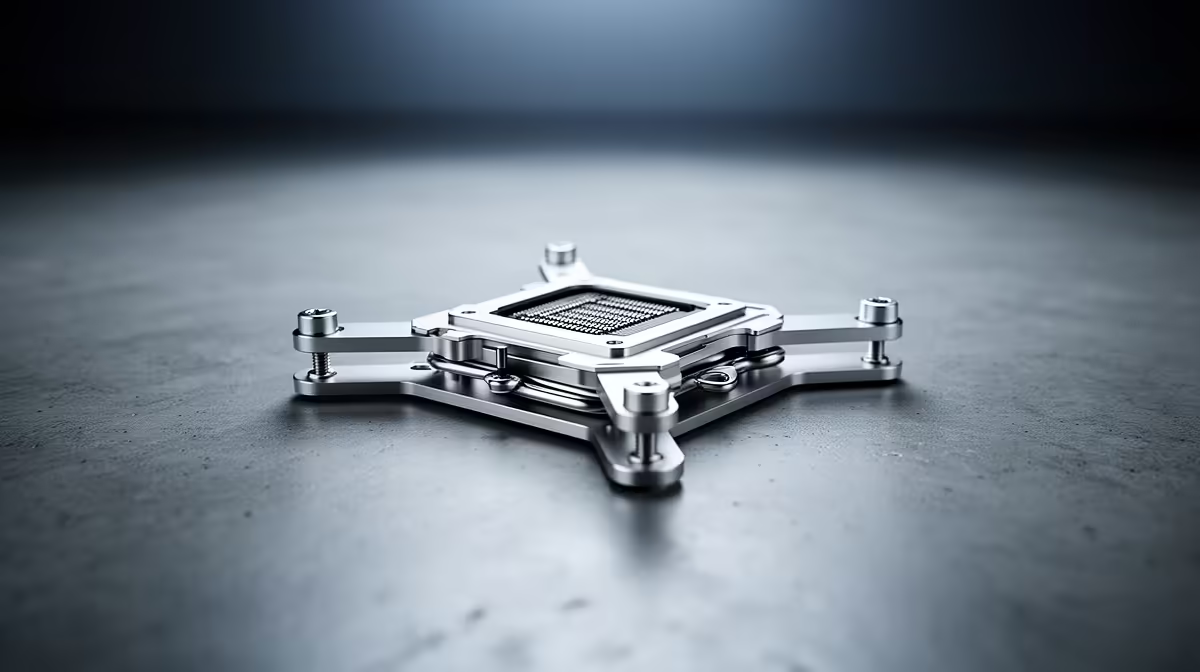
AIO coolers use separate mounting hardware for each CPU socket, and manufacturers include bracket kits that cover the most common platforms. Before buying any AIO, confirm your motherboard socket (AM5, LGA1851, LGA1700, AM4) is listed in the cooler's compatibility sheet, because no universal bracket exists.
The two dominant ecosystems in 2026 SA gaming builds are AMD's AM5 (Ryzen 7000 and 9000 series) and Intel's LGA1851 (Core Ultra 200 series). Both use different mounting hole patterns and require different backplates. AM5 is backward-compatible with AM4 cooler brackets only through specific adapter kits, so do not assume your old cooler slides straight onto a Ryzen 9800X3D. LGA1700 (12th to 14th Gen Intel) is still common in budget builds and uses its own 78mm x 78mm pattern. LGA1851 shares the same hole spacing as LGA1700, which means many current AIO coolers support both with the same bracket, but always verify the spec sheet.
Most 360mm AIOs ship with a universal mounting kit that contains a backplate, standoffs, screws, and a pump-head bracket. The backplate differs between Intel and AMD: Intel coolers typically use a plastic backplate that slots through the motherboard, while AMD AM5 uses the stock backplate already mounted on the board. Some premium AIOs like the NZXT Kraken series and Corsair iCUE Elite include tool-free mounting systems with magnetic or twist-lock mechanisms that speed up installation. When buying locally, the bracket kit is included in the box, but if you are buying a used cooler or an international grey-market unit, missing brackets mean you need to source spares, which is difficult in South Africa.
Socket compatibility is only half the equation. A 360mm radiator (typically 394mm x 120mm x 27mm) requires a case with a 360mm top or front mount. Mid-tower cases often support 360mm front mounting but not top mounting due to VRM clearance near the socket. Measure the distance from your CPU socket centre to the top panel before committing. In tight ATX builds, long GPU cards can also block front radiator clearance. South African builders commonly pair a 360mm AIO with full-tower or large mid-tower cases priced around R2,000 to R4,500 to ensure adequate radiator room. Always cross-reference the cooler spec sheet and your case's supported radiator sizes.
Most AIO manufacturers publish a compatibility list (QVL) on their support page listing every tested socket and case. Download it before adding to cart. For AM5 builds in SA, confirm the kit includes the AM5 backplate, as some older stock still ships with AM4-only hardware.
Not without an adapter. AM5 uses a new mounting pattern and a higher load on the IHS, so AMD designed a new backplate. Some cooler brands offer free AM5 upgrade kits on their websites, but availability in South Africa can be patchy. Check the brand's local distributor before assuming you can reuse an older unit.
Many current AIOs use the same bracket for both LGA1700 and LGA1851 because the hole spacing is identical at 78mm x 78mm. However, Intel changed the pressure requirements for LGA1851 to prevent ILM damage, so confirm the cooler's mounting force spec is within Intel's recommended range for Core Ultra 200 series.
No. The pump head mounting hardware is usually the same, but the radiator and fan dimensions differ entirely. Brackets are matched to the pump assembly, not the radiator size, so mixing radiator lengths between the same brand's lineup is generally fine, but the bracket from a different brand's 240mm unit will not fit.
Ready to lock in the right AIO for your socket? Evetech stocks a full range of 240mm and 360mm AIOs with AM5, LGA1851 and LGA1700 bracket kits included. Browse the CPU cooler category to filter by socket and radiator size.
iRacing build planning should focus on the target resolution, settings and total system balance. Treat launch wording as time-sensitive, then verify requirements before choosing SA PC parts.
Read more
Skyrim PC requirements should be mapped to resolution, settings and upgrade budget before choosing a tier. Verify current requirements, then balance GPU, CPU, RAM and SSD around SA pricing.
Read more
Skyrim PC builds is a cautious guide for game PC build planning. Compare game requirements, tier fit, resolution goals, RAM, storage, and GPU choice for SA buyers without assuming live prices, availability, or exact benchmark results.
Read more
Hades 2 PC builds is a cautious guide for game PC build planning. Compare game requirements, tier fit, resolution goals, RAM, storage, and GPU choice for SA buyers without assuming live prices, availability, or exact benchmark results.
Read more
Roblox PC builds is a cautious guide for game PC build planning. Compare game requirements, tier fit, resolution goals, RAM, storage, and GPU choice for SA buyers without assuming live prices, availability, or exact benchmark results.
Read more
Mortal Kombat 1 launch needs a balanced parts plan, not a random basket. Map the CPU, GPU, RAM, SSD, cooling, and monitor target to the budget so SA builders know where to spend first.
Read more
Wondering if a TKL wireless mechanical keyboard is worth it for everyday productivity? We break down latency, battery life, comfort, and workflow gains for real work. ⚡⌨️

Maximise battery life on a fanless 15-inch laptop using efficiency core architecture. Cut idle drain, tune power profiles, and improve thermals for longer runtime. 🔋⚙️
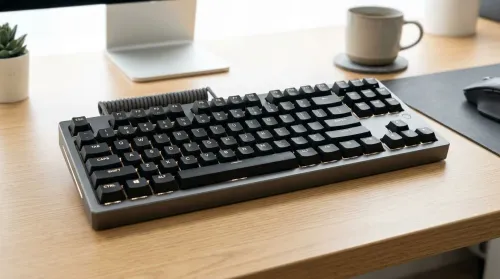
Learn how to reduce desk clutter with a TKL wireless keyboard using fewer cables, smart placement, and tidy essentials. Get a faster, calmer workspace with better ergonomics. ✅🧼
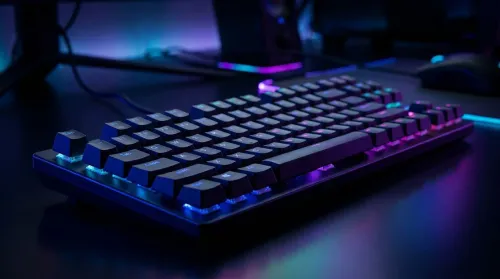
RGB keyboard lighting too distracting? Learn how to manage backlight modes, set brightness, and reduce distraction for focus and productivity 😌🖱️
Are themed gaming keyboards worth the extra cost? Compare build quality, switch options, features, and resale value to find the best fit for your setup 🎮⌨️
Full-Size vs Tenkeyless mechanical keyboards for gaming: find out if a smaller layout truly improves aim, speed, and comfort. We break down layout, desk space, latency-feel, and keybinds 🎮⌨️

Dedicated media rollers vs function key shortcuts: learn which setup gives you better workflow control, faster media access, and fewer mistakes. 🖱️🎧
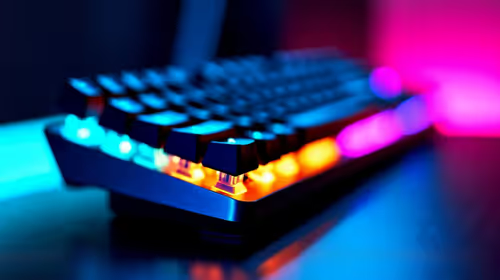
Best Mechanical Switch Type for Gaming: Clicky vs Linear vs Tactile. Find your feel, speed, and noise balance with practical guidance for FPS, MOBA, and productivity 😄🎮
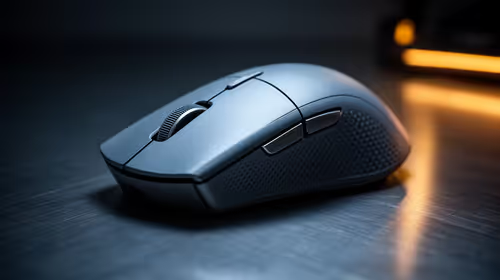
Direct mouse answer: Mouse not keeping up with your work? Everything that matters about dual-mode 2.4GHz + BT 5.0: DPI behaviour, channel switching, battery curves and per-app button mapping. Covers when 2.4GHz USB wins (low-latency desk) and when BT 5.0 wins (laptop, d

Plain wireless mouse guide: Mouse not keeping up with your work? Everything that matters about wireless productivity mouse: DPI behaviour, channel switching, battery curves and per-app button mapping. Includes DPI tuning tips, channel switch shortcuts, and ZAR-aware fea
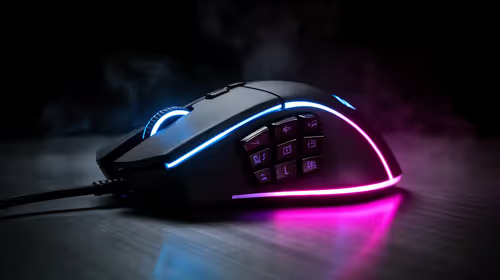
Real productivity numbers: Set up your wireless mouse in this order: everything that matters about wireless productivity mouse: DPI behaviour, channel switching, battery curves and per-app button mapping. Includes DPI tuning tips, channel switch shortcuts, and ZAR-aware
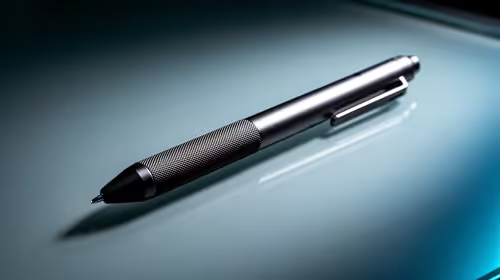
Pen not feeling like paper? Stylus lag and skipping usually trace to old drivers, dirty nibs, or display refresh mismatches, not the pen itself. Covers pressure curve tuning, tilt thresholds, nib swap timing, and SA pricing brackets.