



iRacing SA Gaming PC Build Guide
iRacing build planning should focus on the target resolution, settings and total system balance. Treat launch wording as time-sensitive, then verify requirements before choosing SA PC parts.
Read moreFanless ultrabook vs active-cooled laptop in warm climates: we break down cooling behavior, throttling risk, and comfort so you can choose confidently. 🌡️💻

South African gamers and tech buyers, have you felt your laptop heat up unbearably during a summer gaming session or work sprint? Choosing the right cooling system can be the difference between smooth performance and frustrating throttling. When debating a fanless ultrabook vs active-cooled laptop in warm climates, it’s essential to understand how each design responds to our local temperatures and usage demands. Let’s break down the key points to help you pick your ideal portable powerhouse ⚡.
Fanless ultrabooks, like the elegant MacBook Air Laptops, rely on passive cooling. They use heat-dissipating materials and clever airflow design without a single spinning fan. The result? Whisper-quiet operation and a slim, lightweight chassis that’s perfect for students, creatives, and professionals on the move.
However, passive cooling struggles when things heat up — literally. In our warm South African climate, high workloads or direct sunlight can cause these ultrabooks to throttle performance to prevent overheating. This means slower processing speeds during intense tasks like gaming or video editing.
The MacBook Air’s fanless design shines when ambient temperatures stay moderate, but active gamers or power users might notice frustrations in hotter conditions. With no fans running, the device depends entirely on case heat dispersion. That’s why understanding your usage pattern is crucial before going fanless.
Active-cooled laptops come with internal fans and vents to push hot air out, enabling sustained peak performance during demanding sessions. The MacBook Pro Laptops are prime examples of this approach, tailor-made for those who need reliable power bursts without the sluggish cooldown period.
While fans produce audible noise and slightly increase the laptop’s weight, they ensure your CPU and GPU don't throttle. This can be a significant advantage when South African summers push internal temperatures higher.
Active cooling isn't just about fans spinning faster. Modern MacBook Pro models, like the 14-inch MacBook Pro, use smart thermal management to balance noise and temperature. When temperatures rise, fans kick in smoothly to cool chips, maintaining performance without sudden dips.
If you game or work heavily under the African sun, keep your laptop elevated on a stand to improve airflow. Avoid using fanless designs if you regularly push performance in high temps.
Your choice also depends on portability versus cooling potential. The 13-inch MacBook Air embodies ultimate portability with fanless design. Perfect for casual daily tasks in climate-controlled spaces.
Conversely, the 15-inch MacBook Air offers a little more breathing room for heat dispersion but still lacks active fans. For gamers and power users, stepping up to actively cooled models like the MacBook Pro gives an extra edge in heat management and sustained speed.
Let me share a quick story. I bought a fanless ultrabook for silent note-taking but soon found it hitting thermal limits during longer gaming sessions. The CPU throttled after 20 minutes of play in a Johannesburg summer room. Switching to an actively cooled laptop meant I could game deeper into the night without performance drops or worrying about overheating. If you game or do heavy workloads, the extra fan noise is worth the reliable power ⚙️.
If you prioritise silence and ultra-portability while using your laptop mostly indoors, fanless ultrabooks like those in the MacBooks category offer excellent value. But in SA’s heat, for gaming or heavy workloads, active-cooled laptops like the MacBook Pro range manage heat better and sustain performance longer.
Balance your needs for portability, noise, and gaming power carefully—your ideal laptop depends on where and how you use it most.
Find Your Ideal Cooling Setup Don’t let heat throttle your laptop’s potential. Shop now at Evetech for a MacBook Pro that stays cool while you power through.
Fanless ultrabooks can run warmer in heat, but smart thermal design and low-power CPUs help reduce overheating risk. Cooling behavior varies by model.
Active-cooled laptops usually handle sustained loads better in warm climate laptop cooling, while fanless ultrabooks often feel steadier and quieter for light-to-moderate work.
It can still throttle under heavy sustained loads, but active airflow and thermal headroom generally keep temperatures lower than fanless designs in the same heat.
Thermal throttling commonly starts when the CPU hits its thermal limits. Watch for performance drops during benchmarks or long video calls in hot conditions.
Fanless laptop heat dissipation relies on larger heat spreaders, heat pipes, and natural convection. In warm climates, airflow and ambient temperature matter a lot.
Yes for silent, low-noise daily tasks and shorter bursts. For hot car cabins or long high-load sessions, an active-cooled laptop can perform more reliably.
Prioritize efficient CPU options, strong thermal engineering, good ventilation design (for active units), and realistic performance goals for warm weather use.
iRacing build planning should focus on the target resolution, settings and total system balance. Treat launch wording as time-sensitive, then verify requirements before choosing SA PC parts.
Read more
Skyrim PC requirements should be mapped to resolution, settings and upgrade budget before choosing a tier. Verify current requirements, then balance GPU, CPU, RAM and SSD around SA pricing.
Read more
Skyrim PC builds is a cautious guide for game PC build planning. Compare game requirements, tier fit, resolution goals, RAM, storage, and GPU choice for SA buyers without assuming live prices, availability, or exact benchmark results.
Read more
Hades 2 PC builds is a cautious guide for game PC build planning. Compare game requirements, tier fit, resolution goals, RAM, storage, and GPU choice for SA buyers without assuming live prices, availability, or exact benchmark results.
Read more
Roblox PC builds is a cautious guide for game PC build planning. Compare game requirements, tier fit, resolution goals, RAM, storage, and GPU choice for SA buyers without assuming live prices, availability, or exact benchmark results.
Read more
Mortal Kombat 1 launch needs a balanced parts plan, not a random basket. Map the CPU, GPU, RAM, SSD, cooling, and monitor target to the budget so SA builders know where to spend first.
Read more
Wondering if a TKL wireless mechanical keyboard is worth it for everyday productivity? We break down latency, battery life, comfort, and workflow gains for real work. ⚡⌨️

Maximise battery life on a fanless 15-inch laptop using efficiency core architecture. Cut idle drain, tune power profiles, and improve thermals for longer runtime. 🔋⚙️
Learn how to reduce desk clutter with a TKL wireless keyboard using fewer cables, smart placement, and tidy essentials. Get a faster, calmer workspace with better ergonomics. ✅🧼
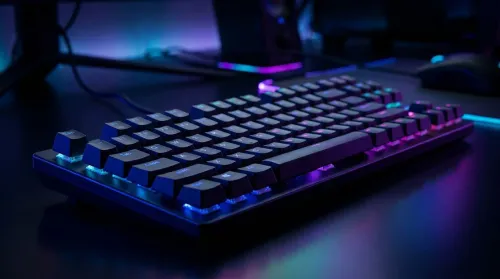
RGB keyboard lighting too distracting? Learn how to manage backlight modes, set brightness, and reduce distraction for focus and productivity 😌🖱️

Are themed gaming keyboards worth the extra cost? Compare build quality, switch options, features, and resale value to find the best fit for your setup 🎮⌨️

Full-Size vs Tenkeyless mechanical keyboards for gaming: find out if a smaller layout truly improves aim, speed, and comfort. We break down layout, desk space, latency-feel, and keybinds 🎮⌨️

Dedicated media rollers vs function key shortcuts: learn which setup gives you better workflow control, faster media access, and fewer mistakes. 🖱️🎧

Best Mechanical Switch Type for Gaming: Clicky vs Linear vs Tactile. Find your feel, speed, and noise balance with practical guidance for FPS, MOBA, and productivity 😄🎮
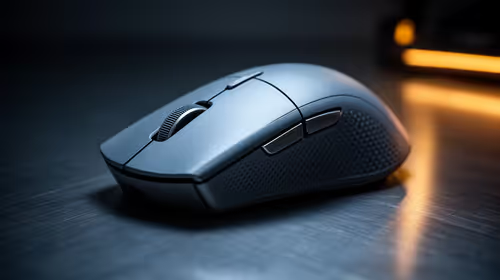
Direct mouse answer: Mouse not keeping up with your work? Everything that matters about dual-mode 2.4GHz + BT 5.0: DPI behaviour, channel switching, battery curves and per-app button mapping. Covers when 2.4GHz USB wins (low-latency desk) and when BT 5.0 wins (laptop, d

Plain wireless mouse guide: Mouse not keeping up with your work? Everything that matters about wireless productivity mouse: DPI behaviour, channel switching, battery curves and per-app button mapping. Includes DPI tuning tips, channel switch shortcuts, and ZAR-aware fea

Real productivity numbers: Set up your wireless mouse in this order: everything that matters about wireless productivity mouse: DPI behaviour, channel switching, battery curves and per-app button mapping. Includes DPI tuning tips, channel switch shortcuts, and ZAR-aware
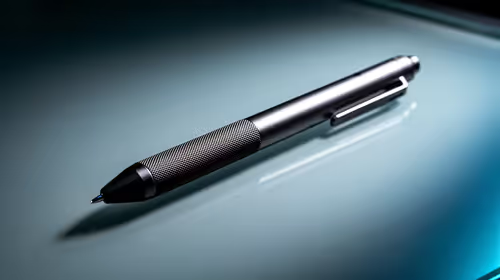
Pen not feeling like paper? Stylus lag and skipping usually trace to old drivers, dirty nibs, or display refresh mismatches, not the pen itself. Covers pressure curve tuning, tilt thresholds, nib swap timing, and SA pricing brackets.