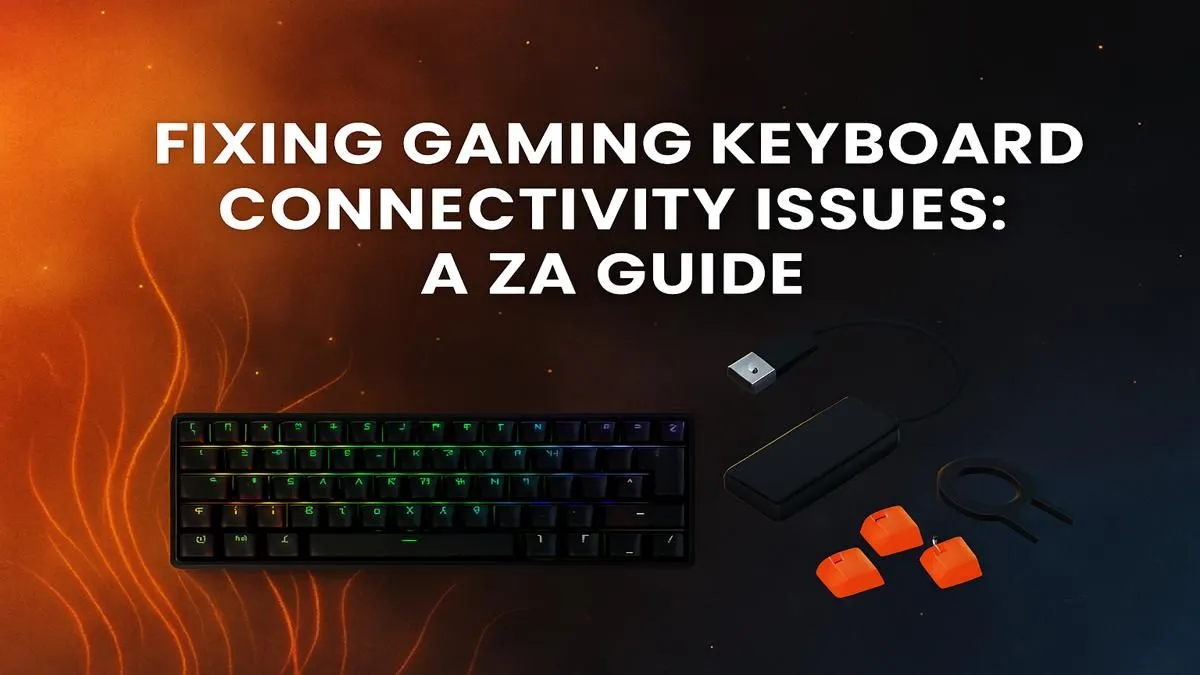
You’re in the final circle. It's a 1v1. You line up the perfect shot, ready to hit the build key... and nothing happens. Your character stands frozen as you get eliminated. We’ve all been there, staring at the screen in disbelief. Frustrating gaming keyboard connectivity issues can strike at the worst moments, turning a guaranteed win into a rage-quit. But before you hurl your gear across the room, let's run through the ultimate ZA fix guide.
First, Check the Obvious Stuff
Before diving into complex driver reinstalls, let's cover the basics. It sounds simple, but you’d be surprised how often the simplest solution works. A loose connection is a common cause of keyboard connection problems.
Start by unplugging your keyboard and plugging it back in firmly. Try a different USB port on your PC, preferably one directly on the motherboard (at the back) rather than a front-panel port or USB hub. If the problem persists, a quick restart of your computer can often resolve temporary software glitches that cause these frustrating connectivity issues. If these simple steps fail, it might be a sign of a deeper problem with your gaming keyboard in South Africa.
Solving Wired Gaming Keyboard Connectivity Issues
If your wired keyboard is still acting up, the problem often lies with your system's software or settings. Windows can be a bit aggressive with power management, sometimes cutting power to USB ports to save energy, which is a nightmare for gaming peripherals.
First, head to the Device Manager, find your keyboard, and check for driver updates. You can usually right-click and select "Update driver." If that doesn't work, try uninstalling the device completely. Unplug your keyboard, restart your PC, and plug it back in. Windows will automatically reinstall the generic drivers, which can fix a corrupted driver file. Many brands also offer specific firmware updates on their websites which can solve known bugs. 🔧
Pro Tip: Tame Windows Power Management ⚡
Windows, go to Device Manager > Universal Serial Bus controllers. Right-click each 'USB Root Hub', go to the 'Power Management' tab, and uncheck "Allow the computer to turn off this device to save power." This can prevent your keyboard from randomly disconnecting during an intense session. While you're optimising your setup, adding [a quality wrist rest](https: www.evetech.co.za buy-wrist-rest x 1586) can also make those long gaming hours far more comfortable.
Troubleshooting Wireless Keyboard Glitches
Wireless keyboards offer amazing freedom, but they come with their own unique set of connectivity challenges. The most common culprit? Power. Check your battery levels or plug it in for a solid charge. A low battery can cause missed keystrokes and intermittent dropouts.
Interference is another major cause of wireless gaming keyboard connectivity issues. Other wireless devices like routers, cordless phones, or even your microwave can disrupt the signal. Try moving your wireless dongle to a front USB port for a clearer line of sight to your keyboard. Re-pairing the device is also a great troubleshooting step. For a truly stable, clutter-free desk, you could also consider a streamlined keyboard and mouse combo designed to work together flawlessly.
When the Problem is Physical Damage
Sometimes, the issue isn't software... it's hardware. Did you recently spill a drink or drop your keyboard? Liquid damage is a notorious killer of electronics, causing shorts and corrosion on the internal PCB. A hard drop can dislodge internal components or damage the USB connector itself.
For mechanical keyboard enthusiasts, a single faulty switch can make a key unresponsive. If you're feeling adventurous and your keyboard is out of warranty, replacing individual keyboard switches can be a rewarding DIY fix. Other times, a simple deep clean and a fresh set of keycaps can breathe new life into a tired-looking board. ✨
Is It Time for a Fresh Start?
You've tried everything. You've swapped ports, reinstalled drivers, and checked for interference, but the problem persists. How much is your time worth? Spending hours trying to fix an old, unreliable keyboard might not be the best use of your energy, especially when a critical failure could cost you a tournament or your hard-earned rank.
Sometimes, the most effective fix for persistent gaming keyboard connectivity issues is a fresh start. Newer models offer improved wireless technology, more durable switches, and better software support. Instead of fighting with your old gear, maybe it's time to check out the latest gaming keyboard deals and invest in reliability. 🚀
Ready for a Lag-Free Upgrade?
Don't let a faulty keyboard hold you back. An unreliable connection is the last thing you need in the heat of battle. Explore our massive range of gaming keyboards and find the perfect, reliable machine to conquer your next game.