Quick Answer
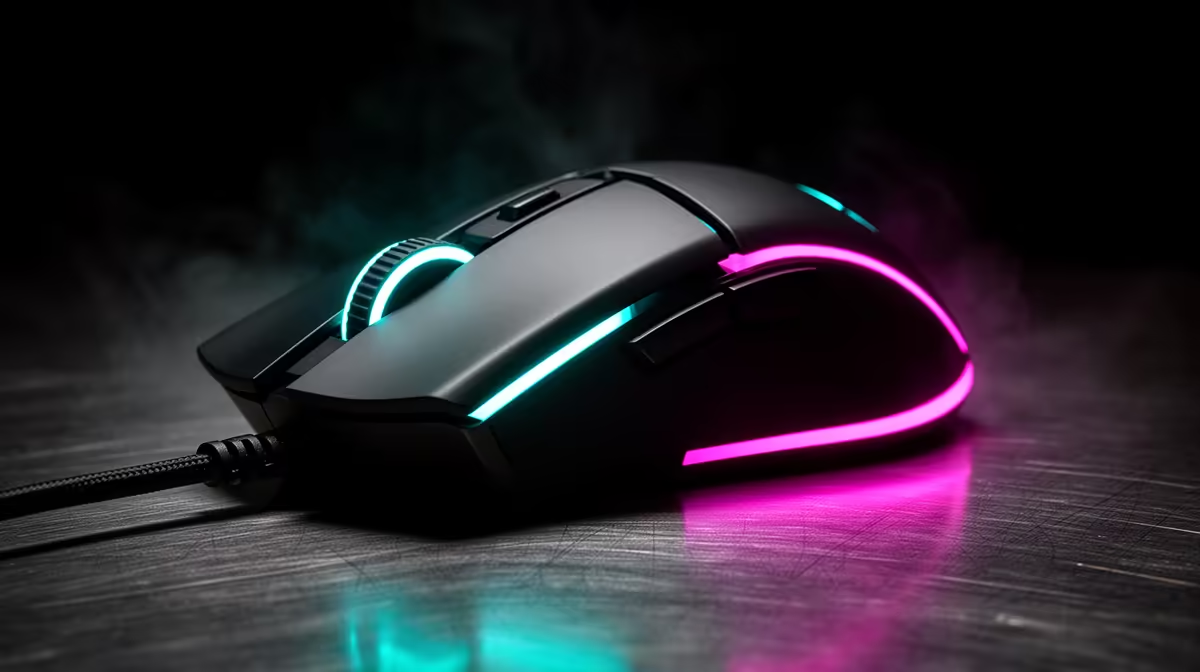
Gen-4 optical switches are more durable and faster than mechanical switches. Optical switches are rated at 100 million clicks with zero debounce delay, while mechanical switches are rated at 20 to 60 million clicks and require a 2ms to 8ms debounce window to filter contact bounce.
Durability: How the Lifecycle Numbers Compare 🔧
The 100 million click rating of Gen-4 optical switches represents a fundamental difference in failure mode rather than a marginal improvement. Mechanical switches fail because two metal contact points oxidise and accumulate debris over repeated physical contact, causing the double-click issue that has frustrated competitive gamers for decades. Gen-4 optical switches use an infrared beam that never physically contacts anything. The shutter that breaks the beam is the only moving part, a simple plastic flag with no metal contacts to oxidise. Razer's Gen-4 optical switch, used in current DeathAdder V3 and Viper V3 series mice, carries the 100 million click rating with zero double-click risk throughout its full lifecycle.
Speed: Actuation Time and Debounce Delay 🎮
Mechanical switches require a debounce window in firmware because physical contact bounce creates multiple false signals per click. Mouse firmware filters these by waiting 2ms to 8ms after the first signal. Optical switches have no contact bounce and need no debounce window. Razer's Gen-4 optical switches actuate in 0.2ms versus the 2ms to 4ms effective actuation time of mechanical switches after debounce is included. In a 240Hz gaming environment where each frame is 4.16ms, this difference can mean one to two extra frames of registered input latency from a mechanical switch. For SA esports players competing in fast-paced titles, this is a measurable edge.
Feel, Click Weight, and Adaptation 💡
Despite the objective advantages of optical switches, mechanical switches remain popular for their tactile feel. Omron and Kailh mechanical switches used in premium gaming mice have a satisfying clickiness that many gamers have used for years. Gen-4 optical switches feel lighter and crisper but require several days of adaptation before the difference feels natural. SA gamers transitioning from a long-time mechanical mouse to an optical switch model like the Razer DeathAdder V3, available locally at around R1,800 to R2,500 depending on variant, consistently report that after the adaptation period, returning to a mechanical click feels noticeably slower and mushier by comparison.
Optical Switch Adaptation Strategy ⚡
If you are switching from a mechanical mouse to an optical switch model, use the optical mouse exclusively for two weeks before forming a final opinion. Switching back and forth between click types resets the adaptation and makes the optical switch feel foreign longer than necessary. Commit to the transition period for an accurate assessment.
FAQ
Do optical mouse switches wear out at all over time?
The optical beam and receiver component itself does not degrade over normal use. The shutter housing and physical button pivot are the components most likely to show wear over very long-term use, though both are rated to outlast the useful life of the mouse body. Dust on the IR lens is the only maintenance concern.
Are Gen-4 optical switches available in SA gaming mice at reasonable prices?
Yes. Razer's Gen-4 optical switches appear in their Viper V3 Pro and DeathAdder V3 HyperSpeed lines, both stocked locally at Evetech. Entry points for optical switch mice start from around R1,200 to R1,500 for Gen-3 models, while Gen-4 models sit at R1,800 to R2,800.
Can I replace mechanical switches with optical switches in a gaming mouse?
Not practically. The switch housings are physically different and PCB soldering requires specialist tools. For most SA gamers, the cost and effort of a switch swap exceeds the cost of buying a new optical switch mouse outright.
Ready to upgrade from mechanical to optical switch gaming mice?
Browse Razer Gen-4 optical switch mice and other high-performance gaming mice stocked at Evetech for SA delivery.