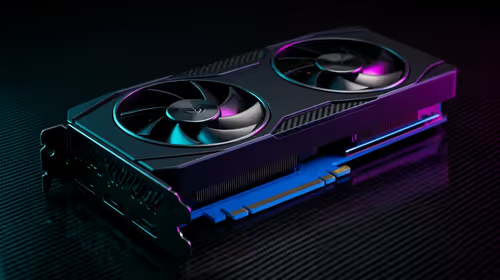
Dreaming of that glorious jump to 1440p gaming? You’re not alone. It’s the new sweet spot for sharp visuals and high frame rates. But for South African gamers, the dream often crashes into the reality of hardware costs. The GPU price impact on 1440p gaming is significant, turning a simple upgrade into a major financial decision. So, how do you navigate the market without breaking the bank? Let's dive in. 🚀
Why 1440p is the New Gaming Standard
For years, 1080p was the undisputed king of PC gaming. It was accessible and easy to run. But as screen technology has improved, 1440p (or QHD) has emerged as the perfect middle ground. It offers a massive 77% more pixels than 1080p, resulting in dramatically sharper images and more immersive worlds.
Unlike 4K, it doesn't require a top-of-the-line, budget-destroying graphics card to run smoothly. This balance makes it the ideal target for most PC builders today, but the cost of entry is directly tied to your choice of GPU.
The Rand Reality: Unpacking GPU Prices in Mzansi
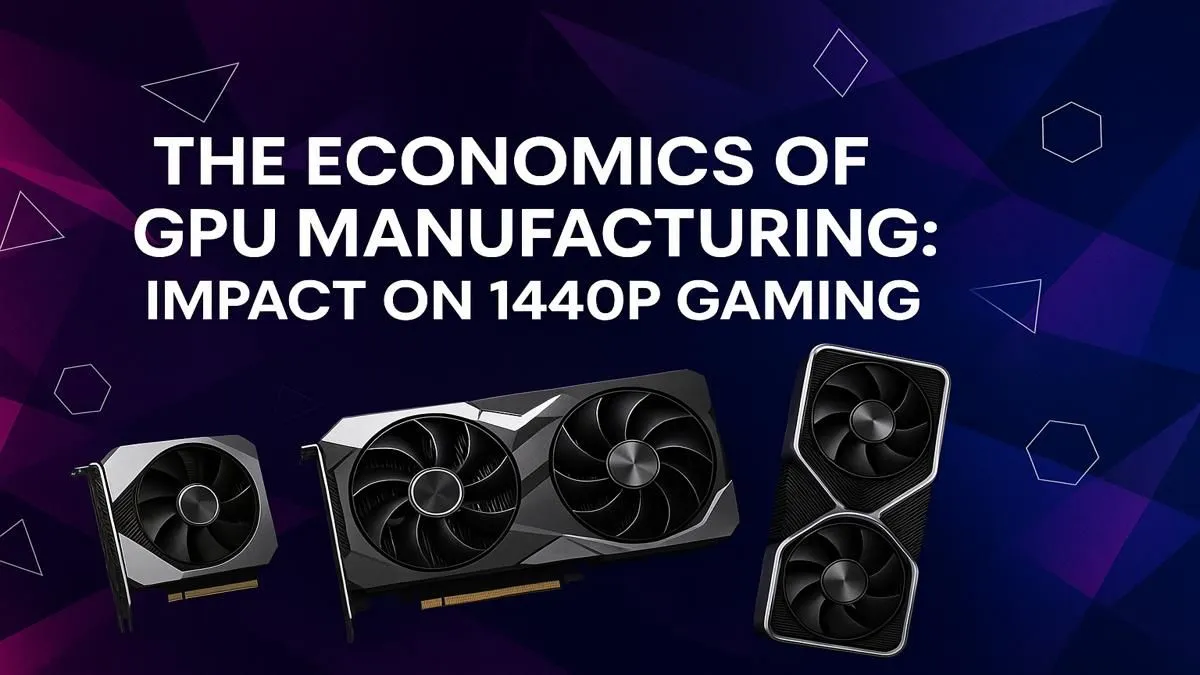
Ever wonder why a graphics card seems to cost so much more here? The GPU price impact on 1440p gaming in South Africa is amplified by several economic factors. Import duties, fluctuating Rand-to-Dollar exchange rates, and international shipping costs all add up. This is why planning your purchase is crucial. A card that’s a bargain overseas can become a premium product by the time it lands here, affecting the overall cost of your 1440p build. It’s a complex market, but understanding it helps you find the true value among the wide range of graphics cards available today.
Finding Your 1440p Champion: A Price-to-Performance Breakdown
Choosing a GPU isn't just about grabbing the most expensive one. It's about finding the right balance for the games you play, the refresh rate of your monitor, and, of course, your budget. Let's break down the tiers.
The Budget Contenders (Sub-R8,000)
Getting into 1440p on a tight budget is challenging but not impossible. You’ll be aiming for medium settings in modern titles to maintain a smooth 60 FPS. Cards in this bracket are often previous-generation heroes or entry-level current-gen models. While older series like the NVIDIA GeForce GTX cards were once powerful, they often lack features like DLSS or sufficient VRAM for modern 1440p textures, making newer options a smarter long-term investment.
VRAM is Key for 1440p 🔑
When choosing a GPU for 1440p, pay close attention to the VRAM. 8GB is the absolute minimum you should consider today, but 12GB or more will give you much better performance with high-resolution textures and future-proof your rig for upcoming games. Don't let low VRAM bottleneck your new card!
The Mid-Range Kings (R8,000 - R15,000)
This is the real sweet spot for 1440p gaming. Cards in this price range deliver fantastic performance, often allowing for high or even ultra settings at 60+ FPS. This is where the battle for your money gets fierce, with excellent options available from both sides. For many gamers, the value offered by AMD Radeon graphics cards in this bracket is hard to ignore, thanks to strong rasterization performance and features like FSR.
The High-End Heroes (R15,000+)
If you want to max everything out, enable ray tracing, and push for 144Hz refresh rates at 1440p, you’ll need to step into the high-end tier. These GPUs are powerhouses designed for enthusiasts who demand the best visual experience. ✨ In this space, you'll also see new competitors like the Intel Arc series starting to make their mark. Just be careful not to confuse these gaming beasts with specialised workstation graphics cards, which are built for professional applications like CAD or 3D rendering and don't offer the same gaming value.
Smart Buys: Getting the Most Bang for Your Buck
Understanding the GPU price impact on 1440p gaming is the first step. The next is making a smart purchase.
- Leverage Upscaling: Technologies like NVIDIA's DLSS and AMD's FSR are brilliant. They use AI to boost your frame rates with minimal loss in image quality, letting a mid-range card punch well above its weight.
- Wait for Specials: Keep an eye out for seasonal sales or promotions. A little patience can save you thousands of Rands.
- Balance Your Build: Don't pair a R20,000 GPU with an old CPU. A balanced PC, where the processor isn't bottlenecking the graphics card, will always deliver a better, smoother experience.
Ready to Conquer 1440p?
The GPU market can be complex, but the right card for your rig and budget is out there. Explore our massive range of PC components and find the perfect GPU to power your gaming adventures.