Graphics Card Design & Gaming Performance: What Really Matters?
Ever stared at a sleek new graphics card online, wondering if all that fancy shroud work and RGB really makes your games run better? In Mzansi, where every Rand counts, understanding the true impact of graphics card design on gaming performance isn’t just smart—it’s essential. We’re diving deep into what separates the pixel-pushing titans from the flashy pretenders, helping you make an informed choice for your next rig upgrade.
Beyond the Blink: Unpacking Core GPU Design
At the heart of every graphics card lies the Graphics Processing Unit (GPU) chip itself. This silicon powerhouse dictates raw processing power, but its design is only one piece of the puzzle. The surrounding components and the way they're integrated by manufacturers, known as AIB (Add-in-Board) partners, significantly influence how that GPU performs. Companies like MSI, for example, invest heavily in custom PCB layouts, power delivery systems, and thermal solutions to squeeze every drop of performance from the core silicon. If you’re eyeing a specific partner card, understanding these design choices is key to unlocking its full potential. You can explore a range of these custom designs, including those from MSI, right here at Evetech.
The Cooling Conundrum: Keeping Your Rig Chill ❄️
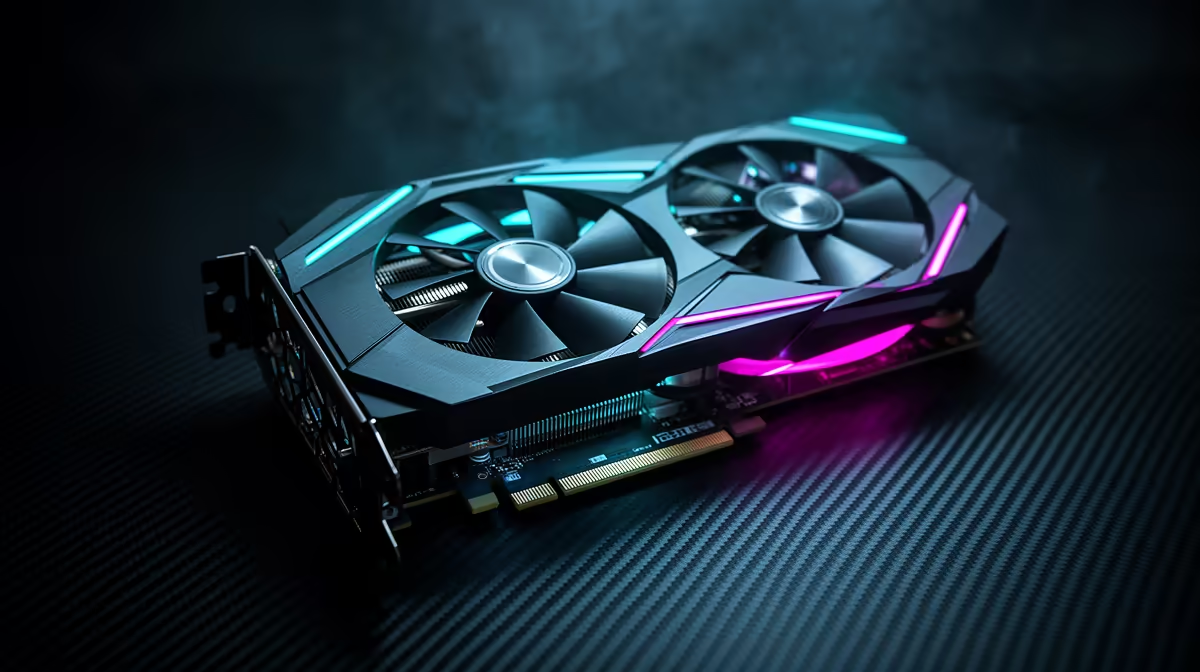
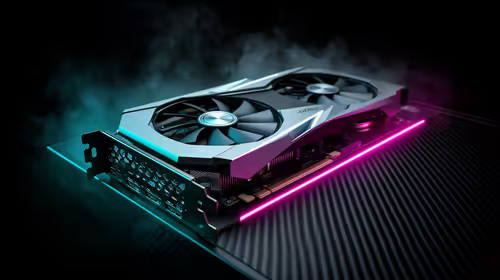
An impressive graphics card design isn't just about looks; it's about effective cooling. Modern GPUs generate serious heat, and if that heat isn't efficiently dissipated, the card will "throttle" – automatically reducing its clock speed to prevent damage. This directly impacts your gaming performance, leading to lower, inconsistent frame rates.
A well-designed cooler features robust heatsinks, often with multiple heat pipes, and an array of high-quality fans. Some designs even incorporate vapor chambers for superior heat transfer. When you’re spending R12,000 or more on a high-end card, you're not just buying a chip; you're investing in an engineered cooling solution that ensures sustained boost clocks during those long gaming sessions.
Optimise Your Fan Curve
Your GPU's fans don't have to scream. Use software like MSI Afterburner to create a custom fan curve. Start with a quiet profile and gradually increase fan speed as temperatures rise. Finding that sweet spot between noise and cooling can shave a few degrees off your temps without sounding like a jet engine.
VRAM, PCB, & Power: The Unsung Heroes of Performance
Beyond the GPU and its cooler, several other design elements critically influence gaming performance. Video Random Access Memory (VRAM) capacity and speed are crucial for higher resolutions and texture-heavy games. A card with insufficient VRAM will stutter as it tries to offload data, regardless of how powerful its GPU core is.
Then there's the Printed Circuit Board (PCB) design and power delivery system (VRMs). A high-quality PCB with ample power phases ensures stable, clean power reaches the GPU, allowing for higher, more consistent boost clocks. This is an area where different manufacturers truly differentiate their products. Consider the evolving landscape, with new players like Intel Arc graphics cards bringing fresh approaches to architecture and board design, pushing boundaries in efficiency and feature sets.
It’s also important to distinguish gaming card designs from others. While a workstation graphics card prioritises stability, specific professional workloads, and features like ECC memory, gaming GPUs are meticulously tuned for high frame rates and graphical fidelity above all else. Their design choices reflect these distinct goals.
Does Aesthetic Design Truly Influence Your Frame Rates? ✨
Let’s be honest: RGB lighting and sleek shroud aesthetics are awesome. They make your build look incredible, especially through a tempered glass side panel. But do they directly impact graphics card gaming performance? Not usually. The primary role of the shroud is to direct airflow, and the RGB is purely cosmetic.
However, a well-thought-out aesthetic design can often be a byproduct of excellent engineering. Manufacturers who pay attention to fit, finish, and materials are often also paying attention to crucial internal design elements like cooling efficiency and power delivery. So while the blinky lights don't add FPS, they might hint at a card built with overall quality in mind.
The Bottom Line: Matching Design to Your Gaming Reality 🎮
Ultimately, what matters most in graphics card design and gaming performance is how it aligns with your specific needs. Are you a casual gamer targeting 1080p at 60 FPS? Or are you chasing buttery-smooth 4K, ray-traced visuals? Your budget, monitor resolution, and the types of games you play should dictate your priorities.
When choosing a card, look beyond the core GPU model. Research reviews that delve into specific AIB partner designs, focusing on cooling performance, noise levels, and power efficiency. Brands like AMD Radeon consistently offer powerful options, and understanding their unique design philosophies, from RDNA architecture to FSR upscaling, can help you find a card that delivers fantastic value. Check out the latest AMD Radeon graphics cards available to see what suits your setup. A smart purchase means getting the best possible performance for your Rand.
Upgrade Your Game Today!
Ready to experience gaming how it was meant to be played? Don't let sub-par graphics card design hold back your gaming performance. Shop now at Evetech for performance that leaves lag in the dust.