


Marvel Rivals launch in South Africa
Marvel Rivals launch needs a balanced parts plan, not a random basket. Map the CPU, GPU, RAM, SSD, cooling, and monitor target to the budget so SA builders know where to spend first.
Read more- Hall effect sensors for flight sim: explain precision - Compare non-contact vs potentiometers - Recommend parts, setup 🔧✈️ Hall effect sensors for flight sim give precise, low-drift, maintenance-free inputs for smoother, longer-lasting rigs.
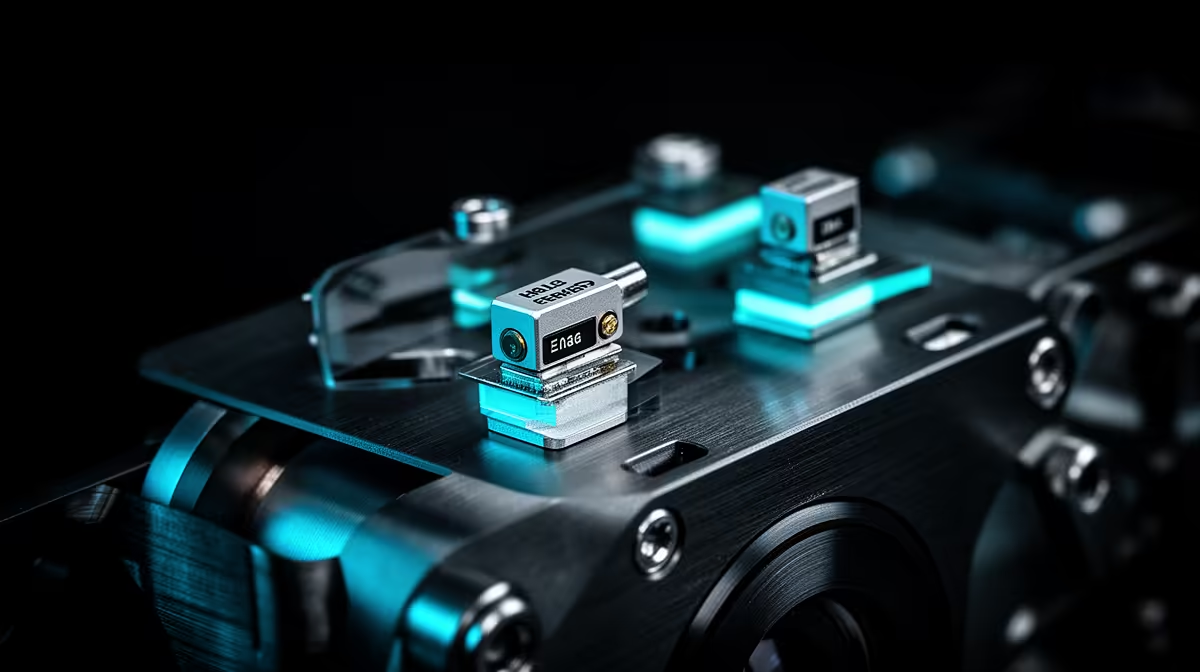
Ever felt your virtual aircraft veering left while your joystick is centred? That frustrating drift often signals the end of traditional potentiometers. For South African pilots seeking absolute precision, Hall Effect Sensors for Flight Sim Inputs have become the gold standard. These magnetic sensors eliminate physical wear... ensuring your landing at Cape Town International is as smooth as your very first flight. ✈️
Traditional flight sticks rely on potentiometers. These are essentially small wipers moving across a resistive track. Over time, friction creates dust and wear... leading to jitter and deadzones. Hall Effect sensors work differently. They measure the strength of a magnetic field as the stick moves.
Because there is no physical contact between the moving parts, the sensor never degrades. This level of reliability is why enthusiasts invest in high-quality flight simulator gear to ensure their setup remains crisp for years.
A deadzone is that "slack" area where you move the stick but nothing happens in-game. With Hall Effect Sensors for Flight Sim Inputs, the resolution is incredibly high. Even a millimetre of movement translates into a precise adjustment of your ailerons. This is vital when you are fighting crosswinds or trying to stay on the glideslope during a heavy storm in the Drakensberg. 🔧
the best magnetic sensors benefit from a clean calibration. In Windows, type 'joy.cpl' into the search bar to open Game Controllers. Select your device and run the calibration wizard. This ensures your software perfectly aligns with the physical limits of your Hall Effect hardware for 1:1 input accuracy.
The benefits of magnetic sensing are not limited to the skies. Many top-tier pedals and wheels in the sim racing world have adopted this technology too. Whether you are hitting the brakes at Kyalami or adjusting your trim in a Cessna... the need for consistent, non-contact input is the same.
Investing in gear with Hall Effect sensors saves money in the long run. In South Africa, where shipping and import costs can be high, you want hardware that lasts. A magnetic sensor stick might cost a few more Rands upfront... but it won't need replacing after a year of heavy use. You can find various upgrades and simulation gear and accessories that prioritise this durable technology. 🚀
If you take your hobby seriously, the answer is a resounding yes. Hall Effect Sensors for Flight Sim Inputs provide a level of "set and forget" reliability that physical wipers simply cannot match. You get smoother inputs... better control... and a piece of kit that feels as good in year five as it did on day one. ⚓
Ready to Elevate Your Flight Experience? Precision is the difference between a perfect landing and a costly mistake. For the best deals on high-accuracy peripherals in South Africa, we have you covered. Explore our massive range of flight sim gear and take control of your virtual skies today.
Hall effect sensors detect magnetic fields and convert position into an electrical signal. Hall effect sensors for flight sim deliver contactless, responsive input.
Non-contact sensors reduce mechanical wear and input drift, giving longer life and more stable readings than potentiometers in flight sim setups.
They significantly reduce mechanical drift. Proper calibration and quality sensors minimize residual offsets when calibrating hall sensors flight sim.
Opt for automotive-grade analog or digital hall effect parts with high linearity and temp stability. See best hall effect sensors for sim rigs guides.
Yes. Many upgrade kits let you swap potentiometers for hall sensors. Check compatibility in upgrade joystick hall effect sensor tutorials.
Use your controller software or OS calibration to set neutral and endpoints. Follow calibrating hall sensors flight sim steps for best accuracy.
Properly shielded magnetic sensors have minimal interference. Choose certified magnetic sensors for rudder pedals and joystick installations.
Marvel Rivals launch needs a balanced parts plan, not a random basket. Map the CPU, GPU, RAM, SSD, cooling, and monitor target to the budget so SA builders know where to spend first.
Read more
Path of Exile 2 launch needs a balanced parts plan, not a random basket. Map the CPU, GPU, RAM, SSD, cooling, and monitor target to the budget so SA builders know where to spend first.
Read more
Black Myth Wukong launch needs a balanced parts plan, not a random basket. Map the CPU, GPU, RAM, SSD, cooling, and monitor target to the budget so SA builders know where to spend first.
Read more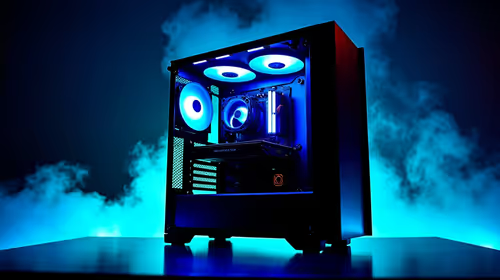
Hollow Knight PC requirements should be mapped to resolution, settings and upgrade budget before choosing a tier. Verify current requirements, then balance GPU, CPU, RAM and SSD around SA pricing.
Read more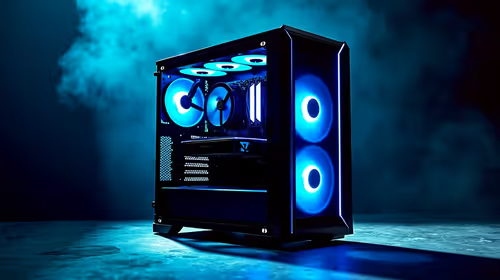
Hollow Knight build planning should focus on the target resolution, settings and total system balance. Treat launch wording as time-sensitive, then verify requirements before choosing SA PC parts.
Read more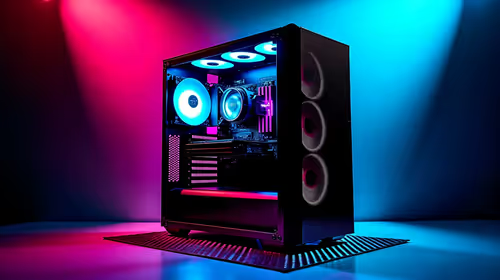
Fallout 4 PC requirements should be mapped to resolution, settings and upgrade budget before choosing a tier. Verify current requirements, then balance GPU, CPU, RAM and SSD around SA pricing.
Read more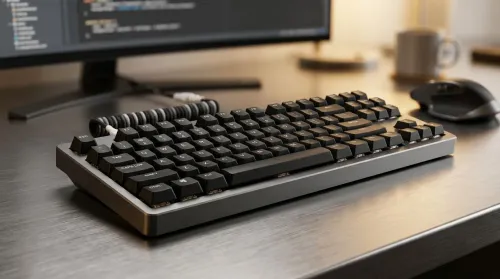
Wondering if a TKL wireless mechanical keyboard is worth it for everyday productivity? We break down latency, battery life, comfort, and workflow gains for real work. ⚡⌨️
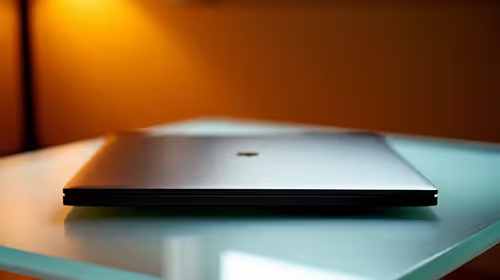
Maximise battery life on a fanless 15-inch laptop using efficiency core architecture. Cut idle drain, tune power profiles, and improve thermals for longer runtime. 🔋⚙️
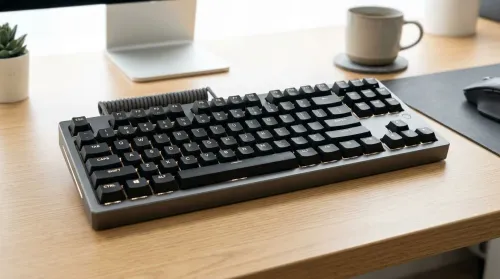
Learn how to reduce desk clutter with a TKL wireless keyboard using fewer cables, smart placement, and tidy essentials. Get a faster, calmer workspace with better ergonomics. ✅🧼
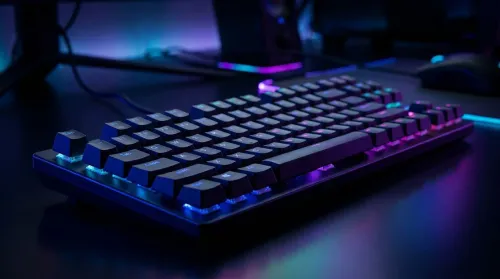
RGB keyboard lighting too distracting? Learn how to manage backlight modes, set brightness, and reduce distraction for focus and productivity 😌🖱️
Are themed gaming keyboards worth the extra cost? Compare build quality, switch options, features, and resale value to find the best fit for your setup 🎮⌨️
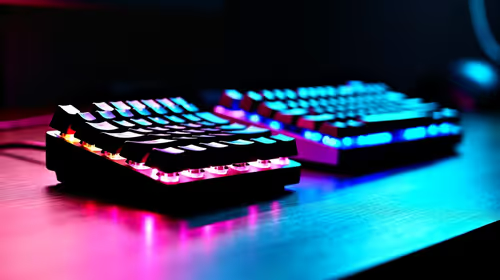
Full-Size vs Tenkeyless mechanical keyboards for gaming: find out if a smaller layout truly improves aim, speed, and comfort. We break down layout, desk space, latency-feel, and keybinds 🎮⌨️
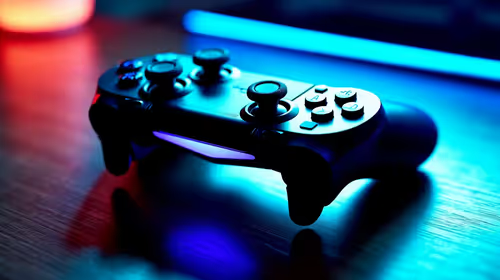
Dedicated media rollers vs function key shortcuts: learn which setup gives you better workflow control, faster media access, and fewer mistakes. 🖱️🎧
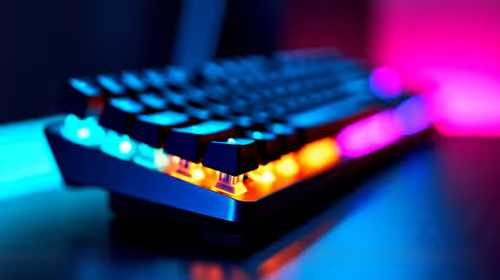
Best Mechanical Switch Type for Gaming: Clicky vs Linear vs Tactile. Find your feel, speed, and noise balance with practical guidance for FPS, MOBA, and productivity 😄🎮
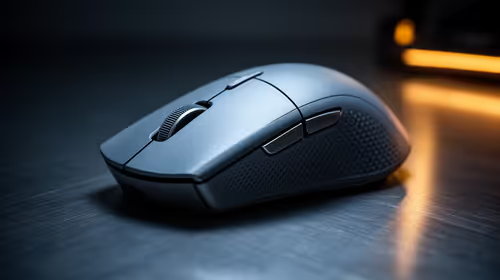
Direct mouse answer: Mouse not keeping up with your work? Everything that matters about dual-mode 2.4GHz + BT 5.0: DPI behaviour, channel switching, battery curves and per-app button mapping. Covers when 2.4GHz USB wins (low-latency desk) and when BT 5.0 wins (laptop, d
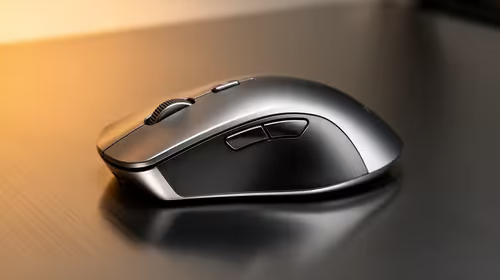
Plain wireless mouse guide: Mouse not keeping up with your work? Everything that matters about wireless productivity mouse: DPI behaviour, channel switching, battery curves and per-app button mapping. Includes DPI tuning tips, channel switch shortcuts, and ZAR-aware fea
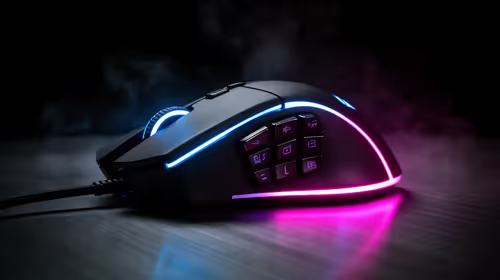
Real productivity numbers: Set up your wireless mouse in this order: everything that matters about wireless productivity mouse: DPI behaviour, channel switching, battery curves and per-app button mapping. Includes DPI tuning tips, channel switch shortcuts, and ZAR-aware
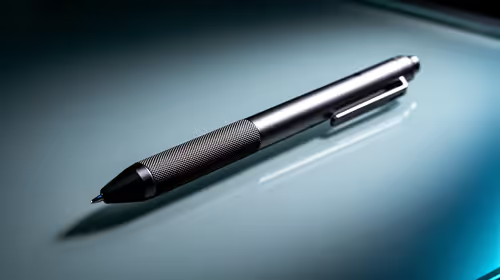
Pen not feeling like paper? Stylus lag and skipping usually trace to old drivers, dirty nibs, or display refresh mismatches, not the pen itself. Covers pressure curve tuning, tilt thresholds, nib swap timing, and SA pricing brackets.